Small spaces can still have the cutest game rooms! 🎮✨ Think comfy bean bags, fun games, smart storage, cozy lighting, and a little corner where kids can enjoy their favorite activities. These kids’ game room ideas are simple, practical, and full of personality—perfect for making a small room feel fun without making it look messy. 🧸🤎
Bilkul yr 🤎 Is Cozy Kids’ Game Room for Small Spaces wali image ko base bana kar full blog aise likho—isme room kaise create kiya gaya, har element kya effect deta hai, aur small space mein kaise recreate kar sakte hain, sab cover hoga.
🧸 How This Cozy Kids’ Game Room Was Created
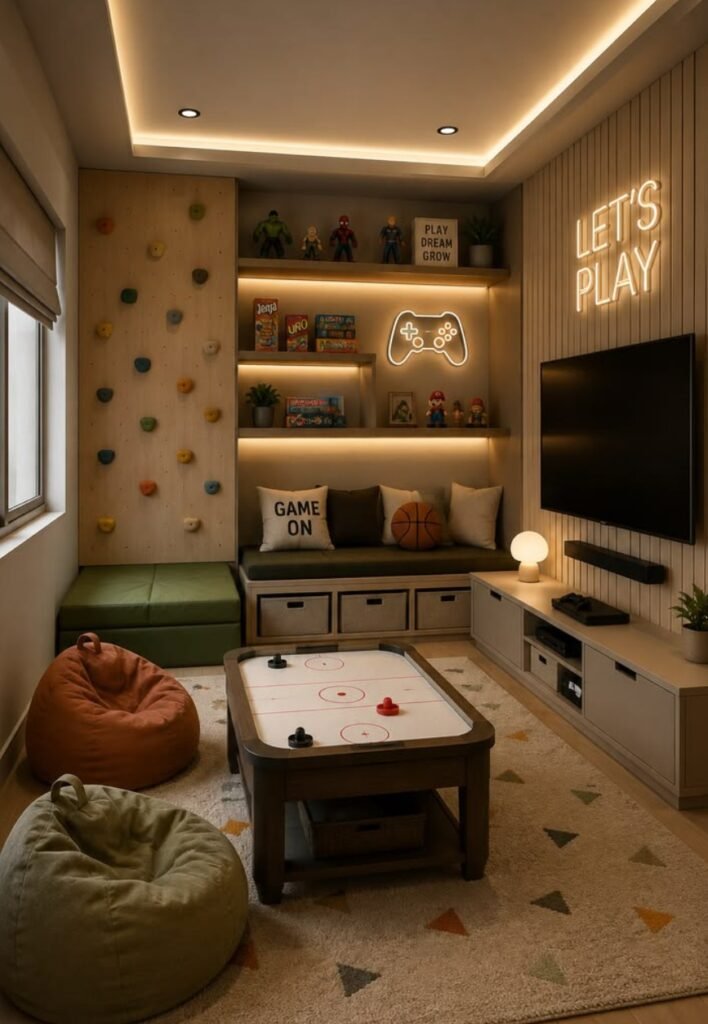
The main idea behind this room is to use vertical space instead of filling the floor with furniture. The walls provide storage, entertainment, and even an activity zone, while the center of the room remains open enough for games.
Natural wood panels, warm LED lighting, colorful accessories, soft bean bags, and built-in cabinetry create a balanced combination of practicality and fun. The result is a game room that feels playful without becoming visually chaotic.
1. Use a Built-In Entertainment Wall
The TV wall is designed as a complete entertainment zone rather than simply mounting a television on an empty wall. Vertical wood slats create a feature wall, while the TV sits neatly above a compact media console.
The cabinets underneath provide space for gaming consoles, controllers, DVDs, toys, and other accessories.
Effect: A built-in entertainment wall keeps everything organized while making the room look polished and intentional.
2. Add a Climbing Wall for Active Play
One of the most fun elements is the small indoor climbing wall beside the storage area. A simple wooden panel with colorful climbing holds turns an unused vertical surface into an activity zone.
If you’re recreating this idea, make sure any climbing equipment is properly installed and appropriate for the child’s age and use, with suitable safety measures underneath.
Effect: A climbing wall adds physical activity to the room and gives kids something exciting to do away from screens.
3. Make the Most of Vertical Storage
Instead of using several bulky cabinets across the floor, this room uses open shelves and built-in storage vertically. The shelves display games, toys, action figures, books, and decorative pieces.
This is particularly useful in a small room because the walls provide additional storage without taking away valuable floor space.
Effect: Vertical storage makes a small game room feel more spacious while keeping toys and games easy to access.
4. Create a Cozy Built-In Bench
The built-in bench beneath the shelves doubles as both seating and storage. Cushions and playful pillows make it comfortable enough for reading, relaxing, or watching games.
The drawers underneath can be used for board games, toys, blankets, or gaming accessories.
Effect: A built-in bench provides seating and hidden storage without requiring another large piece of furniture.
5. Choose Comfortable Bean Bags
Two oversized bean bags in earthy green and orange add a relaxed seating area to the room. They’re easy to move around and don’t make the space feel as formal as traditional chairs or sofas.
Choose washable or durable covers if the room will be used frequently by children.
Effect: Bean bags create a casual, playful atmosphere and give kids a comfortable place to relax while gaming or watching TV.
6. Add a Compact Game Table
The center of the room features a small air-hockey-style game table that becomes the main activity zone.
When choosing a game table for a small room, measure the available floor area carefully and leave enough space around it for children to move comfortably.
Effect: A compact game table creates an interactive focal point while keeping the room suitable for different types of play.
7. Use a Neutral Base With Playful Accents
Instead of covering the entire room in bright colors, the design starts with beige, natural wood, and soft neutral tones.
Green, orange, red, and blue appear through the bean bags, toys, game accessories, and small decorative pieces.
Effect: A neutral foundation keeps the room stylish and allows colorful accents to create the playful personality.
8. Install Warm LED Shelf Lighting
The built-in shelves are illuminated with warm LED strips. This creates a subtle glow around the toys and gaming accessories while also adding depth to the wall.
LED strips can be placed underneath individual shelves or along the back of built-ins for a similar effect.
Effect: Shelf lighting makes the room feel more exciting at night and gives ordinary storage a custom-designed appearance.
9. Add a Playful Neon Sign
The “LET’S PLAY” sign above the TV immediately communicates the purpose of the room. Its simple design fits perfectly with the gaming theme.
You can use a neon-style sign with a short phrase such as “Let’s Play,” “Game On,” or even the child’s favorite gaming-inspired phrase.
Effect: A small illuminated sign adds personality and creates a strong visual focal point.
10. Display Toys Instead of Hiding Everything
The open shelves aren’t only for storage—they also act as a display area. Action figures, board games, colorful toys, and collectibles become part of the room’s decoration.
Keep the most attractive or frequently used items on open shelves and place less attractive clutter inside closed cabinets or baskets.
Effect: Displaying toys makes the room feel personal and playful without needing additional wall decorations.
11. Add a Game-Themed Gallery Shelf
Small signs, figurines, board games, and gaming accessories can be arranged together to create a mini display.
Try grouping items by color or theme instead of placing everything randomly. Leave some empty space between objects so the shelves don’t appear overcrowded.
Effect: Organized displays make the room feel curated rather than messy.
12. Choose a Soft, Patterned Rug
The large rug underneath the activity area introduces a subtle pattern without competing with the colorful toys.
A neutral rug with small geometric shapes works particularly well because it hides everyday marks better than a completely plain light rug.
Effect: A large rug visually connects the room and creates a softer, more comfortable surface for play.
13. Keep the Floor Open
One of the smartest features of a small game room is leaving enough open floor space. Instead of adding multiple chairs, tables, and cabinets, the room relies on built-ins and movable seating.
Bean bags can easily be moved when children need more space for games.
Effect: An open floor plan makes a small room feel larger and gives children more freedom to play.
14. Add a Small Reading or Relaxation Corner
The window-side bench can also become a quiet relaxation area. Add a cushion, a few books, and a small basket of favorite toys to create a cozy corner.
This gives the room another purpose beyond gaming.
Effect: A quiet corner balances active play with a place where kids can relax, read, or take a break.
15. Use Wood to Make the Room Feel Sophisticated
Natural wood appears throughout the room on the wall panels, shelves, climbing wall, and furniture.
This helps balance the playful accessories and keeps the room from looking overly childish.
Effect: Wood adds warmth, texture, and a modern designer feel that can grow with the child.
🎮 How to Design a Small Game Room
Start by measuring the room and identifying which walls can be used for storage. Instead of placing large freestanding furniture everywhere, consider built-in shelves, wall-mounted storage, and a compact entertainment unit.
Choose one main activity for the center of the room, such as a small gaming table, air hockey table, or floor gaming area. Then add flexible seating like bean bags that can easily be moved when more floor space is needed.
Keep the main colors neutral and introduce brighter shades through toys, cushions, artwork, and accessories. Finally, use warm lighting to make the room feel comfortable during evening gaming sessions.
🕹️ Gaming Storage Ideas for Kids
Good storage is essential in a game room because toys, controllers, board games, and accessories can quickly create clutter.
Use closed cabinets for larger items, open shelves for collectibles, fabric bins for toys, and small labeled boxes for controllers and accessories.
A built-in bench with drawers is especially useful because it combines seating with hidden storage. Wall-mounted shelves can hold games without taking up floor space.
The goal is to make every item have a designated place so children can easily put things away after playing.
✨ Lighting Ideas for a Cozy Game Room
Lighting can completely change the atmosphere of a kids’ game room. Use warm LED strips underneath shelves, behind the TV unit, or around architectural details.
Add a small table lamp or decorative light for softer illumination, while keeping the main ceiling light available when the room needs to be fully bright.
For gaming, avoid relying entirely on extremely bright overhead lighting. Layered lighting creates a much more comfortable and visually interesting space.
🧩 How to Make a Game Room Fun Without Making It Look Messy
The easiest way is to use a neutral background and colorful accessories.
Instead of choosing brightly colored furniture for every part of the room, keep the walls, cabinetry, and larger furniture neutral. Then bring in color through toys, cushions, bean bags, artwork, and games.
Use baskets and cabinets to hide everyday clutter while leaving a few favorite toys and collectibles on display.
This approach keeps the room fun for children while maintaining a stylish appearance that parents can enjoy too.
🚫 Common Small Game Room Mistakes to Avoid
Filling every wall with furniture: Leave some breathing room so the room doesn’t feel cramped.
Using oversized furniture: Always check dimensions before purchasing game tables, sofas, or cabinets.
Ignoring storage: Without designated storage, toys and gaming accessories can quickly take over the room.
Using too many bright colors: A neutral foundation makes colorful accents look more intentional.
Poor lighting: Combine ceiling lighting with ambient and shelf lighting for a more comfortable environment.
Forgetting movement space: Children need room to move around furniture safely, so don’t overcrowd the center of the room.
💡 Budget-Friendly Ideas
You don’t need a fully built-in room to achieve this look. Use floating shelves instead of custom cabinetry, add LED strip lighting under the shelves, and use affordable storage cubes for toys and games.
A simple wooden slat panel can create a feature wall, while colorful cushions and bean bags can introduce the playful character.
You can also create a gaming display using existing toys, board games, framed prints, and small decorative pieces instead of purchasing everything new.
🎮 FAQs
How can I create a game room in a small bedroom?
Use the walls for storage and entertainment, choose compact furniture, and keep the center of the room as open as possible. Built-in shelves and flexible seating are especially useful.
What should every kids’ game room have?
A comfortable seating area, organized storage, age-appropriate games or activities, good lighting, and enough open space for movement are the most important elements.
What colors work best for a kids’ game room?
Neutral shades such as beige, cream, taupe, and natural wood work well as a base. Add playful colors like green, orange, blue, or red through accessories.
How do I organize gaming accessories?
Use small labeled containers, drawers, baskets, and dedicated shelves. Keep controllers and frequently used accessories somewhere children can easily reach.
How can I make a kids’ game room look stylish?
Choose simple furniture, a coordinated color palette, natural materials, organized displays, and warm lighting. The room can be playful without being visually cluttered.
Final Thoughts
This cozy kids’ game room is a great example of how small spaces can become highly functional without sacrificing style. The combination of vertical storage, built-in seating, a compact game table, bean bags, warm LED lighting, and playful gaming details creates a room that feels exciting and comfortable.
The biggest takeaway is to design upward, keep the floor open, and give everything a place. With a neutral foundation and carefully chosen colorful accents, you can create a kids’ game room that feels fun today while still looking stylish enough to grow with them.