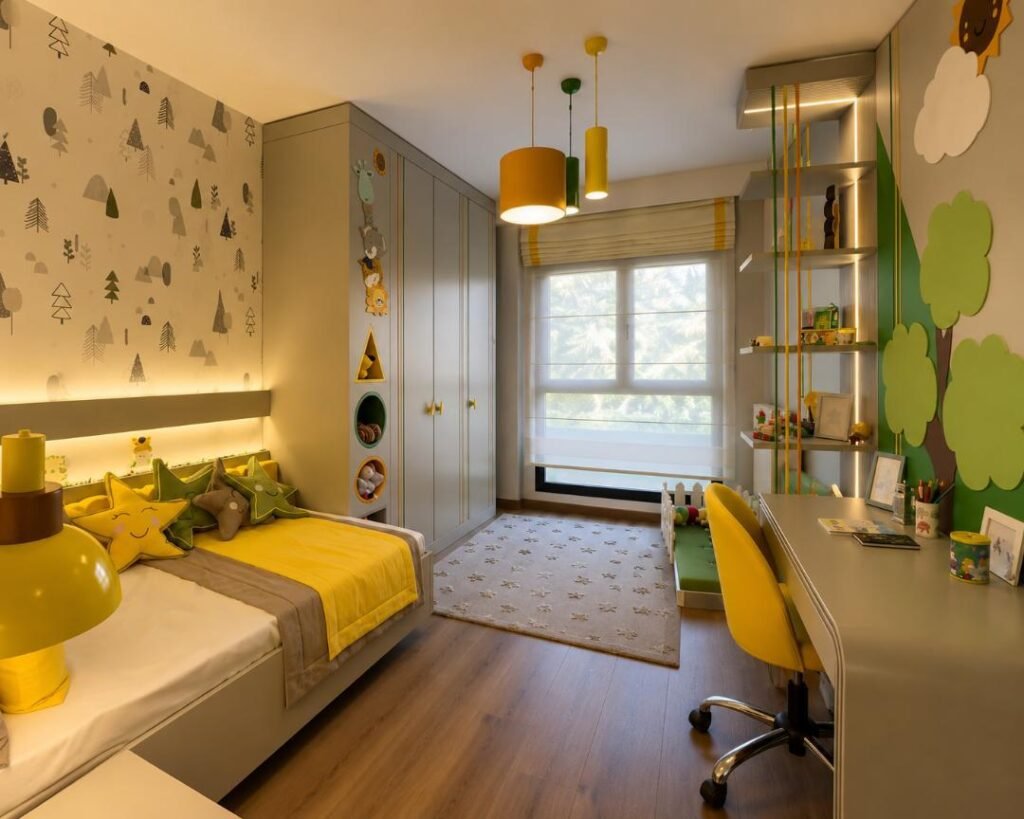
A child’s bedroom should be more than just a place to sleep. It can be a little world where they can play, imagine, study, read, and express their personality. The room in this design combines playful details with a clean and stylish interior, creating a space that feels cheerful without becoming visually overwhelming.
The combination of soft neutral tones, cheerful yellow accents, nature-inspired wall decor, smart storage, and a dedicated study area makes the room both beautiful and practical. Here’s how you can create a playful, stylish, and creative kids bedroom inspired by this look.
1. Start With a Soft Neutral Base
A neutral base is a great starting point for a kids bedroom because it keeps the room feeling clean and spacious. Soft beige, cream, light grey, or warm white can be used on the walls and larger furniture pieces.
In this room, the neutral wardrobe, flooring, and walls create a calm background, allowing the colorful accessories and playful decorations to stand out. This approach also makes it easier to update the room as your child grows without having to completely redesign the space.
2. Add One Cheerful Accent Color
Instead of using several bright colors throughout the room, choose one main accent shade and repeat it through small details. Here, yellow adds a cheerful and energetic touch to the otherwise neutral interior.
The yellow appears in the bedding, pendant lights, desk chair, lamp, and small accessories. Repeating the same shade in different areas creates a coordinated look while keeping the room playful.
3. Make the Bed the Cozy Focal Point
The bed should feel inviting while still fitting naturally into the overall design. Soft bedding, decorative cushions, and playful pillows can instantly make a child’s sleeping area more appealing.
For this room, the yellow bedding adds personality while star-shaped cushions and soft toys bring a fun element to the bed. You can recreate the look with simple patterned sheets, a few themed cushions, and one or two favorite toys rather than filling the entire bed with accessories.
4. Create a Nature-Inspired Feature Wall
One of the most creative elements in this bedroom is the nature-inspired wall design. The illustrated trees, clouds, and small woodland-style patterns give the room a storybook feeling and encourage imagination.
You don’t need to cover every wall with colorful wallpaper. Choose one feature wall and use forest-themed wallpaper, painted trees, removable decals, or simple illustrated artwork. Keeping the remaining walls neutral will make the feature wall feel intentional rather than overwhelming.
5. Design a Creative Study Corner
A kids bedroom should include a comfortable area where children can draw, read, complete homework, or explore their hobbies. A simple desk placed near a window can provide plenty of natural light during the day.
In this room, the long desk provides enough space for studying and creative activities. The bright yellow chair adds a playful touch while keeping the workspace visually connected to the rest of the room.
Add a small desk organizer, pencil holder, books, and a few personal items to make the space functional without creating unnecessary clutter.
6. Use Open Shelving for Personality
Open shelves are perfect for displaying the things that make a child’s room feel personal. Books, small toys, framed artwork, collectibles, and favorite objects can all become part of the decoration.
The vertical shelving in this room makes use of wall space without taking up much floor area. To keep the shelves stylish, mix decorative pieces with practical items and leave some empty space between objects.
7. Choose Playful Lighting
Lighting can completely change the atmosphere of a kids bedroom. Instead of relying on one ceiling light, combine different sources such as pendant lights, a bedside lamp, and soft accent lighting.
The yellow pendant lights in this design add a fun decorative element while also providing useful illumination. A small bedside lamp creates a cozy atmosphere, while task lighting near the desk makes studying and drawing easier.
8. Keep Storage Practical and Hidden
A stylish kids room can quickly become messy if there isn’t enough storage. Large wardrobes, drawers, under-bed storage, baskets, and organized shelves can help keep toys and everyday items under control.
The tall built-in wardrobe in this room uses vertical space efficiently while keeping clothing and belongings out of sight. This helps maintain the clean appearance of the room even when the space is being used for play.
9. Add a Soft Rug for a Play Area
A rug can make a kids bedroom feel more comfortable while visually defining a small play zone. Choose a soft, easy-to-clean rug with a subtle pattern that complements the room instead of competing with the feature wall.
The patterned rug placed in the center of this room creates a comfortable area for playing, reading, or spending time on the floor. It also adds another layer of texture to the neutral interior.
10. Mix Style With Your Child’s Personality
The most important part of designing a kids bedroom is making sure it still feels like their space. Include a few things that reflect their interests, whether that’s books, art, toys, favorite colors, animals, or creative projects.
The trick is to display these personal items thoughtfully. Instead of putting everything on shelves at once, select a few favorites and rotate them occasionally. This keeps the room fresh while preventing it from feeling cluttered.
How to Make a Kids Bedroom Playful Without Making It Look Cluttered
The secret is balance. Choose neutral colors for large surfaces and furniture, then use brighter shades through accessories, bedding, lighting, and artwork.
Keep toys organized in baskets or closed storage and reserve open shelves for your favorite decorative pieces. A simple color palette also helps different elements feel connected. When every item has a purpose, the room can feel fun and creative while still looking polished.
Easy Styling Tips for a Creative Kids Bedroom
- Choose a soft neutral color for the main walls.
- Pick one or two accent colors for accessories.
- Use a feature wall to introduce personality.
- Add playful cushions or soft toys to the bed.
- Create a dedicated study and creative corner.
- Use vertical shelves to save floor space.
- Keep everyday clutter inside drawers, baskets, or wardrobes.
- Add a soft rug for comfortable floor play.
- Use layered lighting instead of one harsh light source.
- Display your child’s favorite artwork and belongings.
Common Mistakes to Avoid
Using too many colors: Too many bright shades can make the room feel chaotic. Stick to a simple palette.
Overdecorating the walls: A playful feature wall is enough. Too many patterns can make the room visually busy.
Ignoring storage: Without proper storage, even a beautiful kids room can quickly become cluttered.
Choosing furniture only for looks: Kids need furniture that is comfortable, safe, durable, and practical.
Filling every shelf: Leave some breathing room so the room feels organized and stylish.
Frequently Asked Questions
How can I make a kids bedroom look stylish?
Start with a simple neutral base and add personality through colorful bedding, artwork, lighting, cushions, rugs, and accessories. Keeping the larger furniture pieces simple makes the room easier to update later.
What colors work well for a playful kids bedroom?
Soft neutrals combined with one cheerful accent color work beautifully. Yellow, sage green, soft blue, peach, lavender, or muted terracotta can add personality without overwhelming the room.
How can I make a small kids bedroom more functional?
Use vertical storage, built-in wardrobes, under-bed drawers, wall shelves, and multifunctional furniture. Keeping the floor open also creates more room for playing.
How do I keep a colorful kids room from looking messy?
Use closed storage for toys and everyday belongings, while keeping only a few favorite pieces on display. Repeating one or two accent colors throughout the room also creates a more organized appearance.
Final Thoughts
Creating a playful, stylish, and creative kids bedroom doesn’t require filling the room with bright colors or countless decorations. A thoughtful combination of neutral furniture, cheerful accents, creative wall decor, comfortable bedding, smart storage, and a dedicated study area can create a space that feels both beautiful and practical.
The key is to design the room around how your child actually uses it. Give them space to sleep, play, study, create, and imagine, while keeping the overall design simple enough to grow with them.