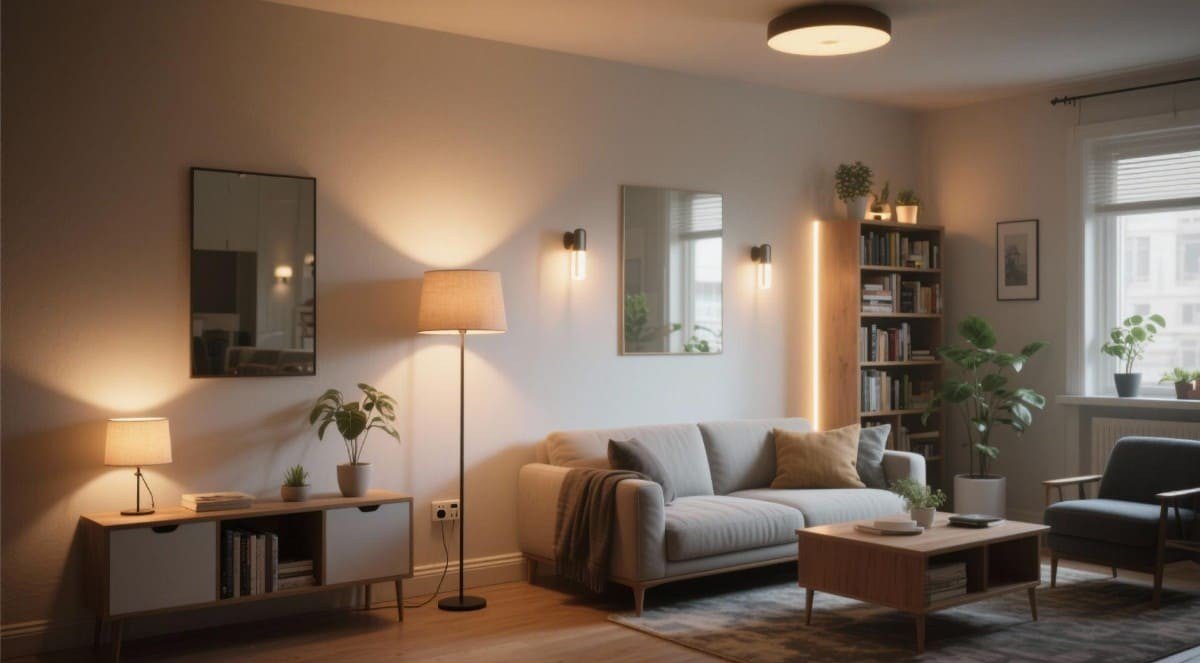
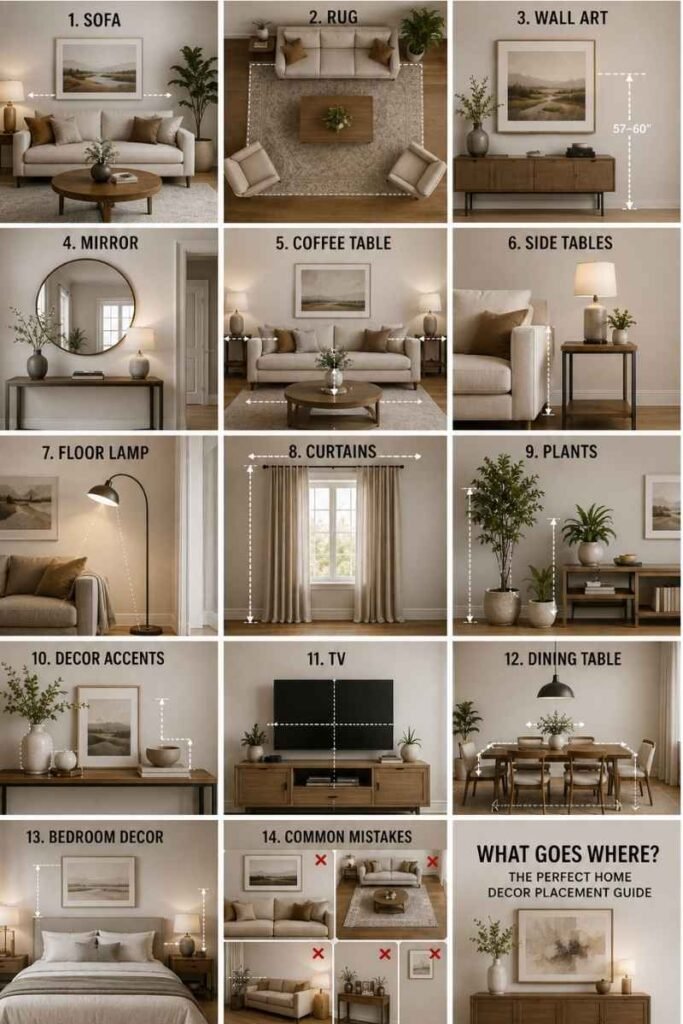
Decorating a home is not only about choosing beautiful furniture and accessories. Where you place each piece can completely change how a room looks and feels. A beautiful rug can look awkward if it is too small, artwork can feel disconnected when hung too high, and even a stylish sofa can make a room feel cramped when it is positioned incorrectly.
The good news is that you don’t need to be a professional interior designer to get the placement right. With a few simple rules for furniture placement, wall decor, rugs, mirrors, lighting, curtains, and accessories, you can create a home that feels balanced, comfortable, and thoughtfully designed.
1. Where Should the Sofa Go?
The sofa is usually the largest piece of furniture in a living room, so it should be the starting point for your layout.
Instead of automatically pushing your sofa against the wall, consider leaving a little breathing room behind it when the room allows. Position the sofa so it faces the main focal point, such as a TV unit, fireplace, large window, or statement wall.
Keep enough space around the sofa for comfortable movement and make sure the seating arrangement encourages conversation rather than pointing everything toward one direction.
Placement tip: Start with the sofa, then build the rest of the living room around it.
2. Where Should the Rug Go?
A rug should visually connect the furniture rather than sit like a small island in the middle of the room.
In a living room, a larger rug that reaches under the front legs of the sofa and chairs usually creates a more connected seating area. In larger rooms, placing all the furniture completely on the rug can create an even more grounded look.
For a bedroom, position the rug so it extends beyond the sides and foot of the bed. In a dining room, the rug should be large enough for chairs to remain on it even when pulled away from the table.
Avoid: choosing a rug that is so small that none of the main furniture touches it.
3. Where Should Wall Art Be Hung?
Wall art should feel connected to the furniture underneath it.
For artwork above a sofa, console table, or bed, choose a size that feels proportional to the furniture rather than using a tiny frame on a large empty wall. Large statement artwork is currently being favored over collections of very small, disconnected pieces.
As a general rule, hang artwork around eye level and leave a comfortable visual gap between the artwork and the furniture below.
Placement tip: If you have to look upward to comfortably view the center of the artwork, it may be hanging too high.
4. Where Should a Mirror Go?
Mirrors work best when they reflect something attractive or useful.
Place a mirror opposite or near a window to bounce natural light around the room. A large mirror above a console can also create an elegant entryway focal point.
For a small room, an oversized mirror can help create the feeling of more openness without adding visual clutter.
Best spots: Entryways, above consoles, beside windows, dressing areas, and narrow walls.
5. Where Should the Coffee Table Go?
The coffee table should be close enough to the sofa to be practical but far enough away to leave comfortable legroom.
Keep the table centered with the main seating arrangement whenever possible. Its size should also relate to the sofa and surrounding chairs.
A very small coffee table can make a large sofa arrangement feel disconnected, while an oversized table can make movement difficult.
Simple rule: Think about both appearance and everyday use before deciding on the final position.
6. Where Should Side Tables Go?
Side tables belong where they can actually be used.
Place one beside the sofa or accent chair so that drinks, books, lamps, or everyday items are within easy reach. The height should generally work comfortably with the arm of the seating beside it.
Instead of filling every empty corner with a table, focus on creating useful surfaces where they are genuinely needed.
7. Where Should Floor Lamps Go?
A floor lamp is perfect for filling a dark corner or creating a cozy reading area.
Place it beside a sofa, lounge chair, or reading nook rather than randomly in an empty corner. The lamp should provide useful light without blocking walkways.
Layered lighting also helps a room feel warmer and more inviting than relying on a single overhead fixture.
Try combining:
- Ceiling lighting for general illumination
- Floor or table lamps for task lighting
- Accent lighting for atmosphere
8. Where Should Curtains Be Hung?
Curtains can dramatically affect how tall and spacious a room feels.
Instead of mounting the curtain rod directly above the window frame, consider placing it higher and allowing the curtains to fall close to the floor. This can visually emphasize the height of the room.
Choose a curtain width that allows the fabric to frame the window rather than looking stretched across it.
Placement tip: Floor-length curtains usually create a more polished and elegant appearance.
9. Where Should Plants Go?
Plants should add life without becoming obstacles.
Large plants work beautifully in empty corners, beside sofas, near windows, or next to furniture pieces that need a little softness. Smaller plants can sit on shelves, consoles, coffee tables, or sideboards.
Use different heights rather than placing every plant at the same level. This creates more natural visual layering.
Avoid: placing too many plants together just to fill empty space.
10. Where Should Decorative Accessories Go?
Small decor pieces look better when they are grouped intentionally.
Instead of spreading candles, vases, books, and small objects across every surface, create small styled arrangements using different heights and textures.
For example, a console can feature:
- One taller vase
- A medium-sized decorative object
- A stack of books
- One small accent piece
The goal is to create visual interest without making the surface look crowded.
11. Where Should the TV Go?
The TV should be positioned where it can be viewed comfortably from the main seating area.
Avoid placing it on a wall where strong sunlight creates constant glare. The TV wall should also have enough visual breathing room so that the surrounding decor doesn’t compete with the screen.
If you’re using a TV unit, balance the unit with a few carefully selected accessories rather than filling every shelf.
12. Where Should the Dining Table Go?
The dining table should have enough clearance around it for people to pull out chairs and move comfortably.
If the dining area is part of an open-plan room, use the table, rug, lighting, or pendant fixture to visually define the dining zone.
A pendant light centered above the table can make the dining area feel intentional and complete.
13. Where Should Bedroom Decor Go?
The bed should remain the visual anchor of the bedroom.
Place artwork, a mirror, or a decorative wall feature above the headboard rather than randomly around the room. Bedside tables should sit close enough to be practical, while lamps can add symmetry and soft evening lighting.
A bedroom should feel calm rather than overloaded, so leave some negative space around major furniture pieces.
14. The 5 Biggest Placement Mistakes to Avoid
Even expensive furniture can look wrong when the proportions are off. Watch out for these common mistakes:
1. Artwork that is too high
It can make the wall and furniture feel disconnected.
2. Rugs that are too small
A tiny rug can make a large seating arrangement look scattered.
3. Furniture pushed against every wall
This can leave the center of the room feeling empty while making the perimeter crowded.
4. Too many small accessories
Decorating every surface can create visual clutter.
5. Ignoring the walking path
A beautiful room still needs to be comfortable and functional.
Final Thoughts
The secret to beautiful home decor isn’t simply buying more things. It’s knowing what goes where.
Start with the largest pieces, create a clear furniture layout, choose rugs and artwork according to scale, add lighting in layers, and finish with a few meaningful accessories. When every element has a purpose and enough breathing room, your home naturally feels more balanced and expensive.
Remember: good placement can make ordinary decor look extraordinary.