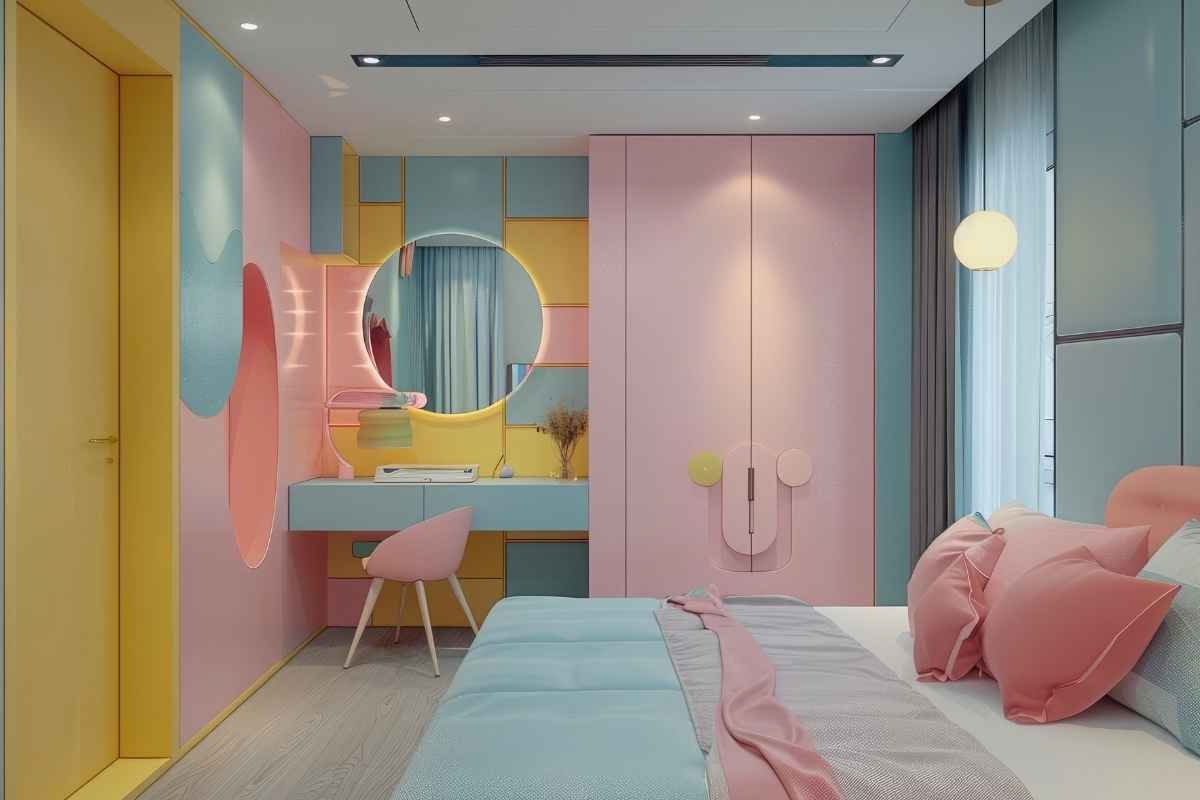
The right wall color can completely change the way a bedroom feels. A soft neutral can make the room look calm and sophisticated, while a muted pastel can add a dreamy and refreshing touch without making the space feel overwhelming.
If you are planning to refresh your bedroom but don’t want a major renovation, changing the wall color is one of the easiest ways to create a noticeable transformation. From soft mocha and mushroom taupe to sage green, dusty blue, and butter yellow, today’s bedroom color trends are all about creating spaces that feel comfortable, personal, and effortlessly beautiful.
Here are 15 beautiful bedroom wall colors and the unique vibe each one can bring to your space.
1. Mocha Beige — Cozy & Sophisticated

Mocha beige is a beautiful choice if you want your bedroom to feel warm, elegant, and inviting without using a very dark shade. Its soft brown undertone gives the walls a little more depth than traditional beige while keeping the room light and comfortable.
Pair mocha beige walls with cream bedding, natural wood furniture, woven textures, and soft white curtains. A few brass or brushed-gold accents can make the room feel even more polished. This shade works especially well in bedrooms inspired by modern, minimalist, organic, or quiet-luxury interiors.
Best vibe: Cozy, sophisticated, and effortlessly elegant.
2. Mushroom Taupe — Soft & Refined

Mushroom taupe sits beautifully between beige and gray, making it a versatile wall color for a modern bedroom. It has a subtle earthy quality that makes the space feel relaxed without looking plain.
Use this shade with ivory bedding, light oak furniture, linen curtains, and simple artwork. Because mushroom taupe is understated, it allows furniture and textures to stand out while maintaining a cohesive look.
If you want a bedroom that feels expensive without relying on bold colors, this is an excellent option.
Best vibe: Refined, peaceful, and understated.
3. Sage Green — Calm & Natural
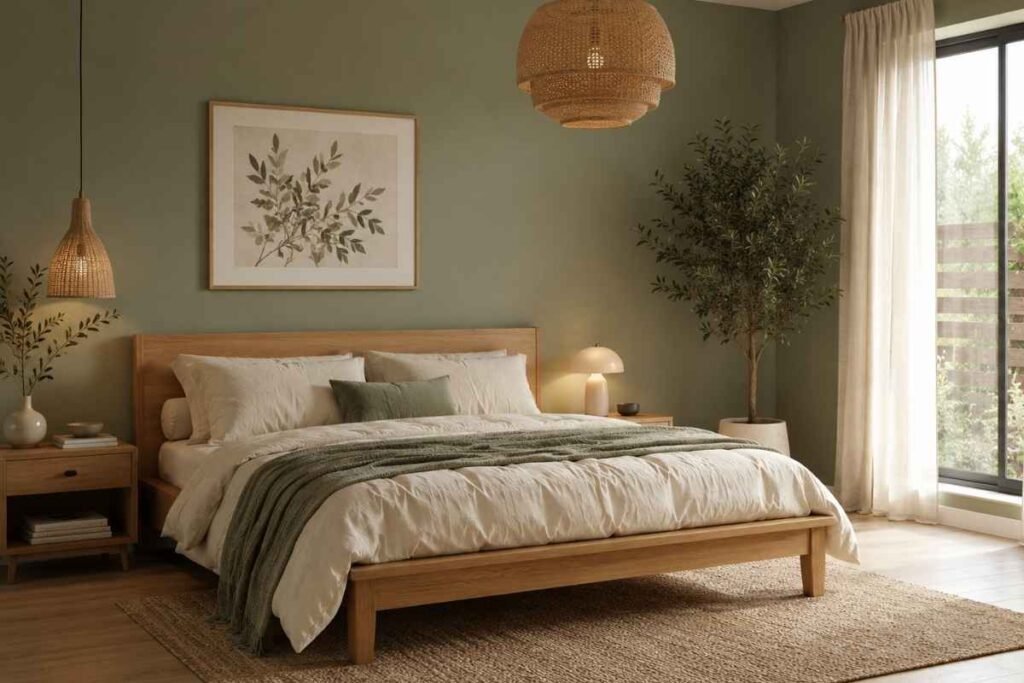
Sage green continues to be a favorite for bedrooms because of its soft connection to nature. Unlike brighter greens, a muted sage feels gentle and sophisticated, making it easy to live with.
For a relaxed bedroom, combine sage walls with warm white bedding, wooden furniture, cream curtains, and natural textures such as rattan or linen. You can also add small botanical details to reinforce the natural feeling without making the room look overly themed.
Sage green is especially beautiful when natural daylight enters the room.
Best vibe: Calm, fresh, and nature-inspired.
4. Dusty Blue — Peaceful & Airy
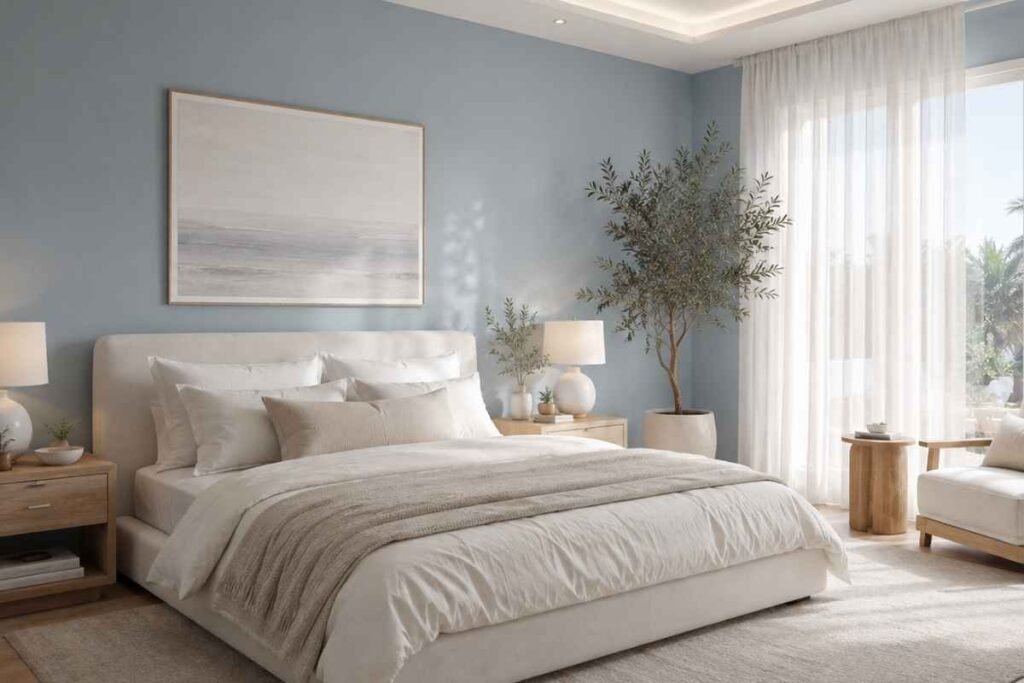
Dusty blue is perfect when you want your bedroom to feel peaceful and light. Its muted quality keeps the color sophisticated rather than overly bright, while the cool undertone creates an airy atmosphere.
Try pairing dusty blue walls with white or ivory bedding, light wood furniture, soft beige rugs, and sheer curtains. For a more contemporary look, add simple black or brushed-metal details in small amounts.
This shade works beautifully in both small and large bedrooms because it can make the space feel open and relaxed.
Best vibe: Serene, airy, and restful.
5. Warm Greige — Modern & Timeless

Warm greige combines the softness of beige with the modern character of gray. It is one of those colors that can instantly make a bedroom feel more polished without demanding too much attention.
Style warm greige walls with creamy whites, natural wood, oatmeal textiles, and minimal decorative pieces. Layering slightly different neutral tones will keep the room from feeling flat.
This is a particularly good choice if you love minimalist bedrooms but still want your space to feel warm and comfortable rather than stark.
Best vibe: Modern, minimal, and timeless.
6. Soft Olive — Earthy & Relaxed
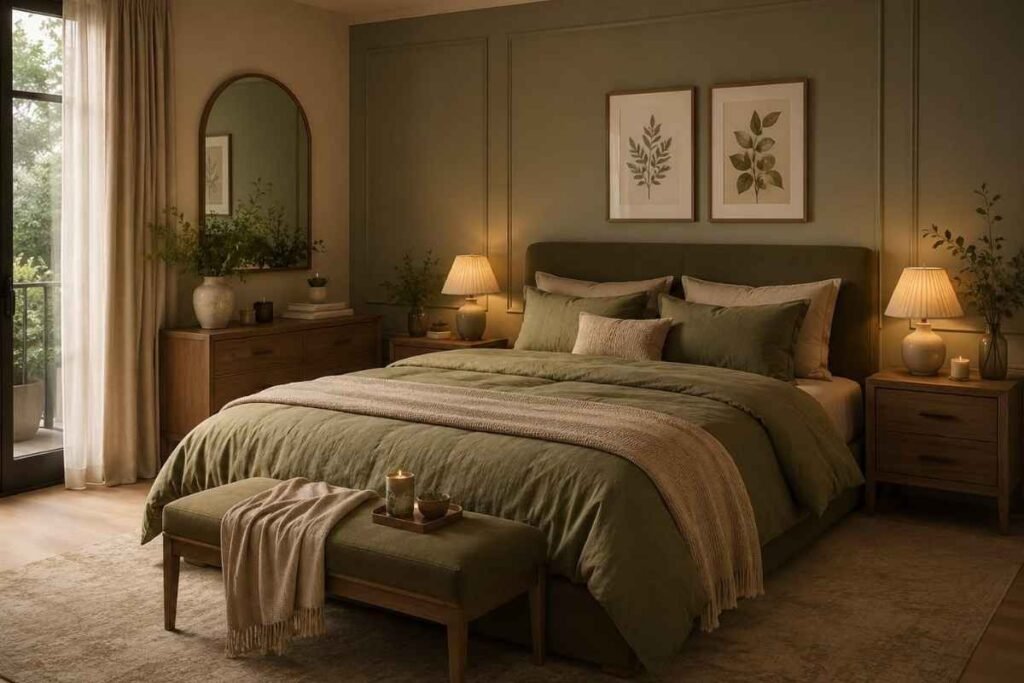
Soft olive is a muted green that adds personality while remaining gentle enough for a bedroom. It creates an earthy atmosphere and works especially well with natural materials.
Pair it with cream, warm beige, light wood, and off-white accents. Linen bedding and woven accessories can make the space feel even more relaxed.
Instead of covering every wall, you can also use soft olive on one feature wall behind the bed and keep the remaining walls neutral.
Best vibe: Earthy, grounded, and relaxed.
7. Terracotta Beige — Warm & Artistic

If you love earthy interiors but don’t want a strong orange wall, terracotta beige offers a softer alternative. It brings warmth and character to the bedroom while maintaining a sophisticated appearance.
Complement the walls with cream bedding, beige upholstery, natural wood, woven baskets, and handmade-looking ceramics. Small touches of muted rust or dusty peach can bring the palette together.
This shade is especially attractive in bedrooms with natural textures and plenty of soft fabrics.
Best vibe: Warm, artistic, and inviting.
8. Butter Yellow — Cheerful & Soft

Butter yellow is a lovely way to introduce color without making a bedroom feel too bright. Unlike strong yellow, this creamy version feels soft and subtle.
Use it with white bedding, pale wood furniture, cream curtains, and delicate neutral accessories. If you want the room to feel modern, keep the rest of the palette simple and avoid combining too many bright colors.
Butter yellow works particularly well in bedrooms where you want a little more personality and natural-looking brightness.
Best vibe: Cheerful, soft, and uplifting.
9. Dusty Mauve — Romantic & Sophisticated
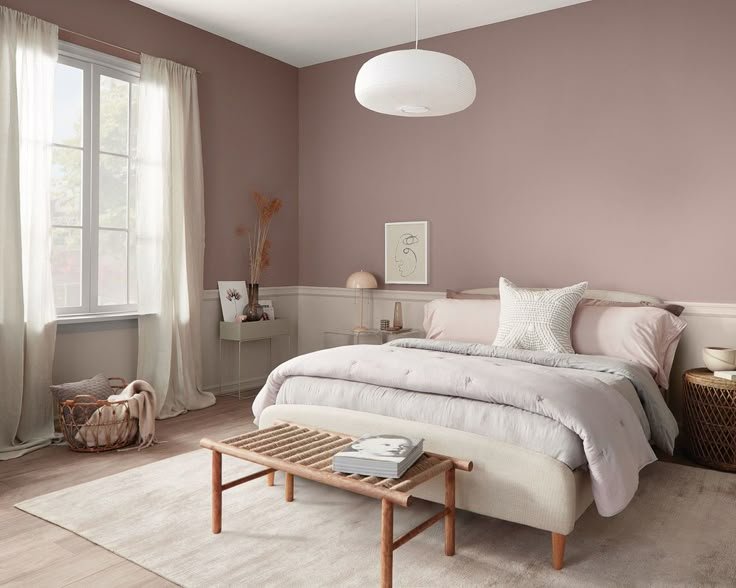
Dusty mauve offers a beautiful balance between pink, purple, and neutral tones. It adds a romantic quality to the bedroom while still feeling mature and elegant.
Pair dusty mauve walls with cream, beige, soft brown, or warm white. Upholstered furniture, linen bedding, curved shapes, and subtle metallic details can enhance its sophisticated character.
For a dreamy bedroom, use the shade behind the headboard and keep the remaining elements simple and neutral.
Best vibe: Romantic, delicate, and sophisticated.
10. Clay Beige — Organic & Cozy

Clay beige has a subtle earthy undertone that makes a bedroom feel connected to natural materials. It is softer than many brown-based shades and works beautifully in spaces inspired by organic interiors.
Combine it with warm white, natural oak, woven textures, cotton bedding, and handmade decorative pieces. Keep the styling relaxed rather than overly polished.
This color is a great option if you want your bedroom to feel peaceful and lived-in while still looking thoughtfully designed.
Best vibe: Organic, cozy, and understated.
11. Soft Peach — Fresh & Welcoming

Soft peach can instantly give a bedroom a gentle and welcoming personality. Its warm undertone works especially well in rooms with plenty of daylight.
Instead of pairing it with strong pinks or oranges, combine soft peach with cream, ivory, beige, and light wood. This creates a sophisticated palette that feels fresh without becoming overly colorful.
Soft peach can also look beautiful with simple white bedding and delicate decorative accents for a light, airy bedroom.
Best vibe: Fresh, gentle, and welcoming.
12. Creamy White — Bright & Luxurious
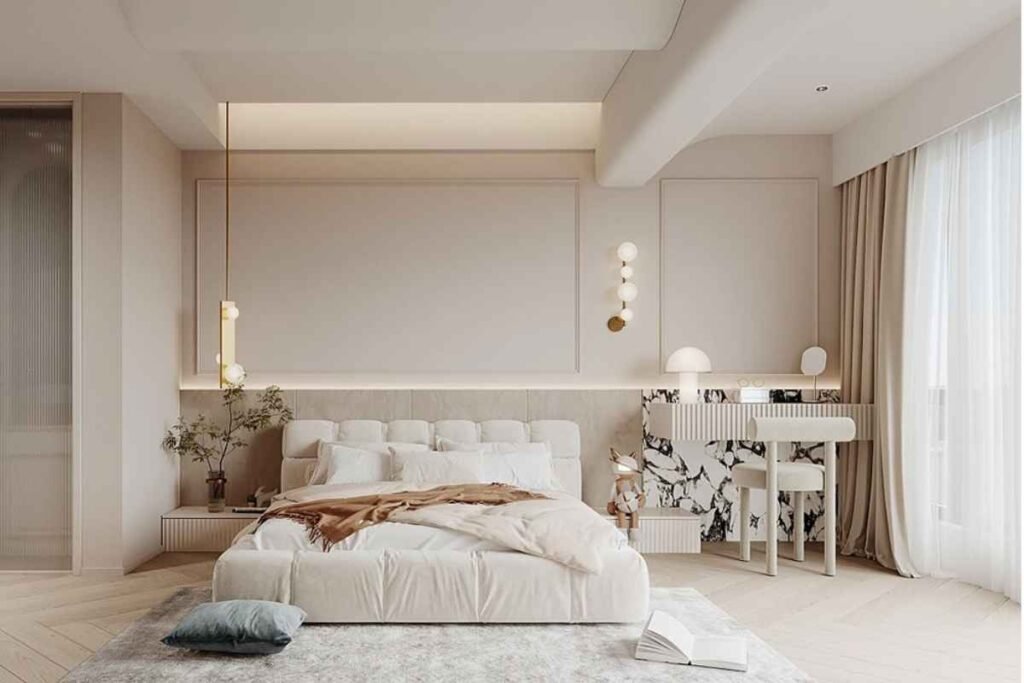
Creamy white is a classic choice, but it doesn’t have to look boring. The key is choosing a warmer white rather than a stark, cool white.
A creamy white wall creates a beautiful backdrop for layered textures. Add beige bedding, boucle or linen fabrics, light wood, soft rugs, and a few carefully chosen decorative pieces.
The result can feel bright and spacious while still being warm and luxurious. It is also an excellent option if you like changing your bedroom accessories frequently because almost everything works with it.
Best vibe: Bright, peaceful, and polished.
13. Oatmeal — Warm & Effortlessly Chic

Oatmeal is a soft neutral with a cozy, natural appearance. It brings warmth to the walls without becoming visually heavy, making it ideal for bedrooms where relaxation is the priority.
Pair oatmeal walls with ivory bedding, cream curtains, pale wood, textured rugs, and subtle brown accents. Layering different fabrics is particularly important with neutral colors because texture adds visual interest.
If you love simple interiors that look expensive without being overly decorated, oatmeal can create exactly that feeling.
Best vibe: Warm, serene, and effortlessly chic.
14. Pale Pistachio — Fresh & Soothing

Pale pistachio is a softer alternative to traditional green. Its delicate green tone brings freshness into the bedroom while keeping the overall look light and playful.
Style it with warm white, cream, pale beige, or light oak. Simple bedding and minimal accessories help keep the color sophisticated.
It is a great option for anyone who wants something a little different from beige or white while still maintaining a calm bedroom atmosphere.
Best vibe: Fresh, soothing, and subtly playful.
15. Soft Powder Blue — Dreamy & Tranquil

Soft powder blue creates a gentle, dreamy atmosphere that works beautifully in bedrooms. Its light tone can make the walls feel airy while giving the room more personality than plain white.
Pair it with warm white bedding, cream textiles, pale wood, and soft beige accents. Sheer curtains can enhance the airy effect, especially when the bedroom receives plenty of daylight.
For an elegant look, keep the accessories simple and let the wall color become the main visual feature.
Best vibe: Dreamy, tranquil, and airy.
How to Choose the Right Bedroom Wall Color
Choosing a beautiful color is only part of the process. The same shade can look completely different depending on your bedroom’s lighting, furniture, and size.
Consider Natural Light
Look at how much natural light your bedroom receives throughout the day. Soft colors such as creamy white, pale pistachio, powder blue, and butter yellow can work beautifully in rooms with limited light, while earthy neutrals can add warmth to brighter spaces.
Think About Your Furniture
Your wall color should work with your existing furniture. If you have light wood furniture, earthy greens, warm neutrals, and soft blues can create a cohesive look. If your furniture is mostly cream or beige, you can experiment with muted colors for more contrast.
Decide on the Mood First
Before choosing a paint color, decide how you want the bedroom to feel.
Want a cozy bedroom? Try mocha beige, oatmeal, or clay beige.
Want a calm retreat? Try sage green, dusty blue, or powder blue.
Want an elegant bedroom? Try mushroom taupe, warm greige, or creamy white.
Want a soft and dreamy space? Try dusty mauve, soft peach, or pale pistachio.
Don’t Forget the Ceiling & Trim
A beautiful wall color can look even better when the trim and ceiling complement it. Warm white is usually a safe choice for soft, earthy, and muted bedroom palettes.
Easy Ways to Make Your Bedroom Wall Color Look Better
The paint color is important, but styling around it makes the biggest difference.
- Use layered bedding in two or three complementary shades.
- Add curtains that are slightly lighter or darker than the wall.
- Choose furniture finishes that complement the wall undertone.
- Use rugs and cushions to introduce texture.
- Hang one large artwork instead of filling every wall with small frames.
- Add soft bedside lighting to enhance the color at night.
- Keep some empty space so the bedroom doesn’t feel visually crowded.
Common Bedroom Wall Color Mistakes to Avoid
Choosing a Color Without Testing It
Always test a paint shade on the actual wall before committing. Lighting can change how the color appears throughout the day.
Ignoring Undertones
Two beige shades may look completely different because one has a pink undertone while another has a yellow or gray undertone. Check the undertone before pairing it with furniture and textiles.
Using Too Many Colors
A bedroom doesn’t need lots of different colors to look interesting. Choose one main wall color and build the rest of the room around two or three complementary shades.
Forgetting the Rest of the Room
Your wall color should connect with the flooring, furniture, bedding, curtains, and lighting. Looking at the wall alone can make it difficult to imagine the finished room.
Final Thoughts
The perfect bedroom wall color isn’t necessarily the most popular shade—it’s the one that creates the feeling you want every time you walk into your room. Soft neutrals can make the space feel sophisticated, muted greens can create a natural retreat, dusty blues can bring calmness, while gentle peach, mauve, and butter yellow can add personality without overwhelming the room.
Whether you’re giving your bedroom a complete makeover or simply refreshing one wall, choosing the right shade can make a surprisingly big difference.
Save this guide for your next bedroom makeover and explore more beautiful home styling ideas on NimraBloom.