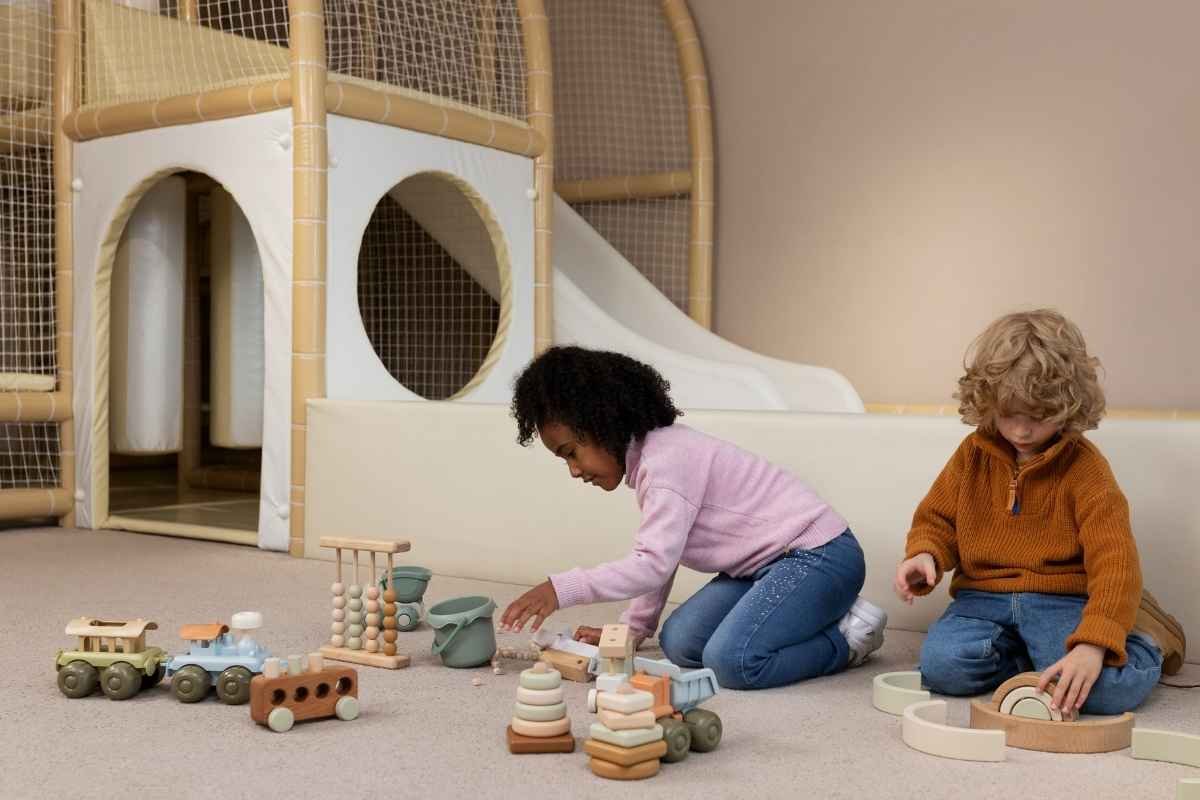
Creating a fun play area for kids doesn’t require an entire room. Even the smallest corner, unused wall, awkward nook, or space beneath the stairs can become a creative place for children to play, read, build, and imagine. With smart furniture, compact storage, and a little creativity, you can design a play space that feels exciting without making your home feel crowded. From cozy reading corners and mini activity stations to hidden toy storage and imaginative play zones, these 25 creative kids play area ideas for small spaces will help you make every inch count.
1. Window-Side Play Corner
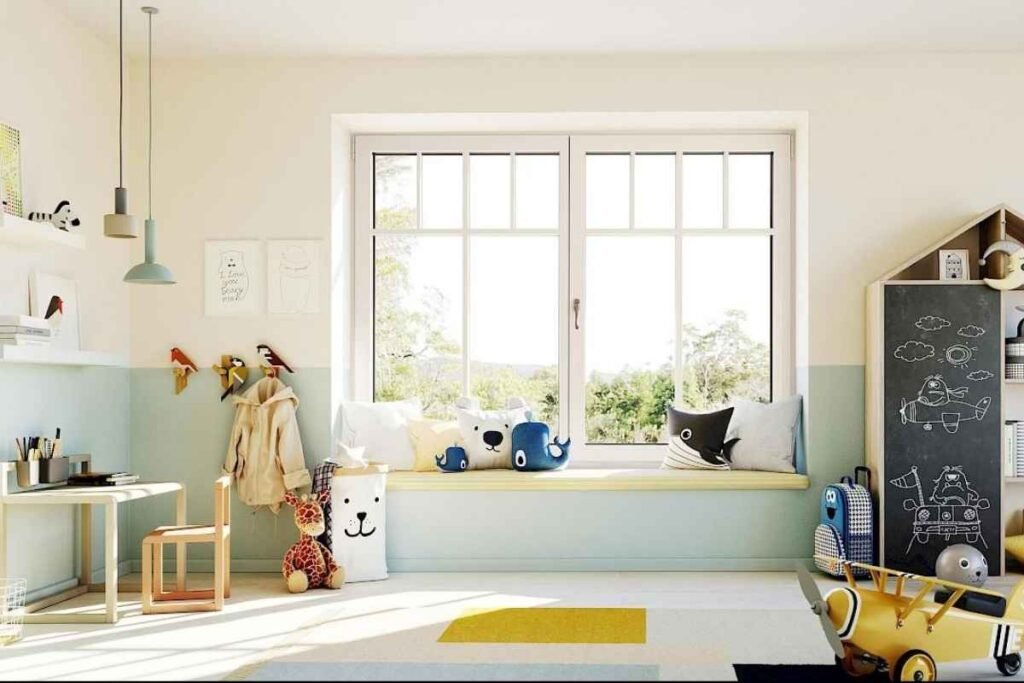
Turn an unused spot beside a window into a bright little play corner. A low floor mattress, washable rug, a few cushions, and a basket of favorite toys can create a comfortable area without taking much floor space. Natural daylight makes the corner feel cheerful during the day, while a small wall light keeps it usable later. Keep furniture low and leave enough open floor for children to move, build, draw, or play independently.
2. Built-In Under-Stairs Play Nook
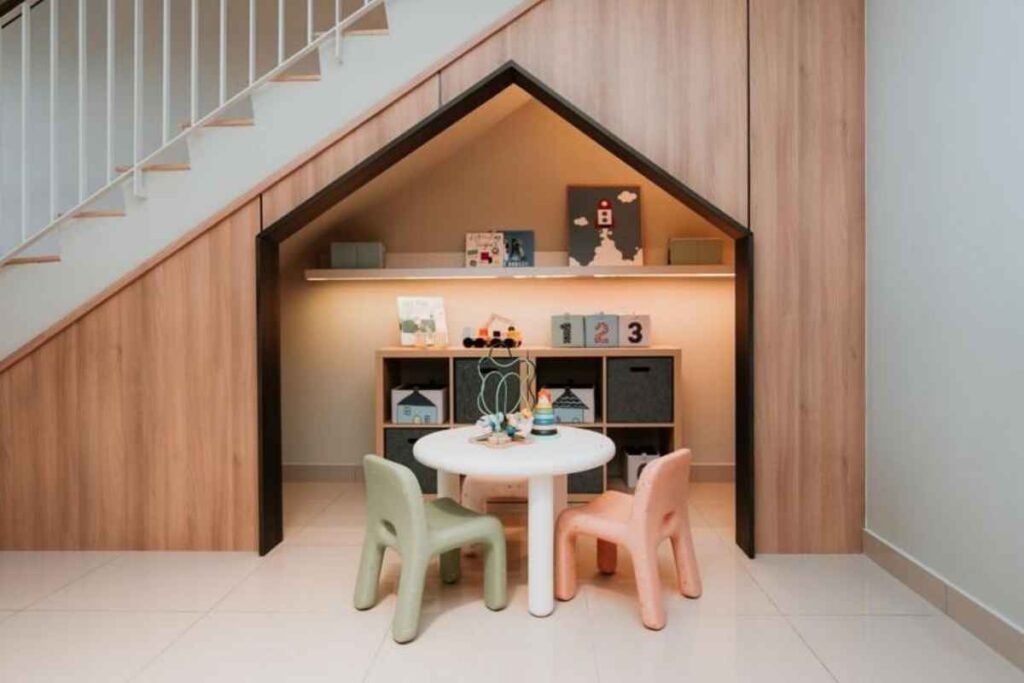
The space beneath a staircase can become one of the most useful small play areas in a home. Add a cushioned bench, compact book ledges, baskets, and a soft rug to create a dedicated retreat. The enclosed shape naturally gives children a cozy hideaway while keeping the main room open. Under-stair play spaces are also useful for combining reading, pretend play, and toy storage in one compact location.
3. Mini Teepee Reading Zone
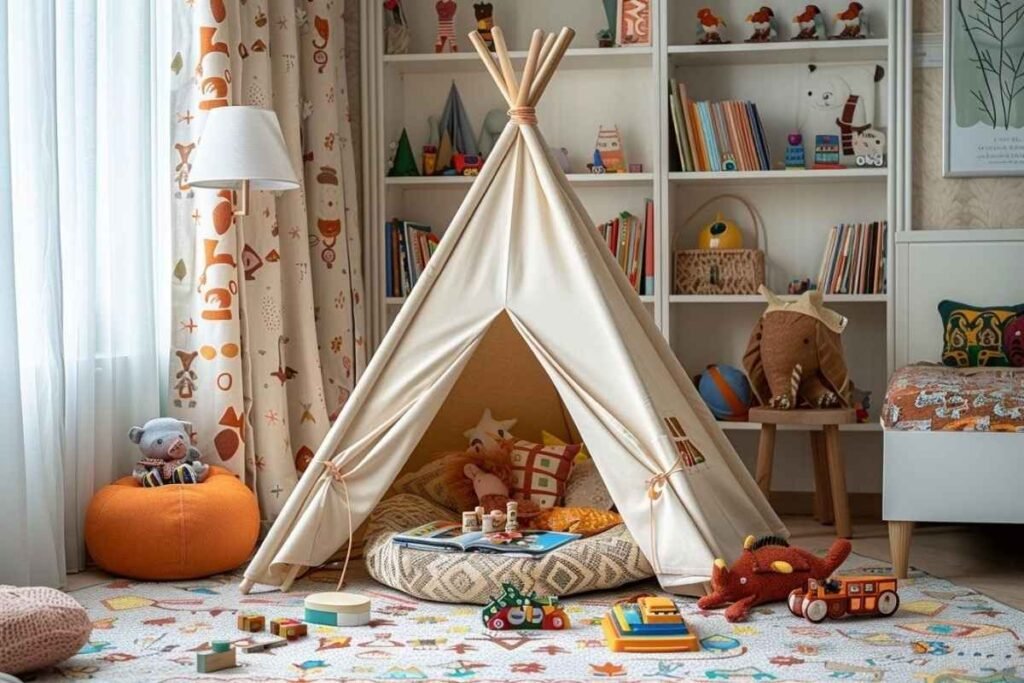
A small teepee can instantly define a play zone without requiring built-in furniture. Place it on a round rug with two or three floor cushions and a small basket of books. Choose a neutral canvas tent for a modern room or a playful patterned version for a colorful bedroom. Because the tent can be folded or moved when necessary, it works particularly well in apartments, shared bedrooms, or family living rooms where the play area needs to remain flexible.
4. Wall-Mounted Art & Play Station
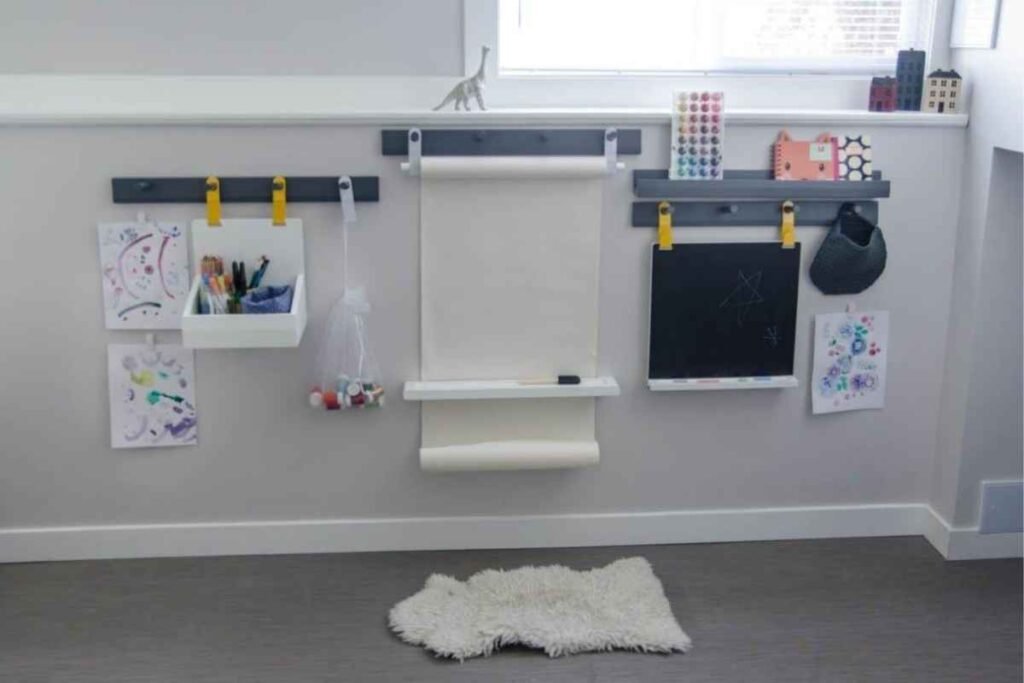
When floor space is limited, move the activity zone onto the wall. A narrow wall-mounted desk with a small chair can become a drawing, coloring, or puzzle station. Install shallow shelves above it for crayons, paper, magnetic tiles, and craft supplies. Choose containers that are easy for children to reach so they can put materials away themselves. A fold-down desk is another smart option because it can disappear against the wall when the activity is finished.
5. Cozy Book Nook Corner
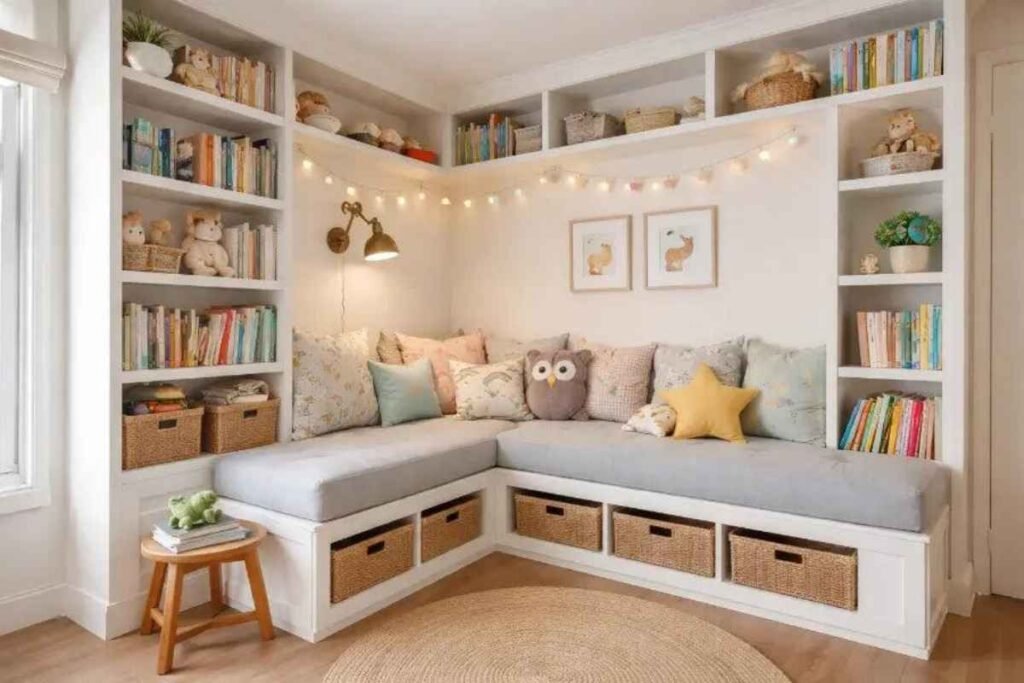
Create a dedicated reading zone using just one corner of the room. A soft floor cushion or narrow bench can provide seating, while forward-facing book ledges make favorite stories easy to see and reach. Add a small rug underneath to visually separate the nook from the rest of the room. Keeping the design simple prevents the area from feeling crowded. A tiny reading light or wall-mounted lamp can make the corner feel especially inviting.
6. Fold-Away Play Table
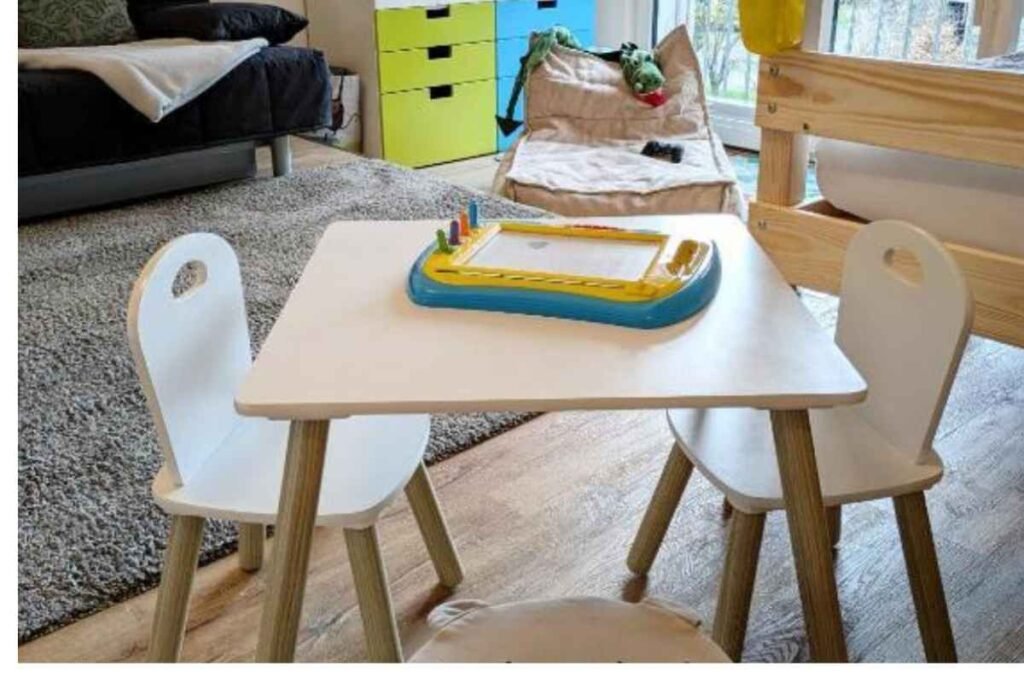
A fold-away activity table is ideal when one room has to serve several purposes. During playtime, it can become a surface for puzzles, blocks, crafts, or pretend cooking. Once the activity is finished, fold it against the wall to recover valuable floor space. Pair it with a lightweight child-sized stool that can slide underneath or hang nearby. This setup is especially practical in apartments and multipurpose family rooms where permanent children’s furniture may feel too bulky.
7. Under-Bed Play Zone
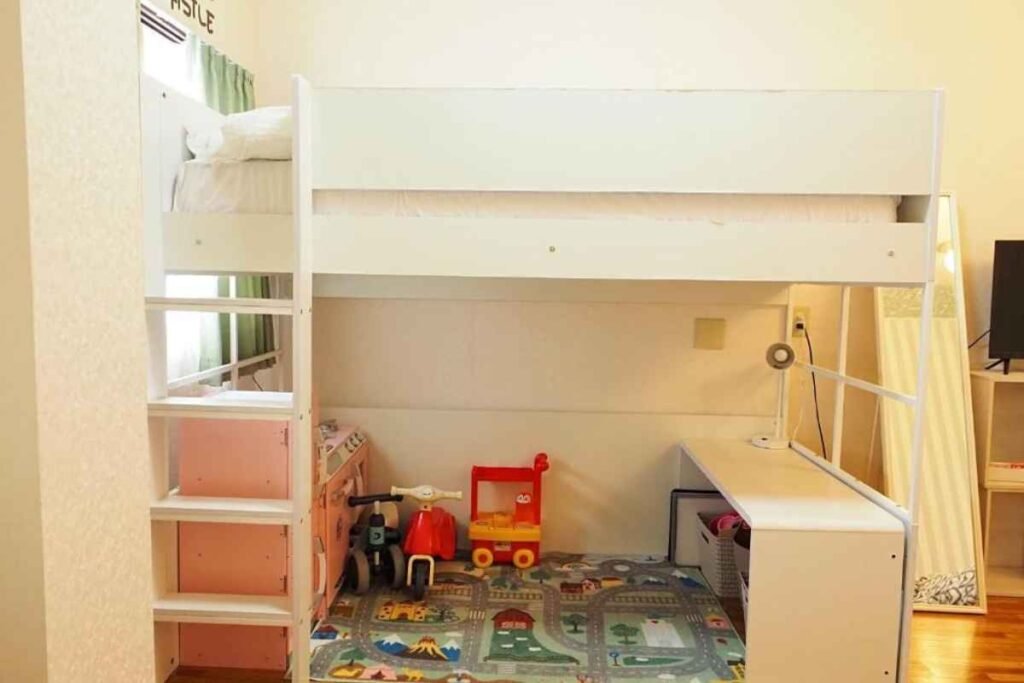
A lofted or raised bed can create a surprisingly useful play zone underneath. Instead of leaving the lower area empty, add a washable rug, floor cushions, a small table, or a pretend-play setup. Curtains can make the space feel like a private hideaway while still allowing it to open completely when needed. This approach gives children a dedicated play area without taking additional floor space from the bedroom.
8. Compact Pretend Kitchen Corner
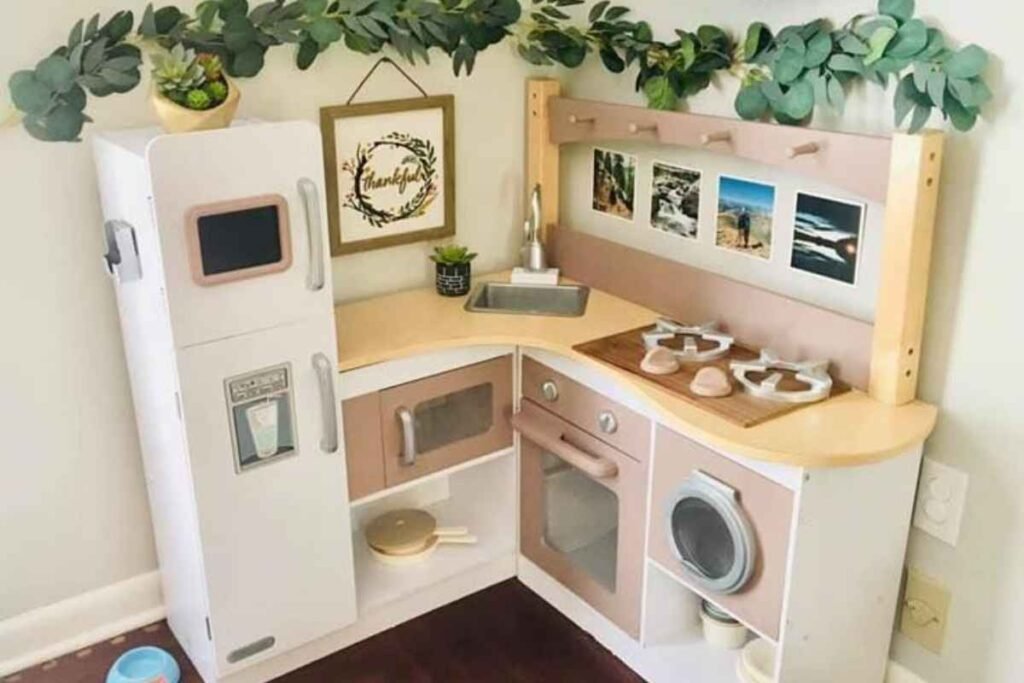
A miniature play kitchen doesn’t need an entire playroom. Choose a narrow wooden unit that fits against one wall and add a small shelf above it for pretend dishes, food, or baskets. A washable mat underneath defines the play zone while protecting the floor during busy sessions. Keep the surrounding wall relatively open so the area feels airy. This setup works particularly well in dining rooms, bedrooms, or living spaces where a full-size play kitchen would overwhelm the room.
9. Closet-to-Playroom Transformation
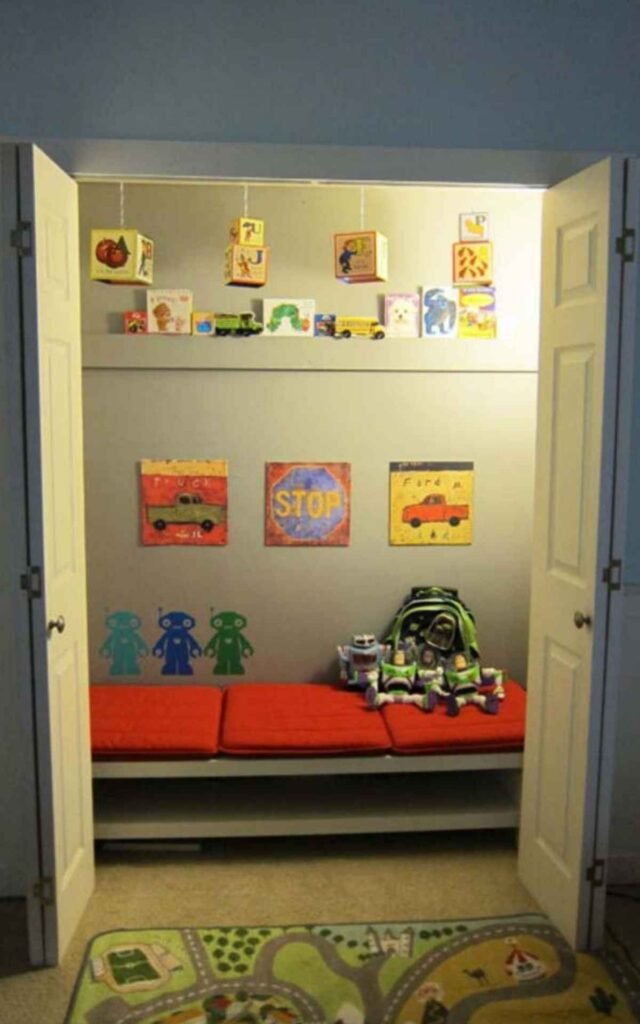
An unused or oversized closet can become a tiny private playroom. Remove unnecessary storage components and introduce a soft rug, low shelves, cushions, and a small amount of lighting. The existing walls provide natural boundaries, so you don’t need extra furniture to define the area. Keep the doorway open or use a simple curtain instead of a solid door to make supervision easier. This idea is especially useful when a home has no dedicated playroom.
10. Corner Climbing Wall
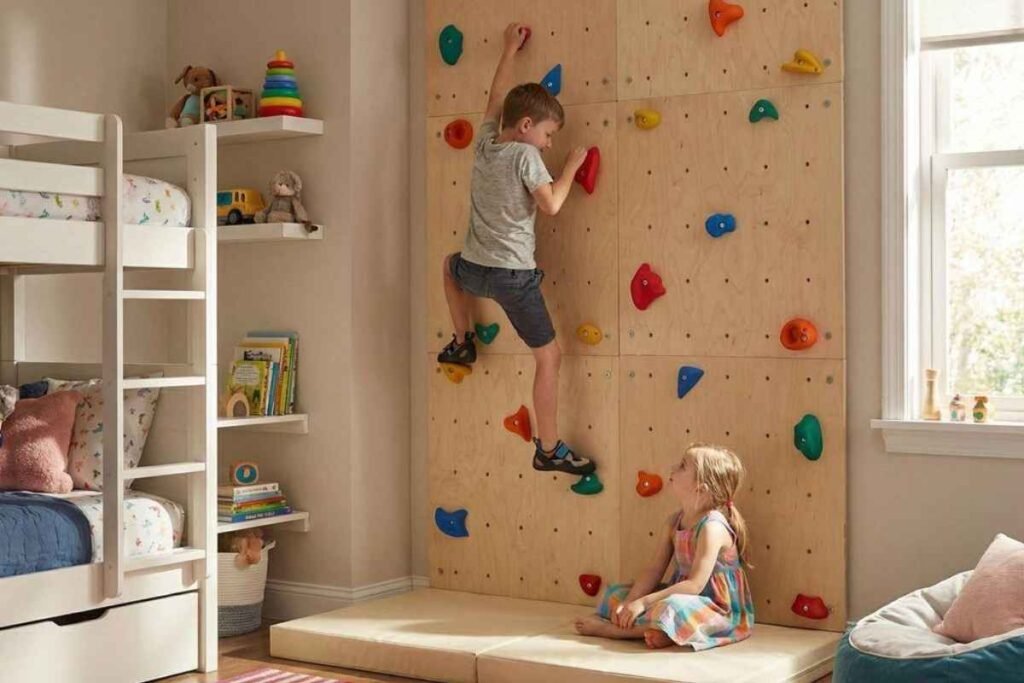
For families who want active play without a large indoor playground, a compact climbing wall can use vertical space instead of valuable floor area. A dedicated panel can fit into a small section of a playroom or bedroom, with a suitable padded landing surface below. Keep the surrounding area clear and have the equipment professionally installed according to its specifications. Climbing walls can add a completely different type of activity to a small play area.
11. Montessori-Style Floor Play Area
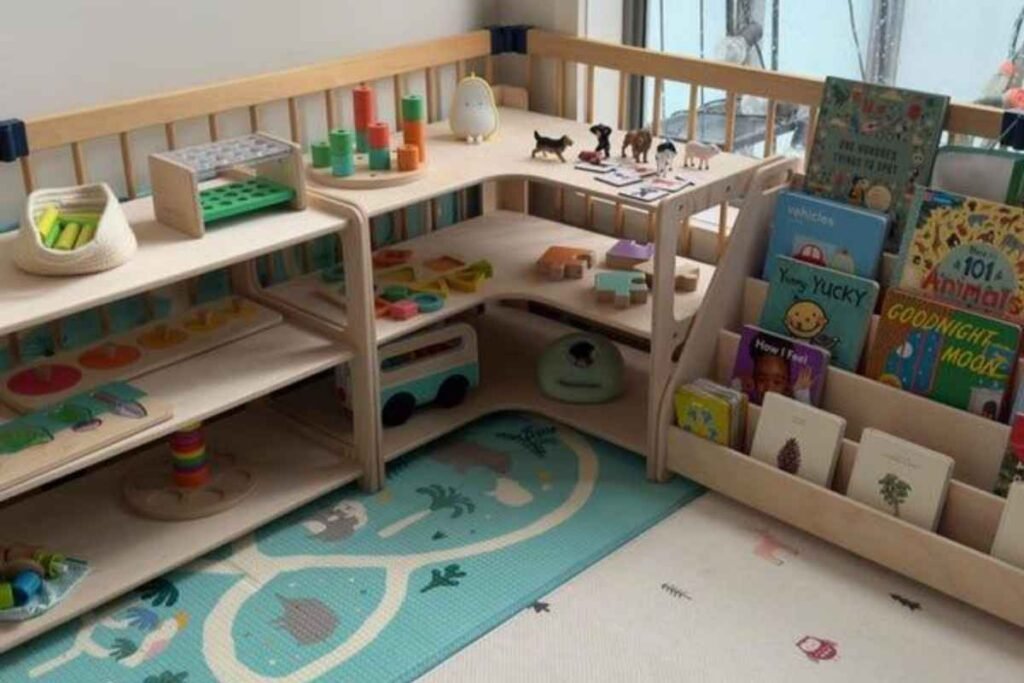
A simple floor-based setup can be both beautiful and practical. Place a low-pile rug in one corner and surround it with a few low shelves containing carefully selected toys. Wooden blocks, puzzles, stacking toys, and pretend-play pieces can be rotated rather than displaying everything at once. Keeping the shelves low allows children to see and access their choices independently. The result is a calm play area that uses very little furniture while still encouraging hands-on activities.
12. Hidden Toy Storage Play Zone
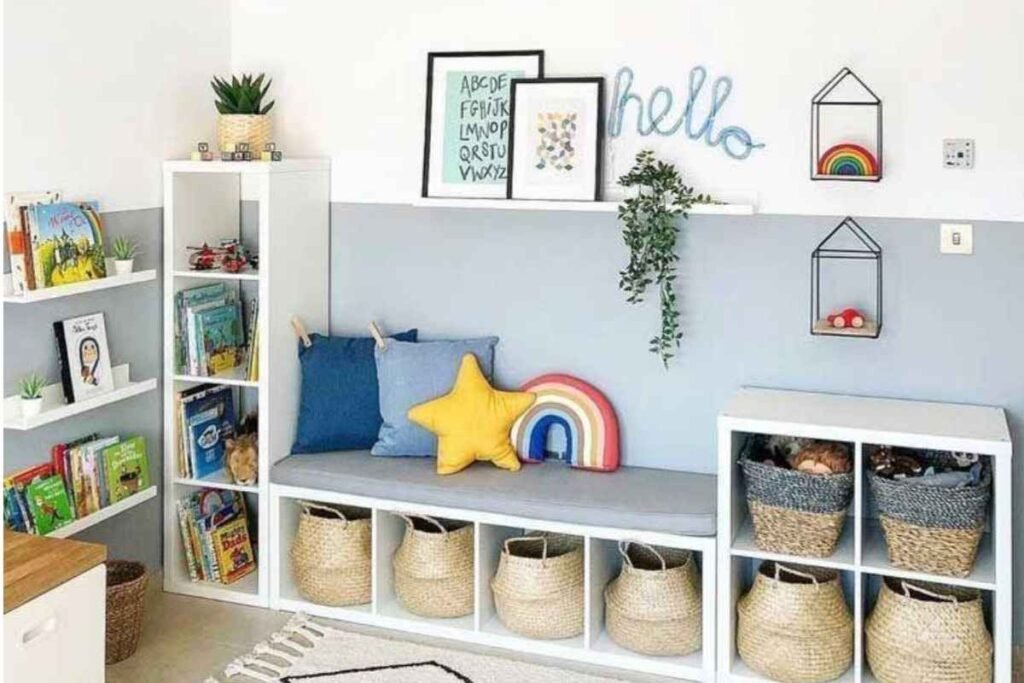
Combine play and organization by placing closed storage directly around a small activity zone. Low cabinets can hide larger toys, while a few open baskets keep frequently used items accessible. A soft rug in front of the cabinets creates enough space for building blocks, dolls, or floor games. This arrangement is particularly useful in shared family spaces because toys can disappear behind cabinet doors when playtime ends, keeping the room visually calmer.
13. Tiny Indoor Slide Zone
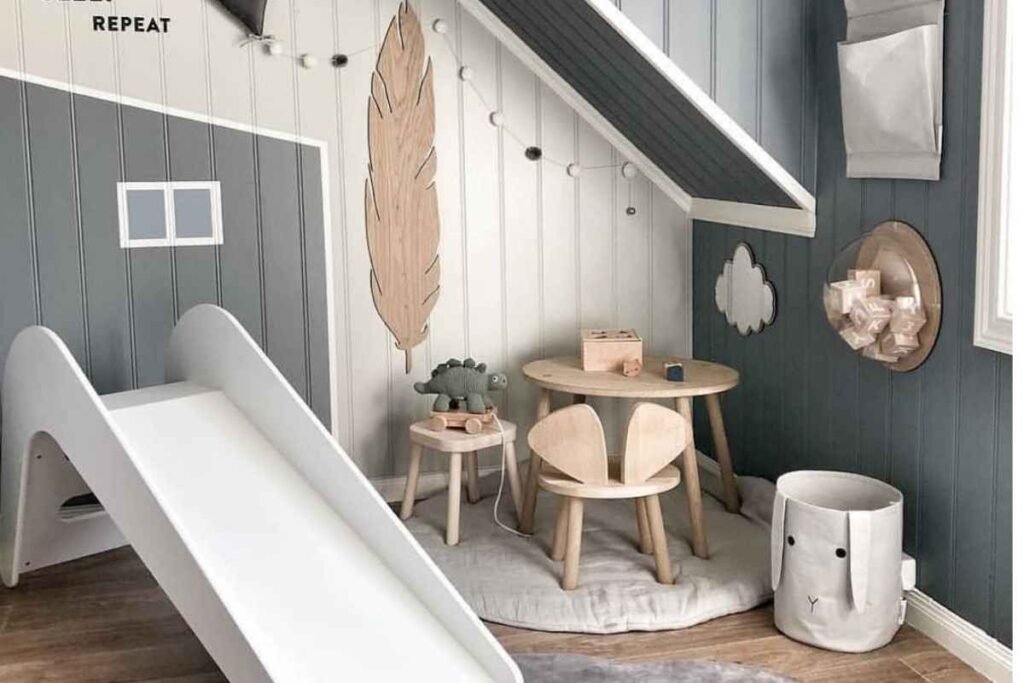
A compact indoor slide can become the main feature of a small play corner without requiring a full playground structure. Look for a proportionally sized design that leaves a clear landing area and doesn’t obstruct doors or walkways. Place a thick play mat around the activity zone and keep nearby furniture minimal. The rest of the corner can remain simple, with a basket of soft toys or books providing quieter activities when children want a break from active play.
14. Wall-to-Wall Drawing Corner
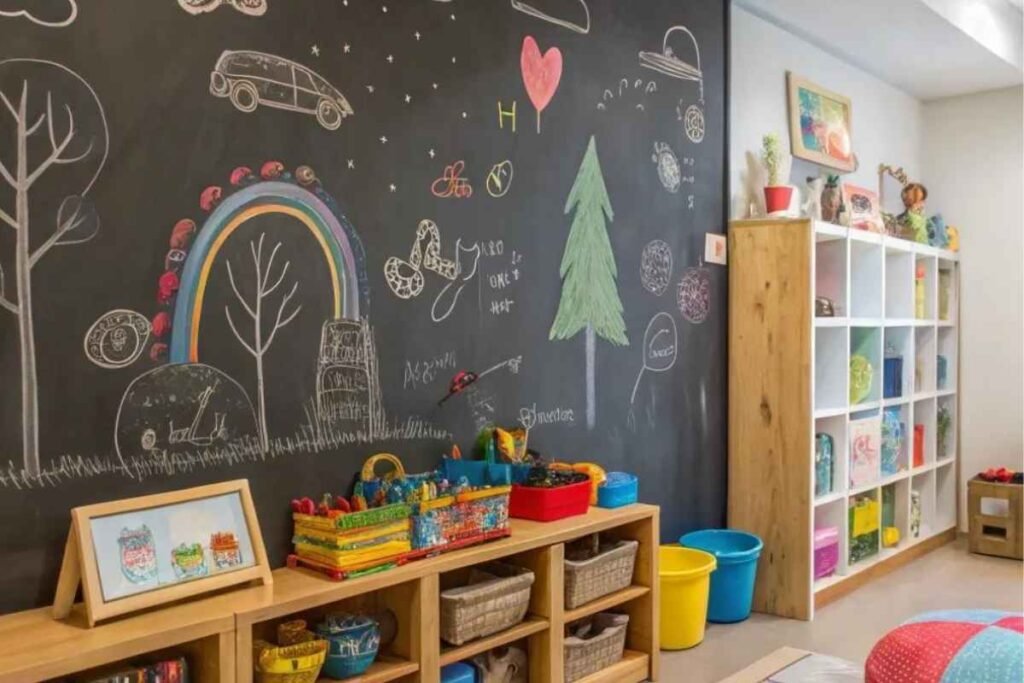
Give a small wall a creative purpose by turning part of it into a drawing surface. A chalkboard panel, magnetic board, or washable whiteboard can provide hours of changing artwork without needing a large desk. Place a narrow shelf underneath for chalk, markers, paper, and magnetic pieces. A small stool can slide underneath when it isn’t being used. This idea is especially helpful in compact rooms because most of the play function comes from the wall rather than the floor.
15. Reading Bench With Storage
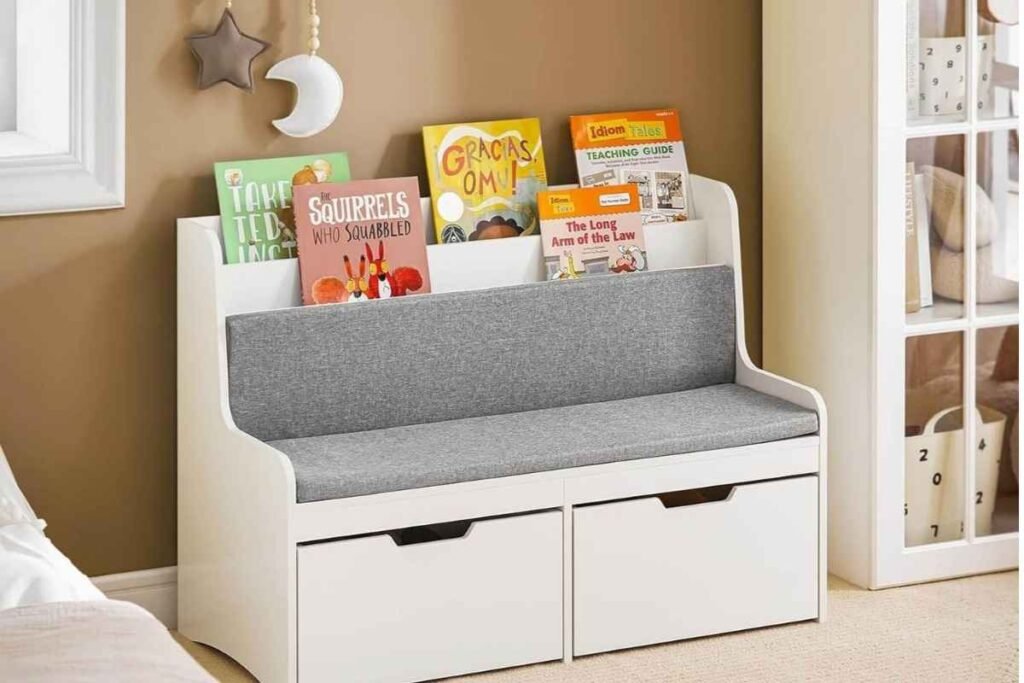
A storage bench can perform two jobs in a very small footprint. Use the top as a comfortable reading seat and the interior for stuffed animals, puzzles, blankets, or toys. Add a few cushions and install a narrow bookshelf nearby to complete the corner. If the bench sits below a window, it can become an especially pleasant reading retreat. Built-in versions can be designed to follow the exact dimensions of an awkward corner.
16. Small Indoor Fort Corner
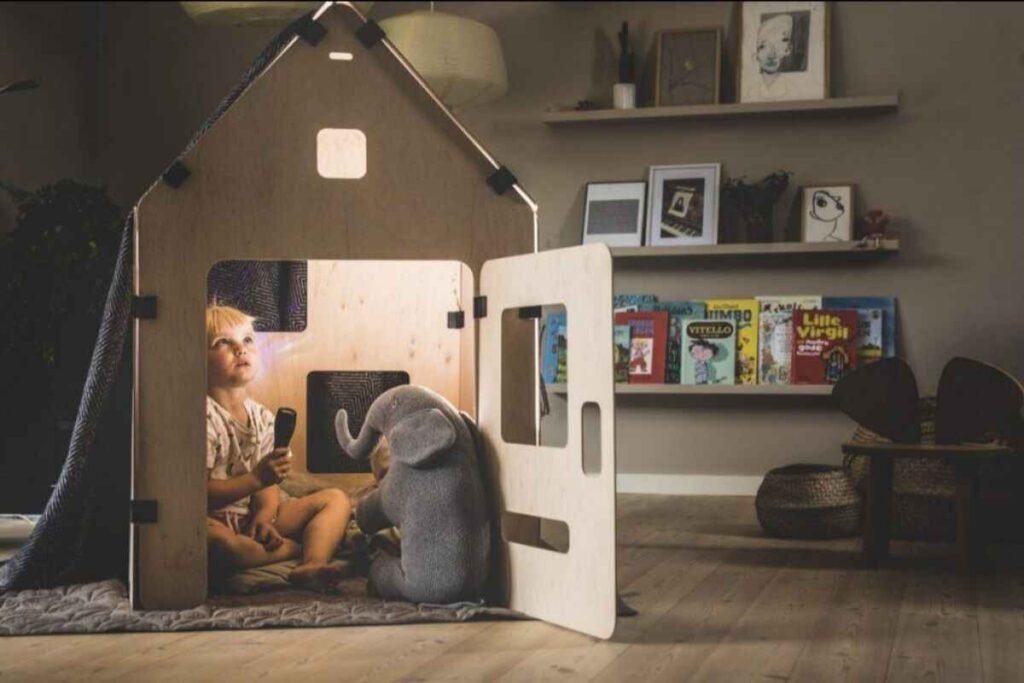
Children don’t need a large room for imaginative fort play. Create a permanent little fort using a simple canopy, lightweight fabric, floor mattress, and a few cushions. Keep the decor uncomplicated so the space can easily transition from a hideaway to a reading corner or quiet play zone. A small basket beside the fort can hold books and soft toys. Choose breathable materials and keep cords or decorative elements safely out of children’s reach.
17. Compact LEGO & Building Station
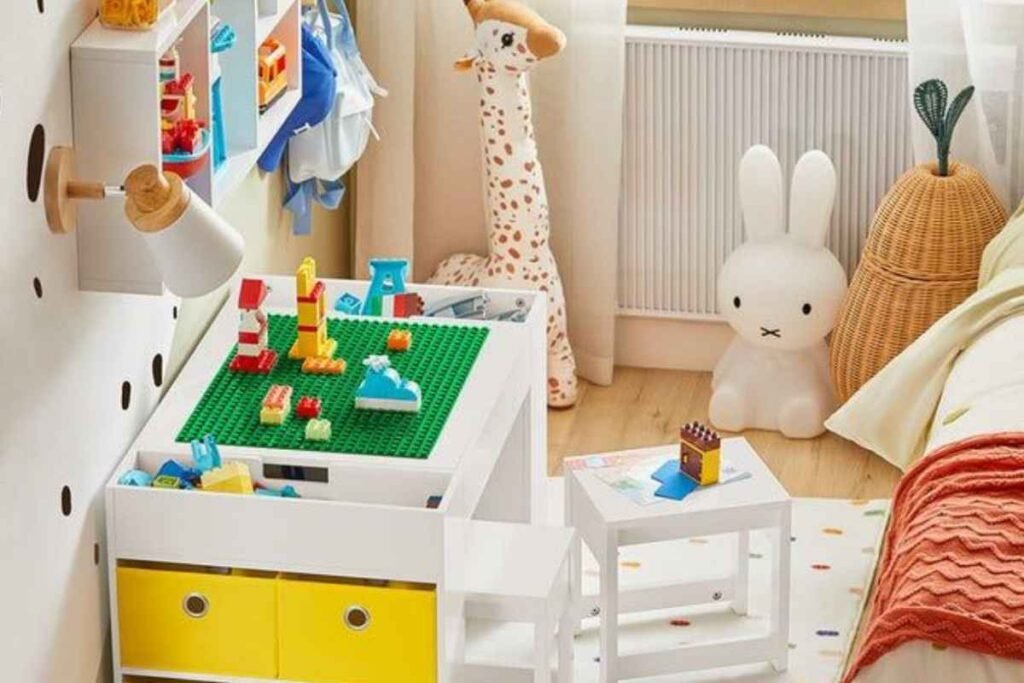
A narrow activity table can give children a dedicated place for LEGO, magnetic tiles, blocks, and construction sets. Choose a table with drawers underneath so pieces can be stored immediately after play. A small wall shelf can display favorite creations without using additional floor space. For particularly tiny rooms, a portable building tray works well because it can be moved to another surface when needed. This keeps construction play organized while allowing the room to serve multiple purposes.
18. Stair-Landing Play Corner
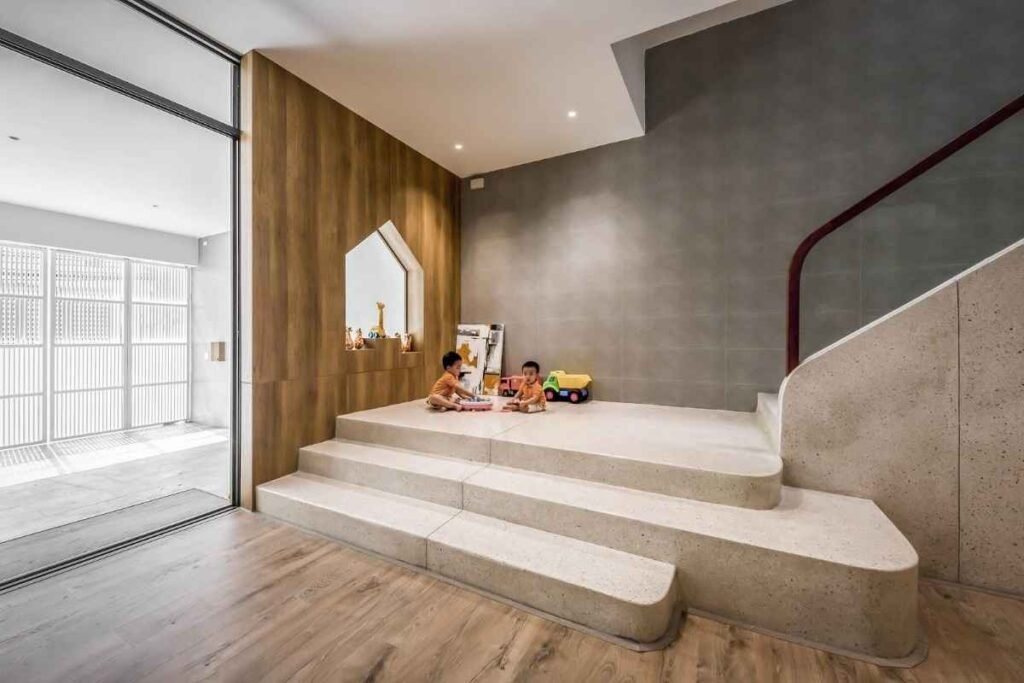
A wide stair landing or hallway corner can become a compact play destination when the main rooms are already full. Add a small washable rug, a low basket for toys, and perhaps a narrow book display. Keep the circulation path completely clear so the play zone doesn’t interfere with people moving through the home. This works particularly well for quieter activities such as reading, puzzles, drawing, and pretend play rather than large movement-based toys.
19. Small Window Seat Play Nook
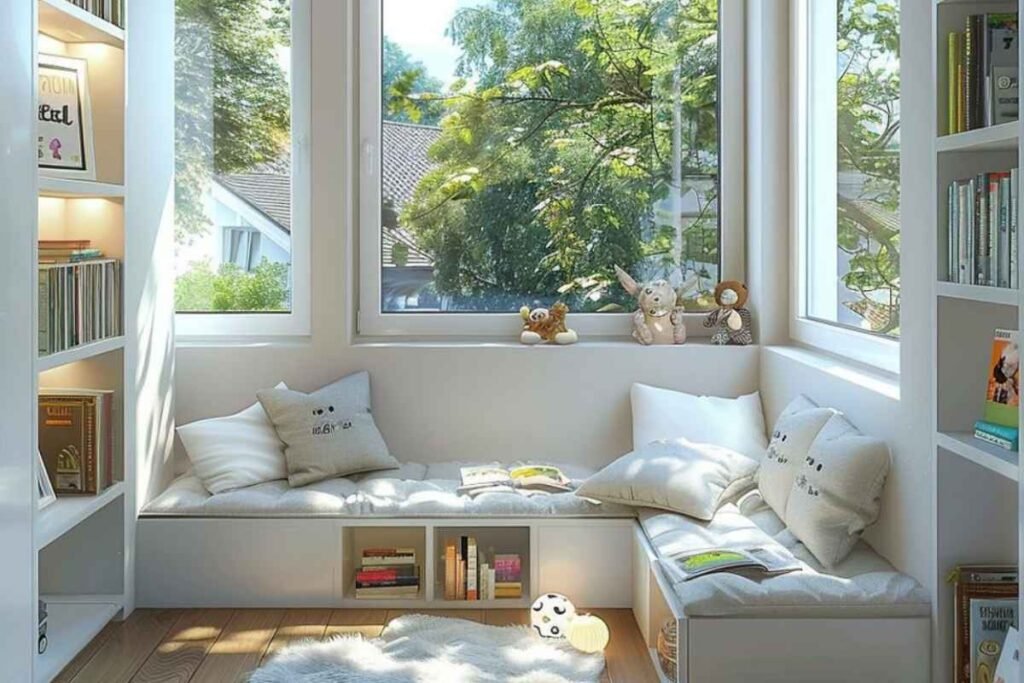
A window seat can become more than a place to sit. Add a washable cushion, a few soft pillows, and a small basket underneath for books or favorite toys. The surrounding floor can remain open for puzzles and quiet games. If the window receives strong sunlight, use suitable blinds or curtains to make the area more comfortable. A window-based play nook is particularly attractive because it creates a defined children’s zone without adding a large piece of furniture.
20.Tiny Dollhouse Station
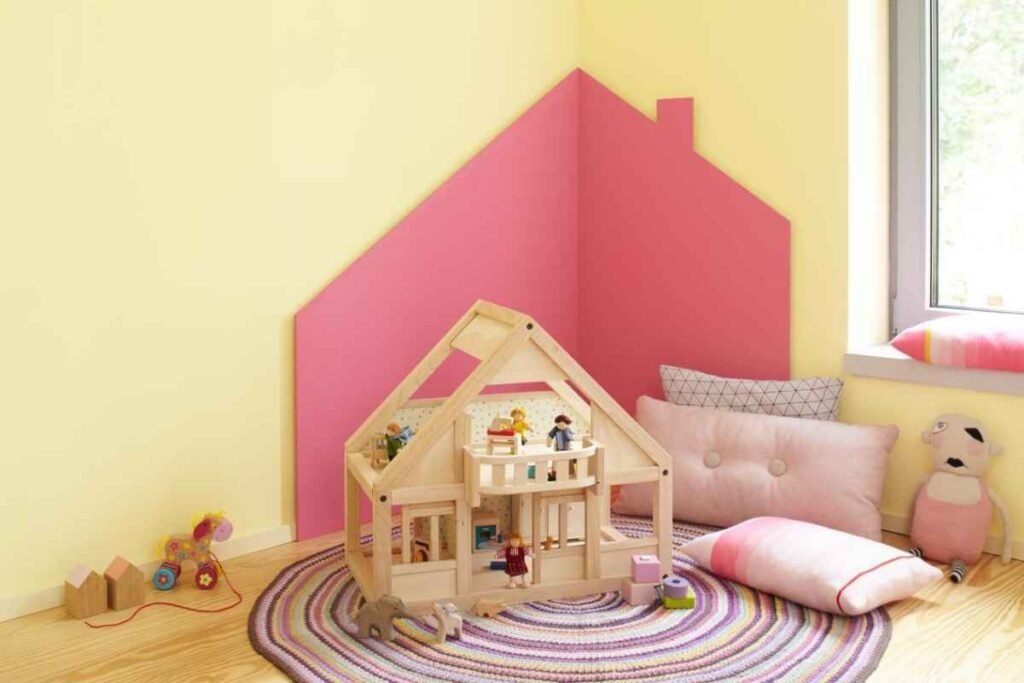
A dollhouse can be the centerpiece of a very small play zone. Instead of placing it on a large table, use a narrow console, wall-mounted shelf, or compact cabinet at an appropriate height. Add a small basket underneath for miniature accessories and dolls. This keeps everything together rather than spreading tiny pieces throughout the room. A simple rug underneath can visually define the station while leaving enough surrounding floor for children to sit and play comfortably.
21. Soft Ball Pit Corner
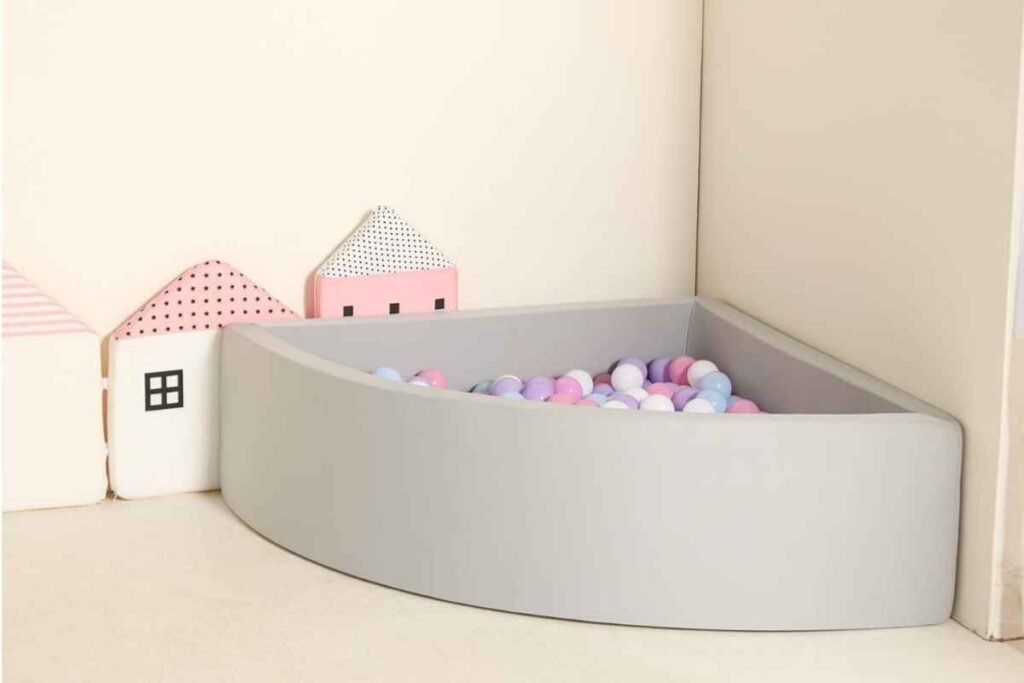
A compact ball pit can turn an otherwise unused corner into an energetic play zone. Choose a smaller soft-sided design rather than a large commercial-style structure, especially when floor space is limited. Keep the surrounding furniture minimal and use a padded floor underneath if appropriate for the product. When the ball pit isn’t being used, the corner can be visually softened with a storage basket or neutral rug. This gives children an active option without dedicating an entire room to play.
22. Under-Stair Activity Table
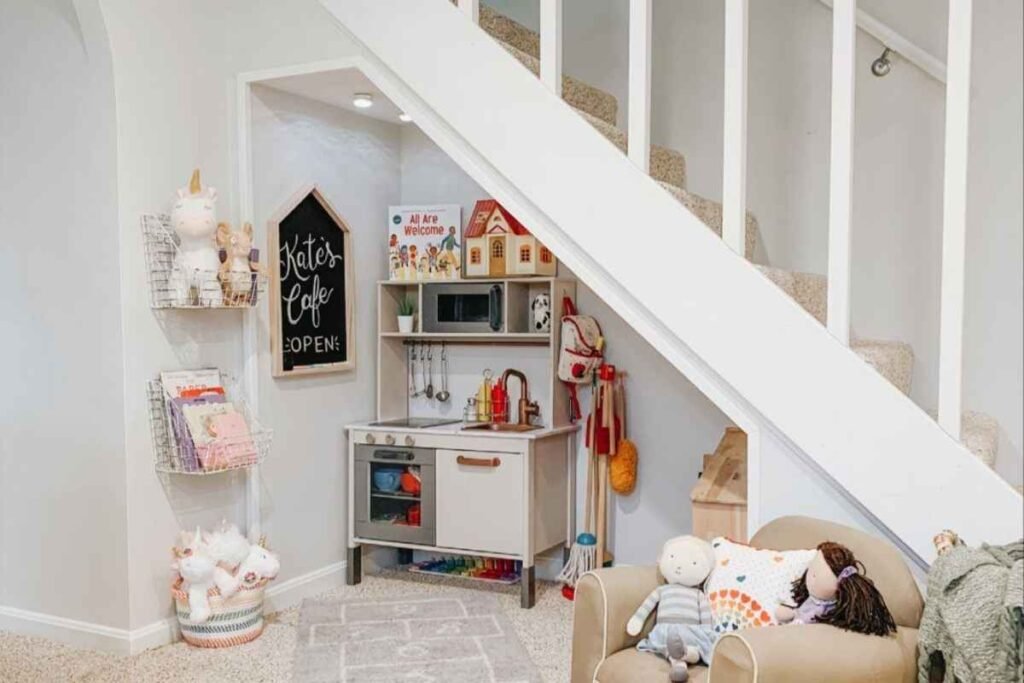
Instead of turning the entire area beneath a staircase into a lounge, use its footprint for a compact activity station. A low table can fit beneath the higher section while baskets slide underneath for supplies. Add wall-mounted book ledges or shallow shelves where the ceiling height allows. This approach makes excellent use of an otherwise difficult architectural area. Similar under-stair spaces are often used for children’s reading, play, and accessible storage.
23. Neutral Minimal Play Corner
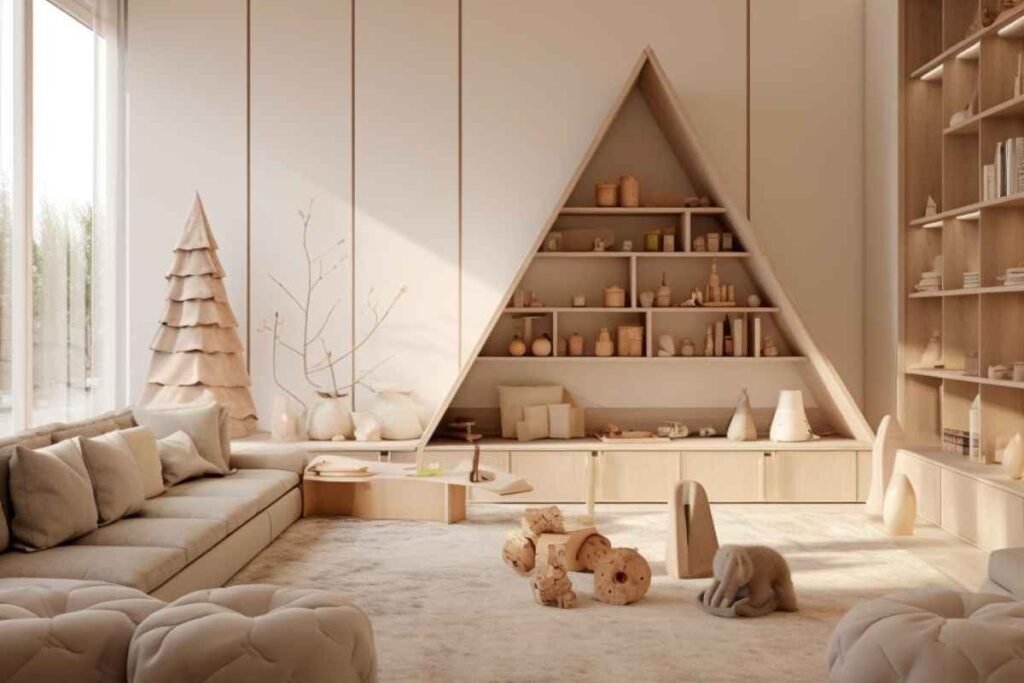
A play area doesn’t have to be brightly colored to feel exciting. Use a neutral rug, light wood storage, a few textured cushions, and carefully selected toys to create a calm corner that blends with the rest of the home. Introduce color through books, artwork, blocks, and small accessories that can easily be changed. This is a good solution for open-plan homes where parents want children’s belongings to feel integrated rather than visually separated from the main interior.
24. Mini Climbing & Movement Zone
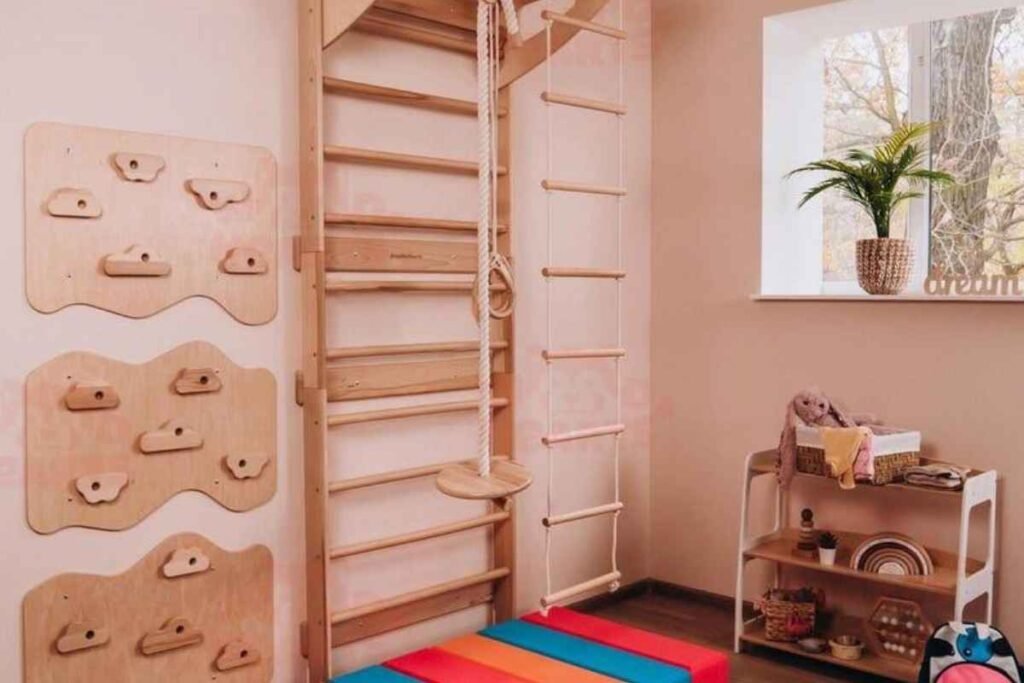
Use vertical and compact equipment to create a movement-focused play zone without filling the room with bulky playground pieces. A small climbing structure, balance element, or age-appropriate movement setup can occupy one defined corner. Leave a generous clear area around it and use suitable protective flooring. The key is choosing equipment that fits the child’s age, the room’s dimensions, and the manufacturer’s installation and safety requirements. This keeps active play concentrated in one manageable area.
25. Multi-Functional Kids Play Corner
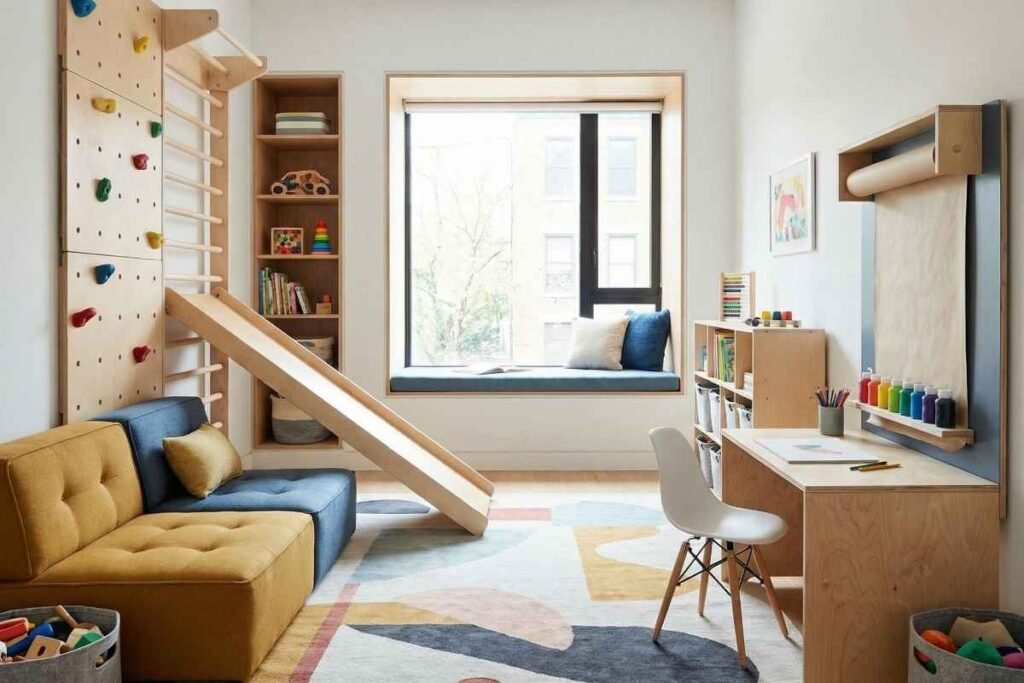
When every inch matters, combine several activities into one carefully planned corner. A low storage unit can hold toys, one side can support a small reading nook, and a narrow table can provide space for drawing or puzzles. Use one rug to visually connect everything while keeping the rest of the room open. The best small play areas don’t need dozens of toys or furniture pieces; they simply make each part of the available space work harder.