Designing a nursery is an exciting way to create a beautiful little world for your baby. The right nursery design should feel peaceful, comfortable, practical, and visually special without becoming overcrowded. From Scandinavian-inspired white and oak interiors to soft lavender cottage rooms and playful modern boho spaces, there are countless ways to create a nursery that reflects your personal style.
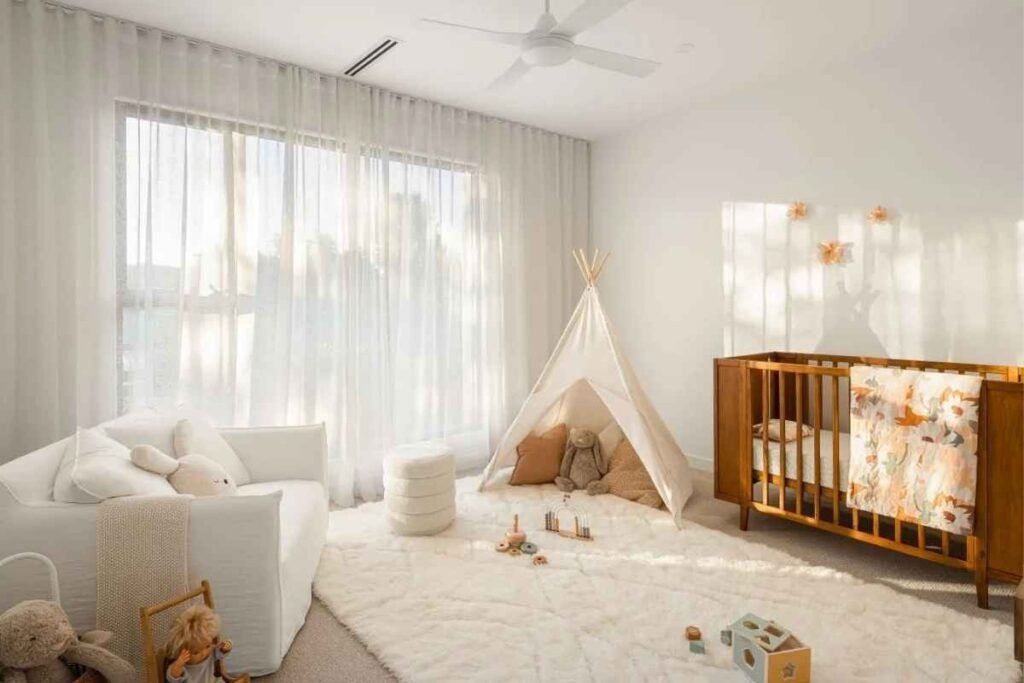
The key is to think about the entire room as one design rather than decorating individual corners separately. Choose a cohesive color palette, furniture style, lighting, textiles, and decorative details that work together. These 30 nursery room ideas will help you discover different styles and create a baby room that feels both dreamy and functional.
1. Scandinavian White & Oak Nursery
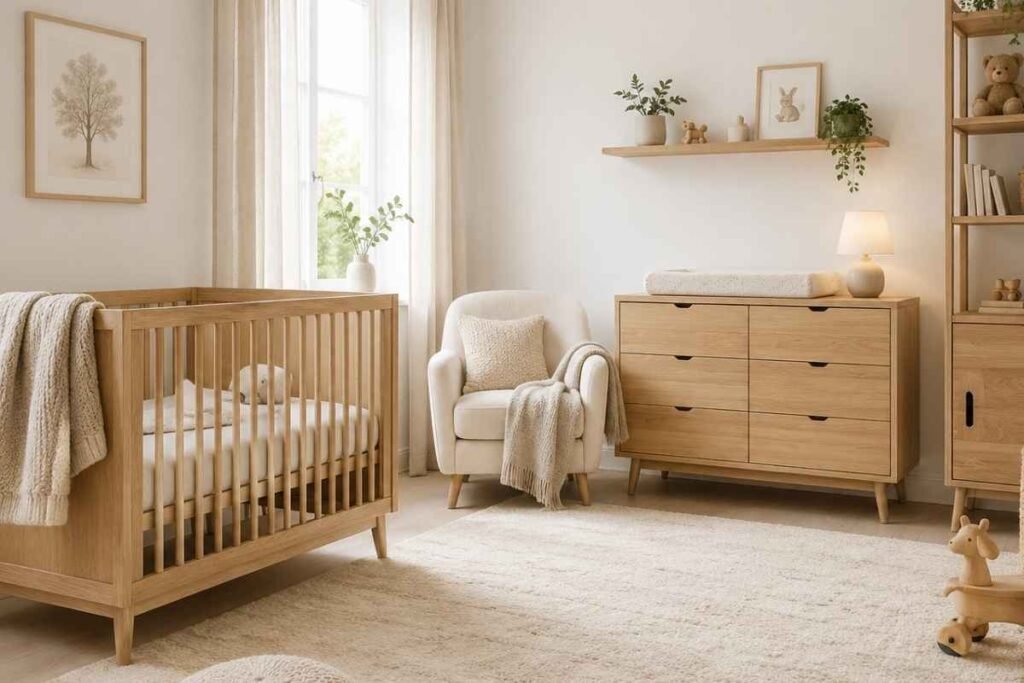
A Scandinavian nursery is perfect if you love clean lines, natural materials, and a bright, peaceful atmosphere. Build the room around a combination of warm white walls and light oak furniture to create a soft, airy foundation. Choose simple furniture with minimal detailing and add a cozy cream rug to prevent the space from feeling too stark. Linen curtains, knitted textiles, and subtle beige accents can introduce warmth without disturbing the minimalist look. Keep the artwork simple with nature-inspired prints or delicate illustrations. A few wooden toys and woven storage baskets can add character while maintaining the Scandinavian aesthetic. The overall room should feel uncluttered and light, with plenty of open space. This style is especially beautiful for parents who want a timeless nursery that can easily transition into a toddler room later.
2. Sage Green Botanical Nursery
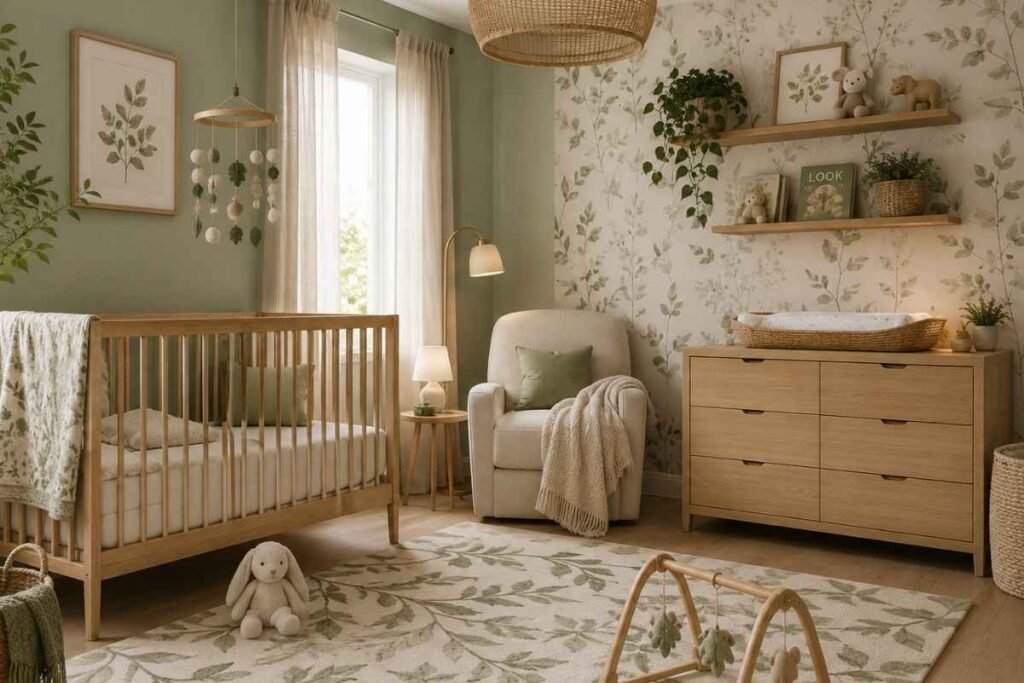
A sage green botanical nursery brings a calm, nature-inspired feeling into the baby room. Use soft sage green on the walls or choose botanical wallpaper featuring delicate leaves and branches. Balance the green with cream, warm white, and natural wood furniture to keep the room feeling bright. Add botanical artwork, linen curtains, and subtle leafy patterns through the rug or textiles. Instead of using too many plants, which may not be practical in a baby’s room, let botanical patterns create the connection with nature. Light oak or rattan details can complement the earthy palette beautifully. Choose soft lighting to enhance the peaceful atmosphere in the evening. The result is a gentle nursery that feels fresh and sophisticated without becoming overly themed.
3. Coastal Blue Nursery
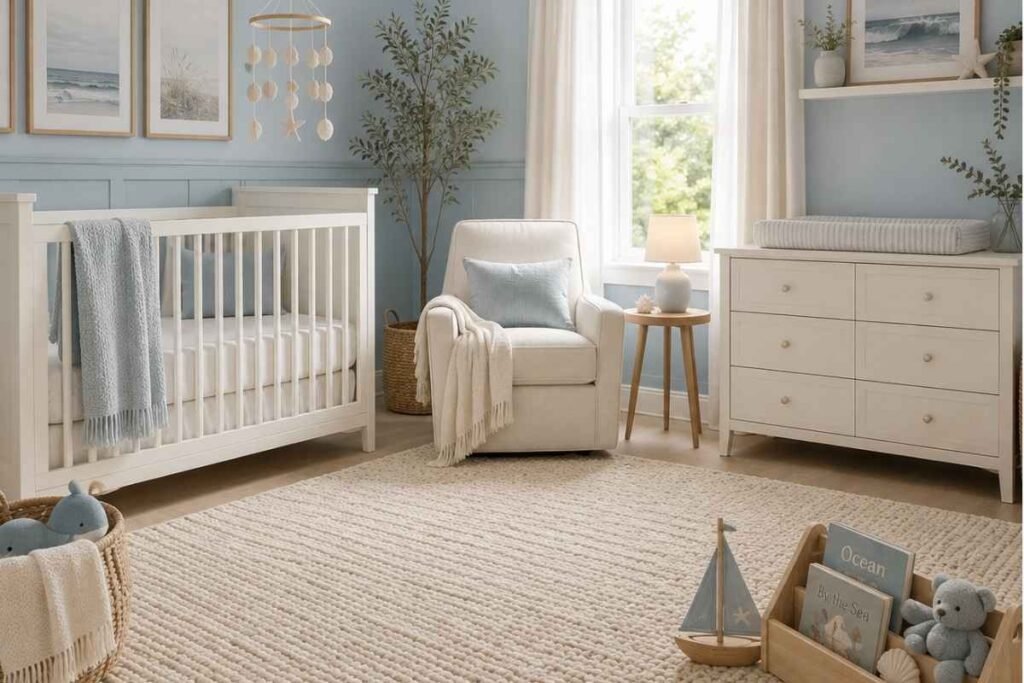
A coastal nursery can bring the calm feeling of the seaside into your baby’s room without looking overly nautical. Start with soft coastal blue walls paired with warm white furniture and natural wood accents. Add subtle references to the ocean through artwork featuring waves, shells, clouds, or gentle seaside landscapes. A textured cream rug and lightweight curtains can create the relaxed feeling associated with coastal interiors. Keep the palette soft by using muted blue rather than bright navy or turquoise. Woven baskets, linen fabrics, and pale wooden details can add natural texture. Avoid filling the room with obvious nautical decorations; a few carefully selected elements will create a more sophisticated result. This nursery style feels fresh, airy, and timeless while remaining suitable as your child grows.
4. Modern Boho Nursery
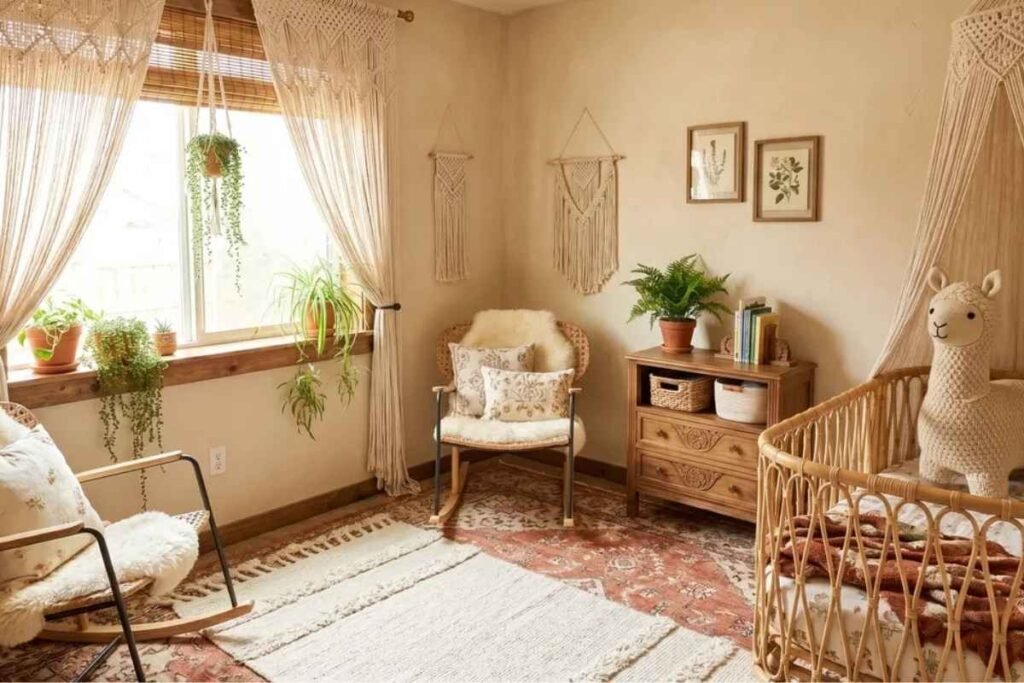
A modern boho nursery combines relaxed textures with a clean contemporary foundation. Start with warm beige or creamy walls and introduce natural wood furniture, woven details, and soft textiles. A patterned rug can become the main visual feature, while macramé-inspired artwork or woven wall decor adds texture. Choose a comfortable chair in a neutral fabric and add cushions in muted earthy tones such as terracotta, sand, or olive. Keep the bohemian elements carefully balanced so the room does not become visually crowded. Natural baskets can provide attractive storage while contributing to the overall aesthetic. The beauty of modern boho style comes from mixing textures rather than using too many decorations. The finished nursery should feel warm, relaxed, and inviting while still looking polished.
5. Soft Lavender Cottage Nursery
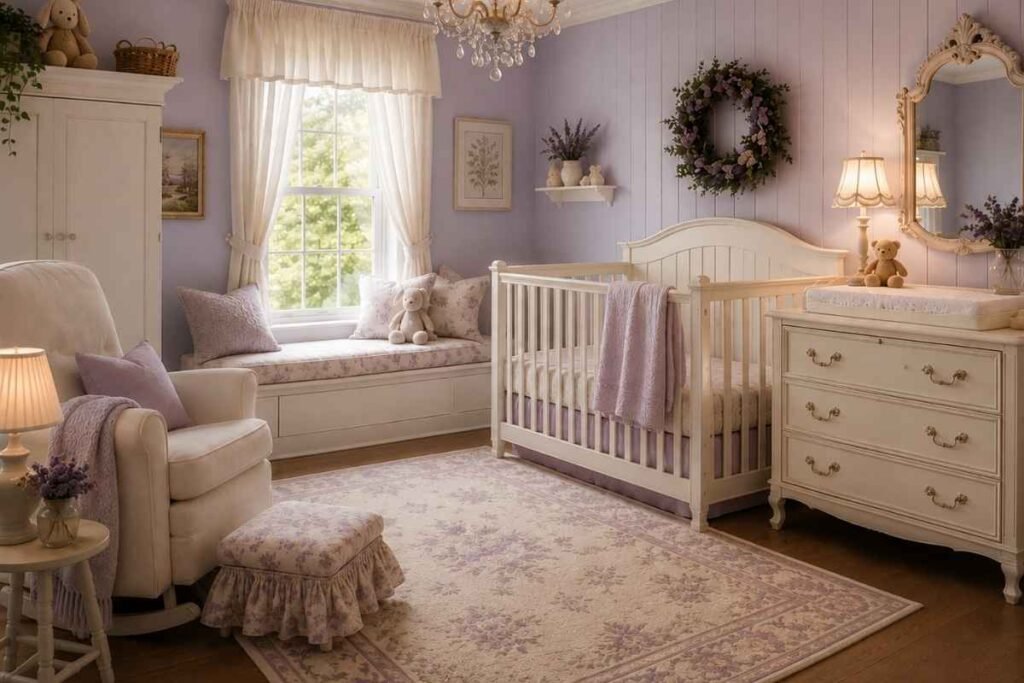
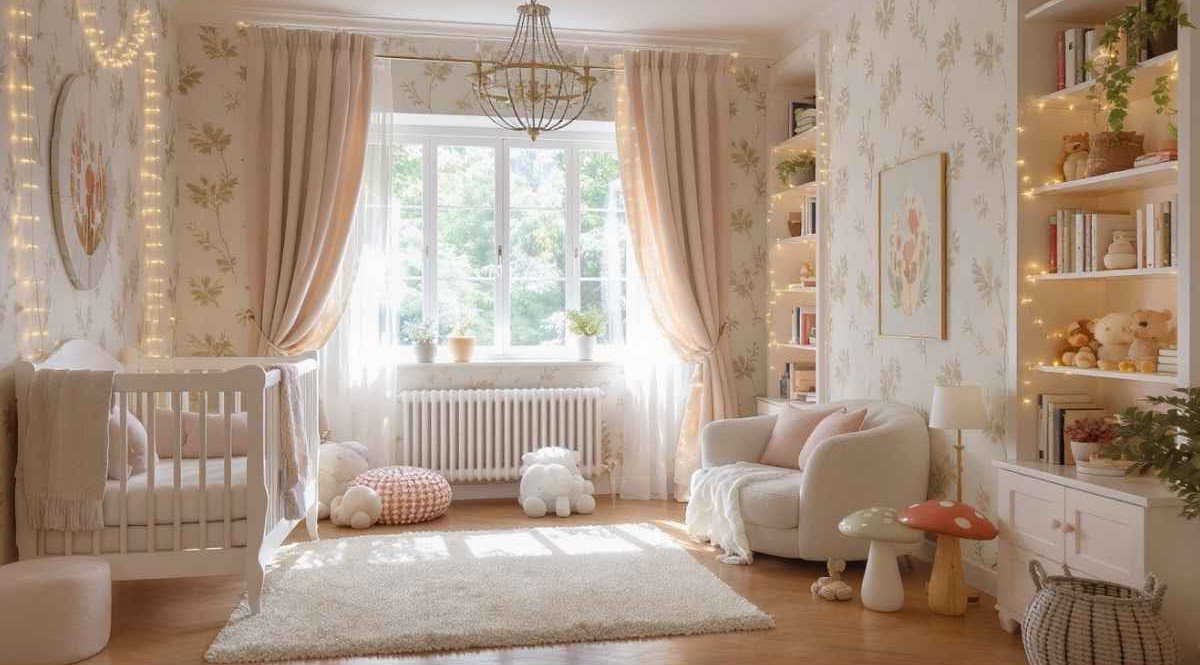
A soft lavender cottage nursery creates a gentle, romantic atmosphere with a charming traditional feel. Use pale lavender or warm white on the walls and combine it with vintage-inspired furniture in white, cream, or natural wood. Floral patterns can appear subtly through curtains, bedding, or artwork rather than covering the entire room. Add a soft rug and delicate lighting to enhance the cozy cottage feeling. Small details such as framed botanical prints, a classic mirror, or a beautiful upholstered chair can give the room character. Keep the lavender shade muted rather than overly bright so the nursery remains peaceful. This style works beautifully for anyone who loves classic interiors with a soft feminine touch while still wanting the room to feel fresh and modern.
6. Warm Beige Minimalist Nursery
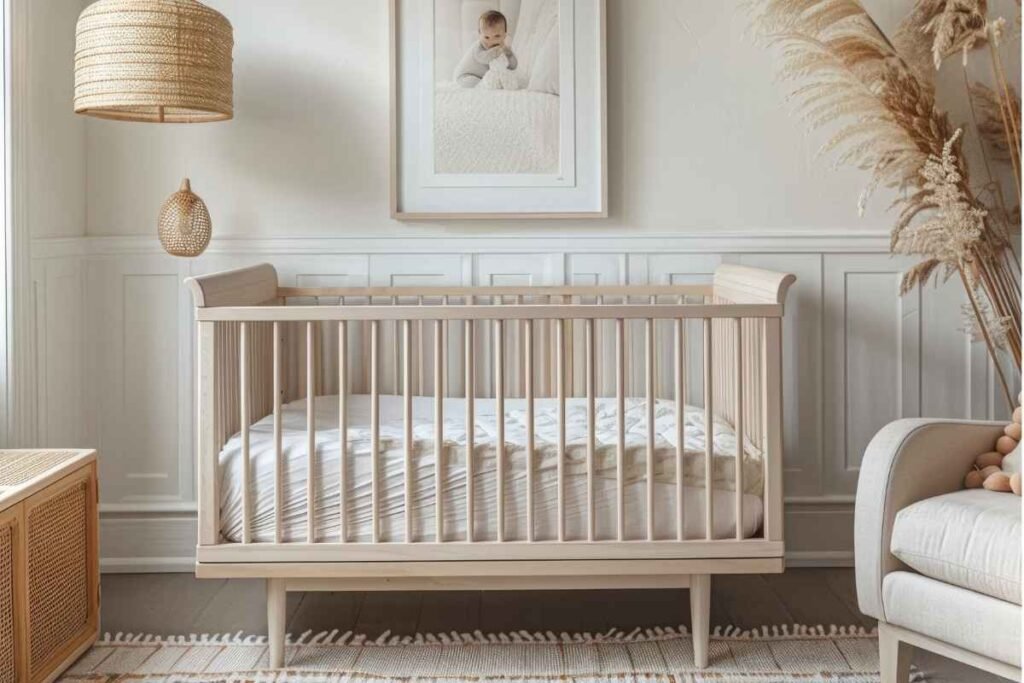
A warm beige minimalist nursery creates a sophisticated and calming environment through simplicity. Use creamy beige, ivory, oatmeal, and light taupe throughout the room, with natural wood furniture adding subtle contrast. Instead of decorating every wall, choose one meaningful piece of artwork or a simple textured feature. Soft curtains, a neutral rug, and natural fabric textiles can create warmth without introducing unnecessary patterns. Furniture should have clean silhouettes and practical storage so the room remains organized. The beauty of this style is the sense of calm created by limited colors and fewer visual distractions. Leave some open space around furniture instead of filling every corner. A warm beige nursery is timeless, gender-neutral, and easy to update with new accessories as your child grows.
7. Woodland Animal Nursery
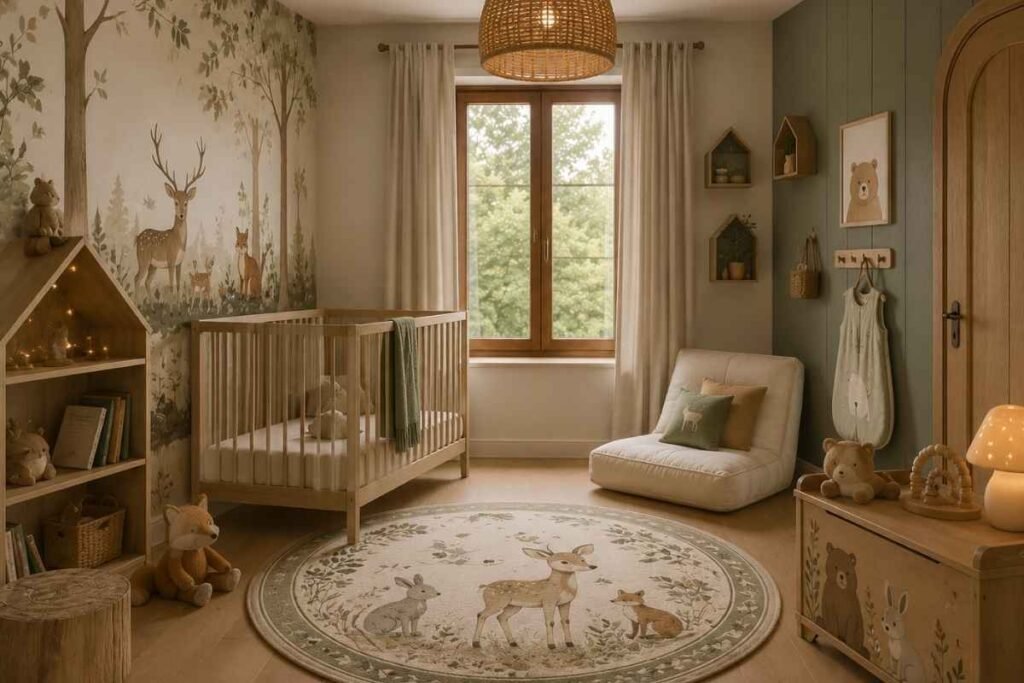
A woodland nursery can create a playful yet sophisticated baby room inspired by forests and gentle wildlife. Use earthy shades such as cream, soft green, warm brown, and muted beige as the foundation. Introduce woodland animals through wallpaper, framed illustrations, rugs, or small decorative accents. Deer, bears, rabbits, foxes, and birds can create a charming theme without making the room look like a cartoon set. Natural wood furniture works particularly well with this style, while woven textures add warmth. Keep the animal designs consistent in style so the room feels cohesive. Soft lighting can enhance the cozy forest atmosphere, especially in the evening. This theme is playful enough for a baby while remaining versatile enough to work beautifully throughout the toddler years.
8. Modern Cream & Greige Nursery
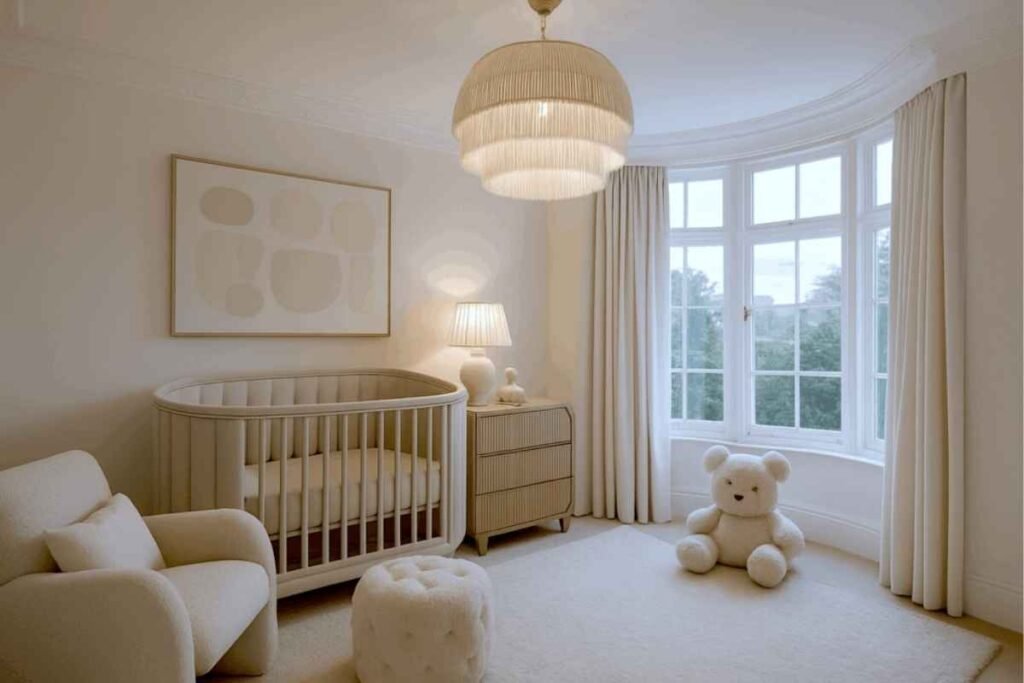
Cream and greige create a polished nursery that feels contemporary without becoming cold. Use warm greige on the walls and combine it with cream furniture, light wood, and subtle beige textiles. Choose furniture with modern silhouettes and minimal decorative details. A textured wall treatment or simple abstract artwork can provide visual interest while keeping the room sophisticated. Add a soft rug in a slightly lighter tone to define the main area. Black or dark metal accents can be introduced sparingly through lighting or small frames for contrast. Keep patterns subtle and focus on texture instead. This design works particularly well for parents who want a modern nursery that feels like a natural extension of the rest of their home rather than a highly themed children’s room.
9. Blush Pink & Cream Nursery
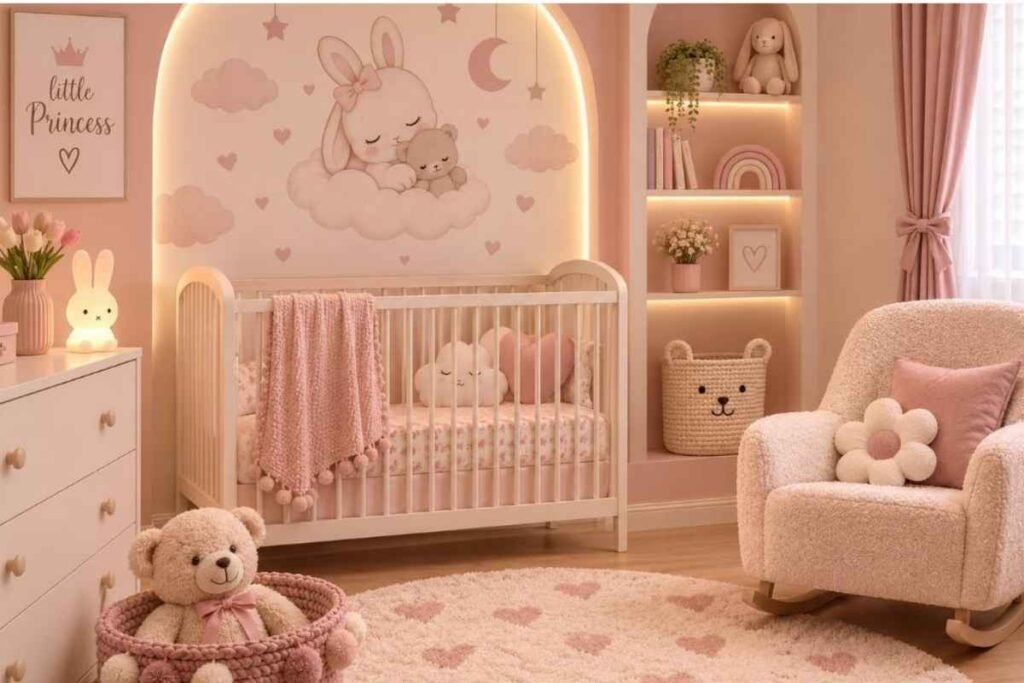
A blush pink and cream nursery can feel soft, elegant, and welcoming without relying on overly bright pink. Use warm cream as the main color and introduce dusty blush through the walls, curtains, rug, or selected furniture pieces. Light wood can keep the palette natural while gold or brass details can add a subtle sophisticated touch. Choose delicate floral or abstract artwork to complement the color scheme. A plush rug and comfortable upholstered chair can make the room feel especially cozy. Keep the pink muted and balanced with plenty of cream so the space remains calm. This style can be adapted easily as your child grows by replacing a few decorative accents rather than changing the entire room.
10. Moody Navy & Natural Wood Nursery
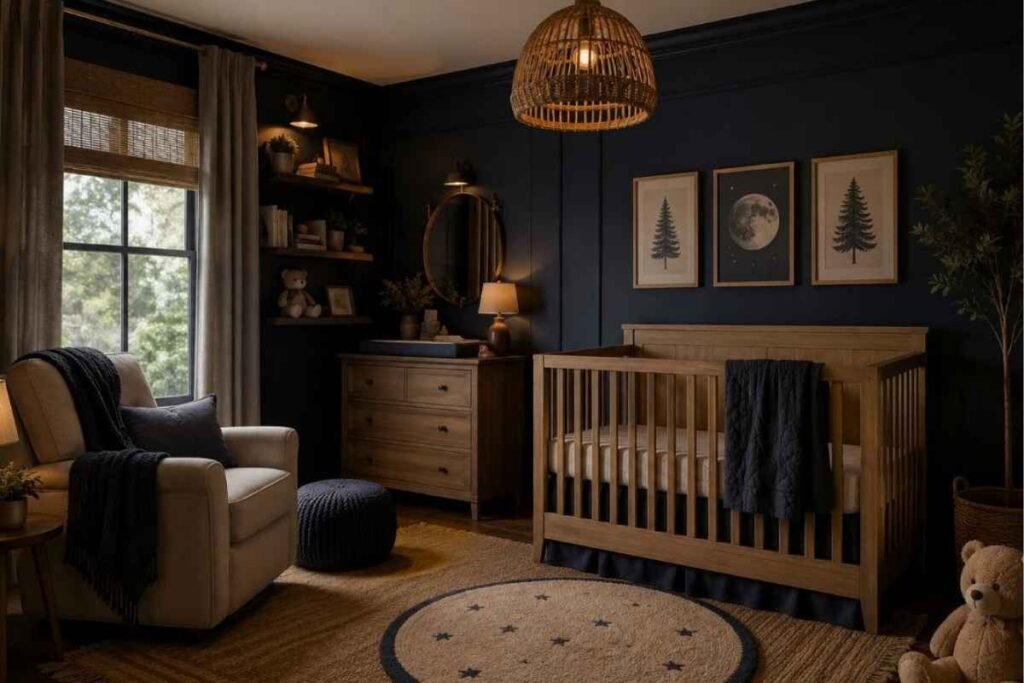
For something more dramatic, combine deep navy with warm natural wood. Navy can be used on one feature wall while the remaining walls stay cream or soft white to keep the room balanced. Light oak furniture creates a beautiful contrast against the deeper color. Add cream textiles, a warm rug, and soft lighting to prevent the room from feeling too dark. Celestial artwork featuring moons and stars can work particularly well with this palette, although the design can remain completely modern without a theme. Keep decorative pieces minimal and allow the wall color to create the main impact. This nursery style feels sophisticated and cozy, especially in rooms with good natural light.
11. Warm Terracotta Bohemian Nursery
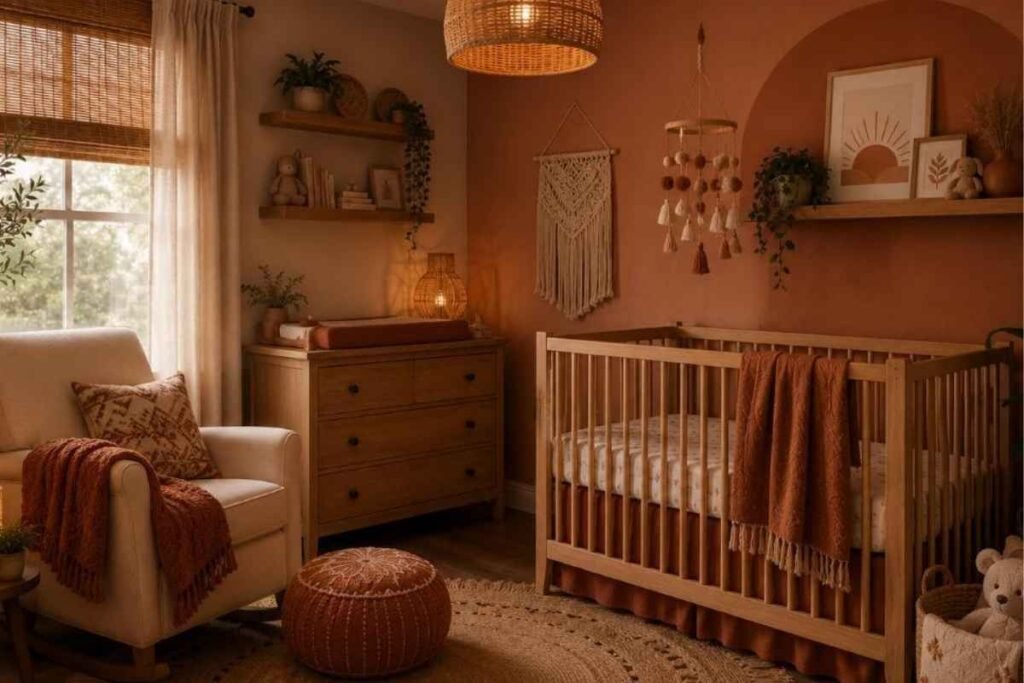
A terracotta-inspired nursery brings earthy warmth and personality into the room. Use a soft terracotta shade as an accent wall or incorporate it through rugs, curtains, cushions, and artwork. Pair it with cream, sand, beige, and natural wood to keep the overall palette balanced. Rattan furniture, woven baskets, and textured fabrics can reinforce the bohemian character. Choose simple abstract or sun-inspired artwork for a modern touch. Avoid using too many strong earthy colors at once; allowing cream and beige to dominate will keep the nursery feeling calm. The combination of warm tones and natural textures creates a cozy environment that feels inviting while still looking stylish and contemporary.
12. Cloud & Sky Dream Nursery
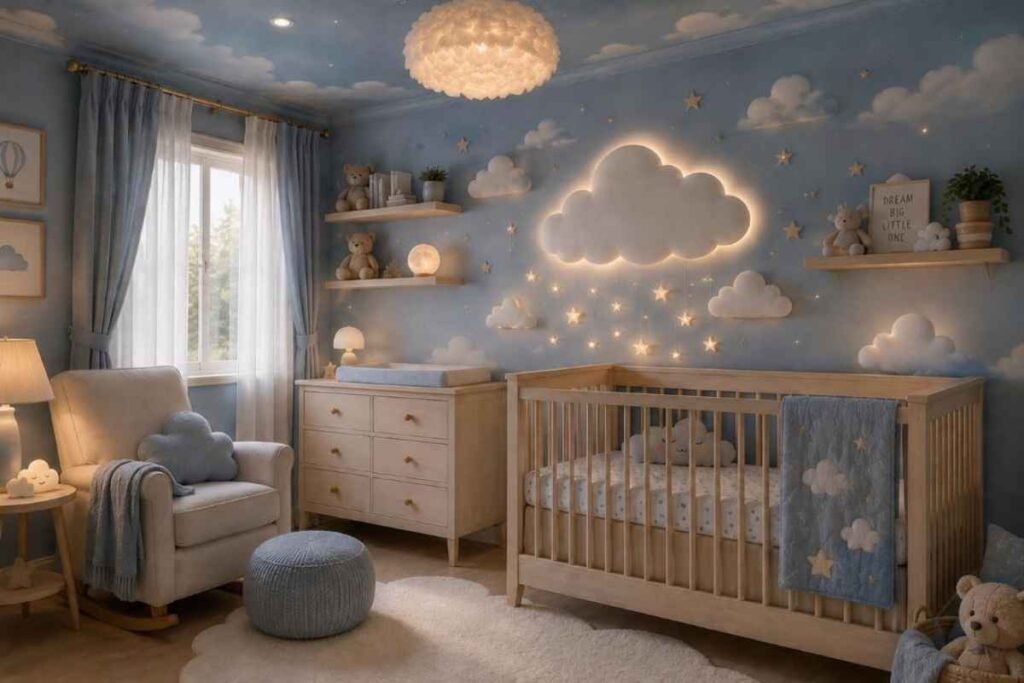
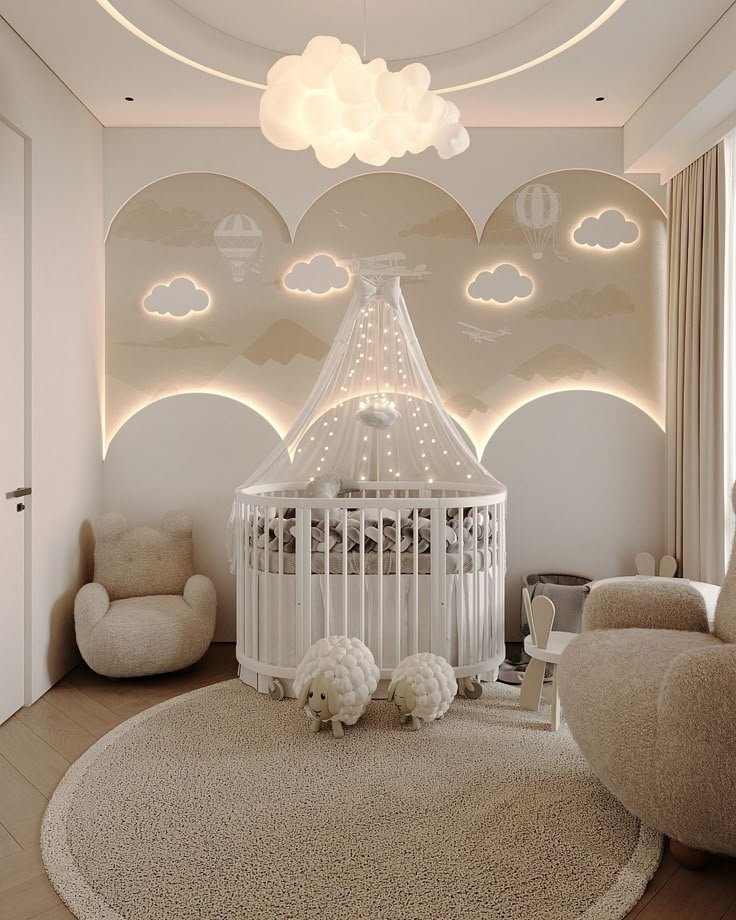
A cloud-inspired nursery can create a soft, dreamy atmosphere without becoming overly childish. Use pale blue, white, cream, and soft gray as the main colors. A subtle cloud wallpaper or hand-painted cloud detail can create the impression of an open sky. Add fluffy-looking textiles, soft rugs, and delicate star or moon artwork to reinforce the theme. Keep furniture simple and neutral so the cloud design remains the main visual feature. Warm lighting can make the room feel especially magical at night. Avoid covering every surface with clouds; a restrained approach will make the nursery feel more elegant. This theme is perfect for creating a peaceful room that feels light, airy, and imaginative.
13. Natural Rattan & Linen Nursery
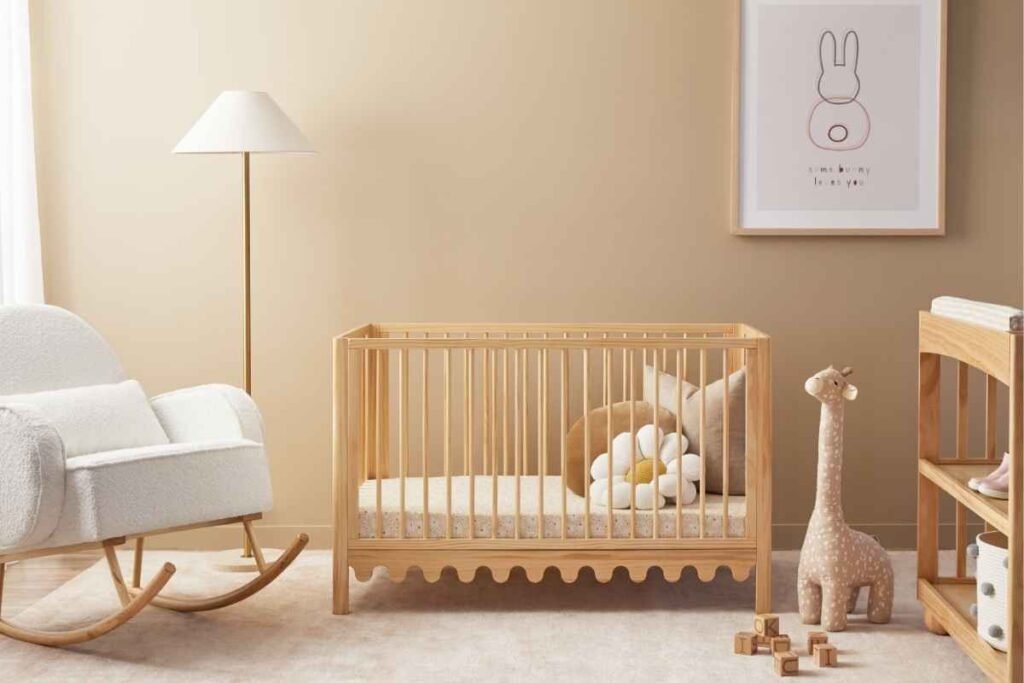
A rattan and linen nursery focuses on natural materials and relaxed textures. Start with warm white or beige walls and introduce rattan through furniture, baskets, or decorative details. Linen curtains and neutral upholstery can soften the room while adding an effortless, organic feeling. Natural wood furniture works beautifully alongside woven textures. Keep the color palette close to cream, sand, beige, and light brown. Instead of relying on bold artwork, let the different materials provide visual interest. A textured rug and a few carefully chosen accessories can complete the room without making it feel cluttered. This nursery style is ideal for parents who love organic interiors and want a peaceful baby room that feels connected to natural materials.
14. Classic White Nursery
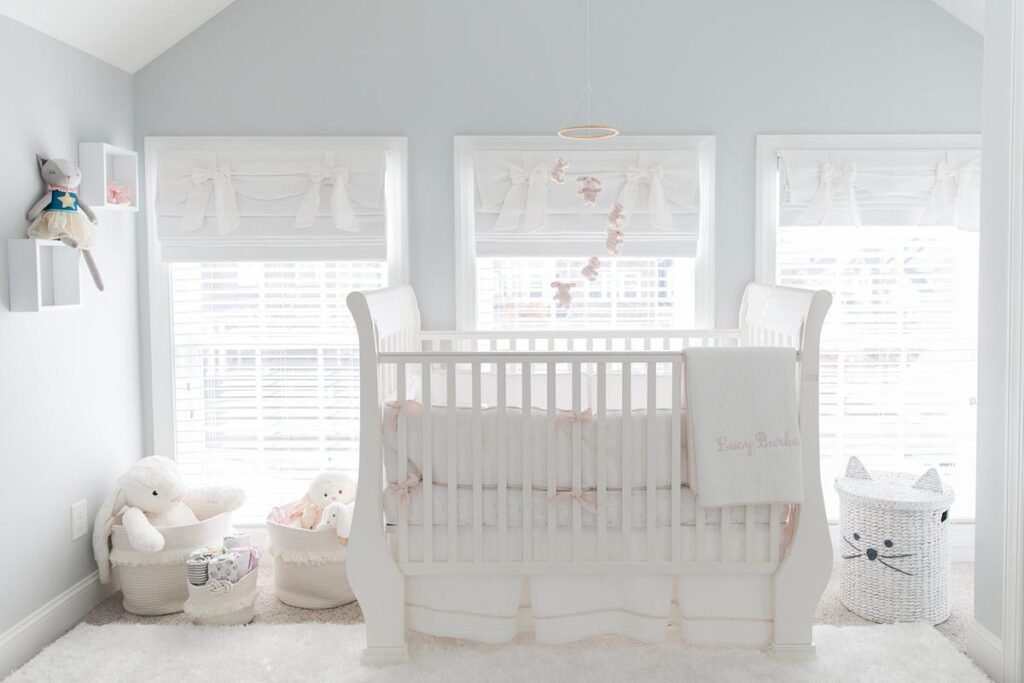
A classic white nursery offers a bright, timeless foundation that can be personalized in many different ways. Use warm white walls and furniture rather than extremely cool whites to keep the room welcoming. Introduce interest through paneling, elegant furniture silhouettes, soft curtains, and delicate artwork. Small touches of beige, wood, or pastel colors can prevent the space from feeling too plain. A traditional chandelier or decorative wall light can add character if it is safely installed and appropriate for the room. Because white provides such a versatile background, you can change the theme later without replacing major furniture. This design is particularly useful for parents who want a nursery that feels elegant now and can easily evolve into a child’s bedroom.
15. Sage & Natural Wood Modern Nursery
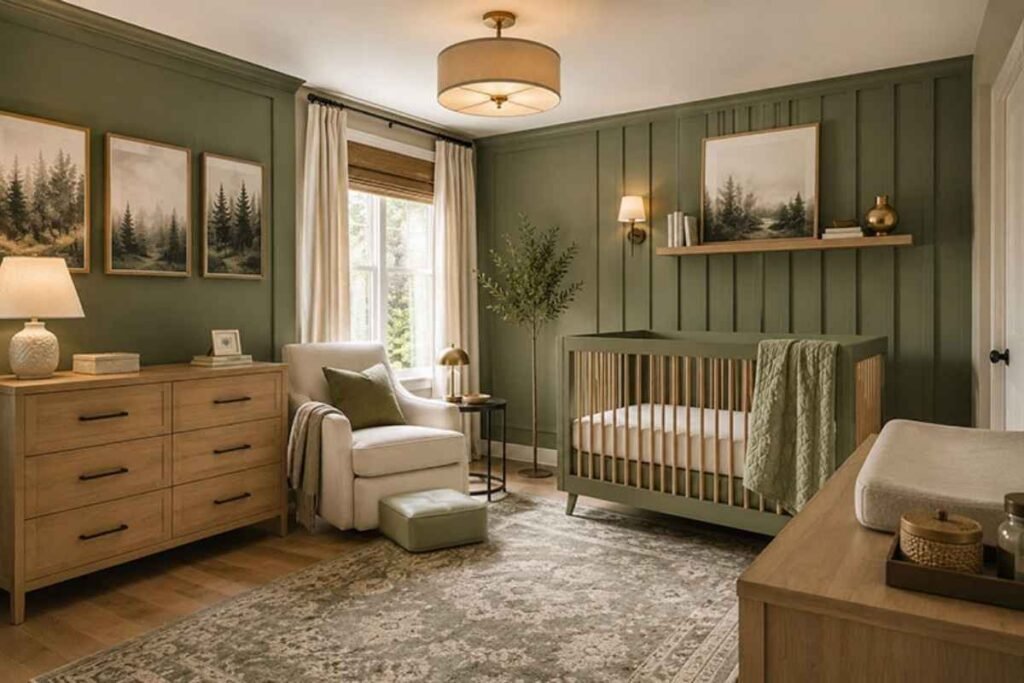
Combine muted sage green with natural wood for a modern nursery that feels earthy and sophisticated. Instead of using botanical wallpaper, keep the walls relatively simple and let sage paint provide the main color. Choose light oak furniture to bring warmth into the room and add cream textiles to soften the contrast. A patterned rug with small touches of sage can visually connect the different elements. Simple abstract artwork or nature-inspired prints can complete the walls without creating a strong theme. Keep the room uncluttered and allow the furniture to have enough breathing space. This combination is versatile enough for any baby and can easily transition into a toddler or young child’s room.
16. Vintage-Inspired Nursery
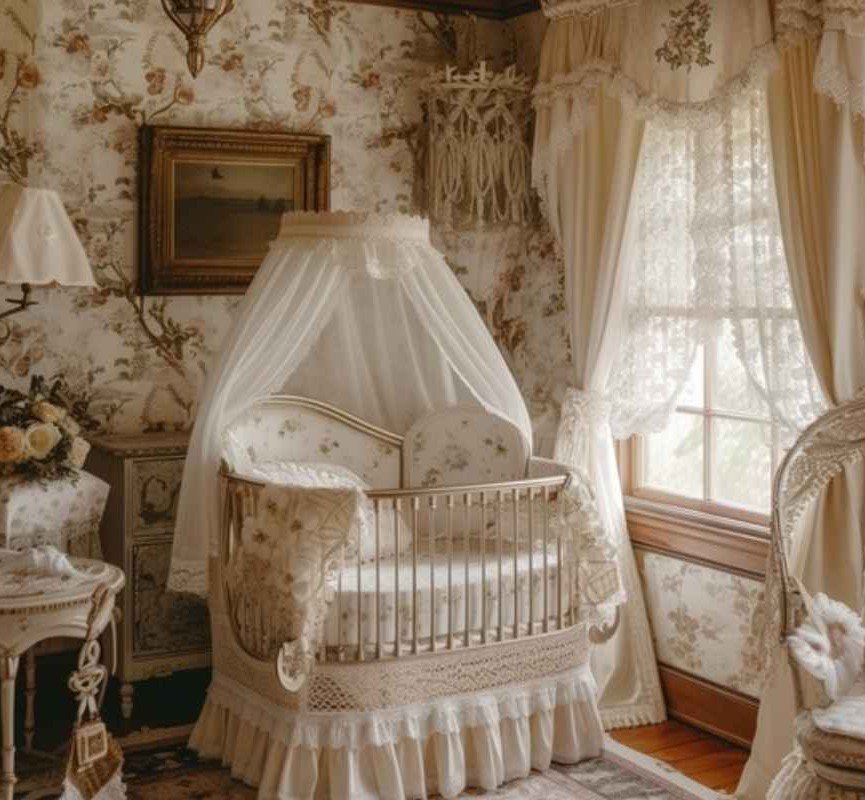
A vintage nursery can feel charming and personal when classic details are balanced with modern functionality. Choose furniture inspired by traditional designs, such as a beautifully shaped dresser or an upholstered chair, and combine it with soft cream, dusty blue, muted green, or blush. Vintage-style artwork, delicate frames, and classic textiles can add character. Instead of filling the room with antiques, select just a few nostalgic pieces and combine them with modern essentials. This keeps the room practical while creating a sense of history and personality. Soft lighting and warm wood can make the space feel especially cozy. The result is a nursery that feels collected and timeless rather than overly themed.
17. Japandi-Inspired Nursery
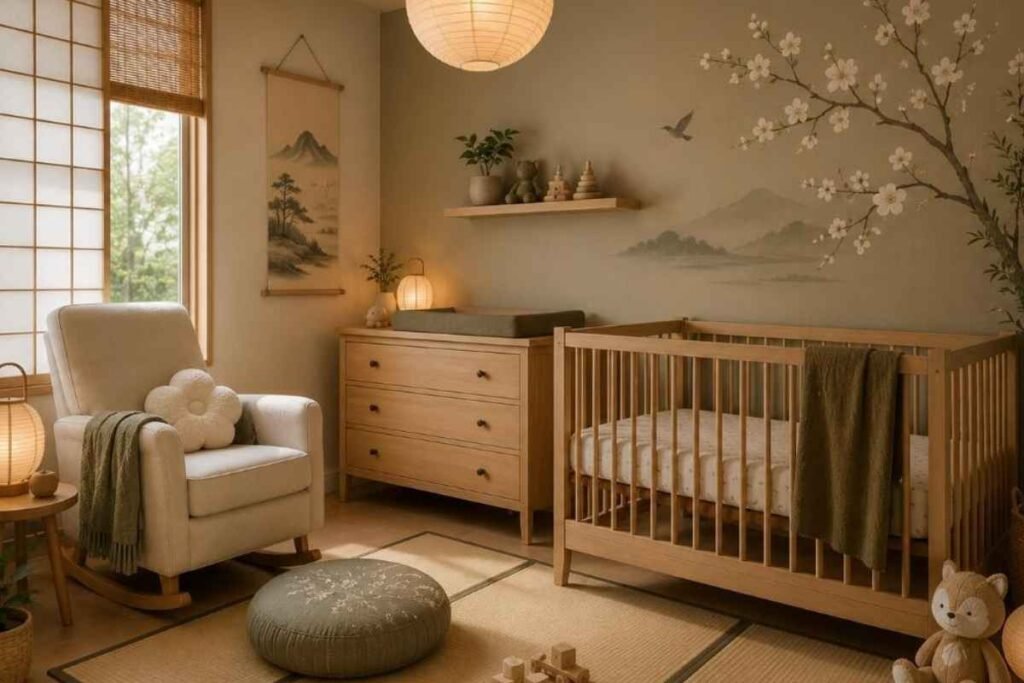
Japandi design combines Scandinavian simplicity with Japanese-inspired calm and natural materials. Use warm white, beige, light taupe, and natural wood throughout the room. Furniture should have simple shapes, clean lines, and minimal detailing. Avoid excessive decoration and instead focus on beautiful materials and thoughtful placement. A low-profile storage piece, woven basket, simple artwork, and natural fiber rug can provide enough visual interest. Soft lighting is important because it enhances the peaceful character of the room. Keep surfaces mostly clear and choose only items that have a practical or meaningful purpose. This nursery style is perfect for creating a calm environment with a sophisticated appearance that blends beautifully with a modern home.
18. Rainbow Pastel Nursery
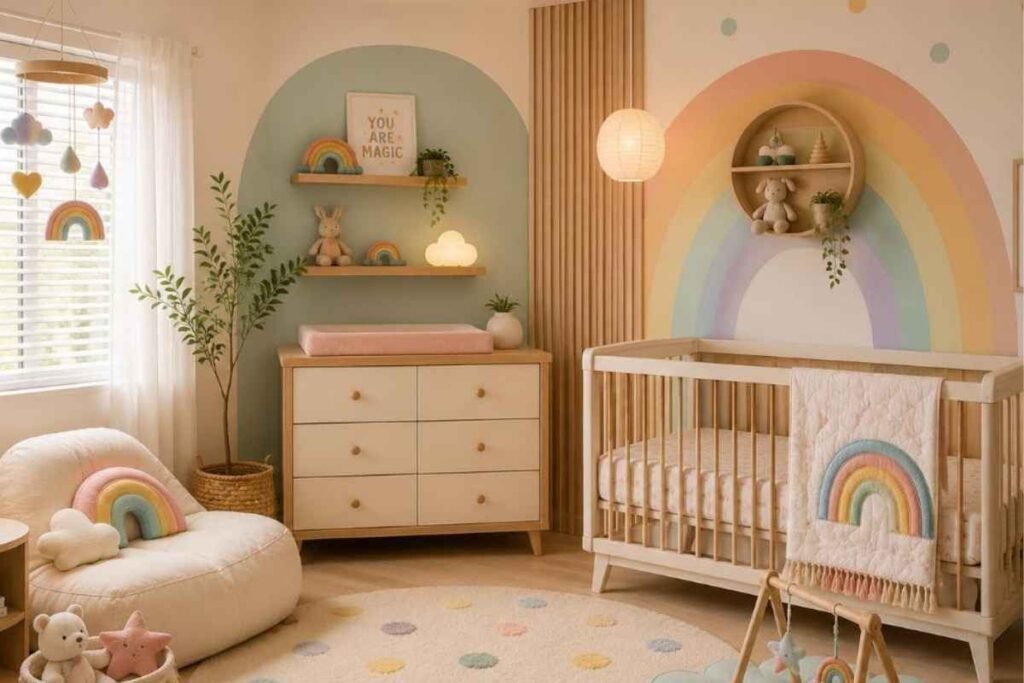
A pastel rainbow nursery can feel cheerful without becoming overly bright. Use a warm white or cream base and introduce muted shades of peach, blush, pale yellow, sage, powder blue, and lavender. A subtle rainbow mural or arched wall design can become the main focal point. Keep furniture neutral so the pastel colors remain the stars of the room. Soft textiles and playful artwork can add personality while maintaining the gentle palette. Instead of using every color equally, choose two or three as stronger accents and allow the remaining shades to appear more subtly. This creates a playful but sophisticated baby room that can easily adapt as your child grows.
19. Modern Farmhouse Nursery
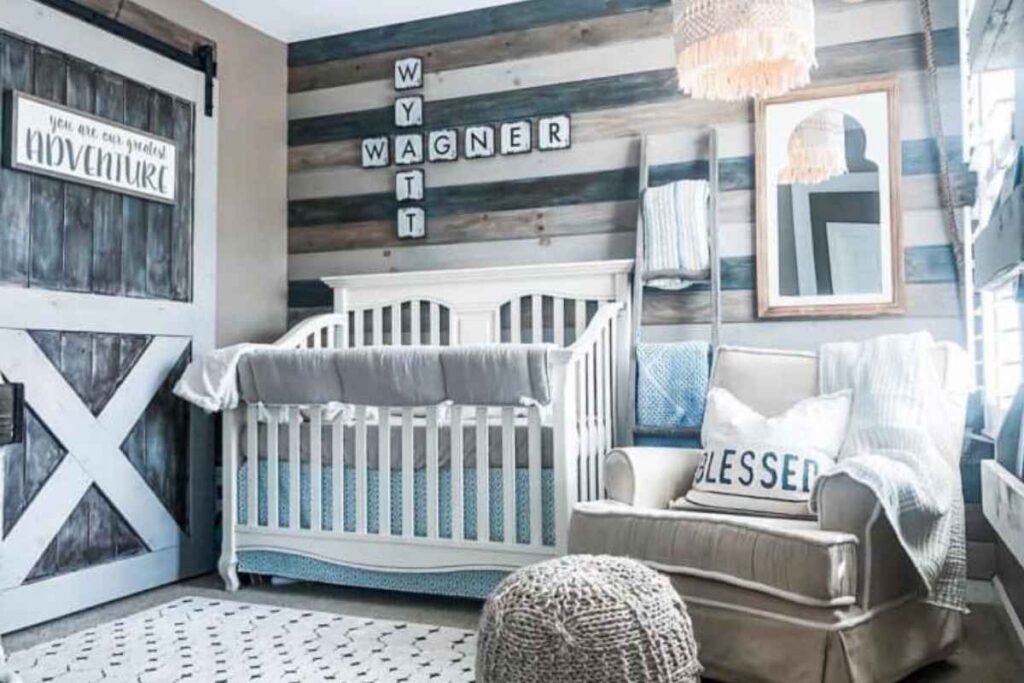
A modern farmhouse nursery combines cozy traditional details with a clean contemporary look. Use warm white walls, natural wood furniture, and subtle black or charcoal accents. Simple paneling or shiplap-inspired wall detailing can add architectural interest without requiring many decorations. Choose soft plaid, stripe, or neutral patterned textiles for a subtle farmhouse touch. Woven baskets and wooden accessories can reinforce the rustic character. Keep the overall room light and uncluttered so it does not become too heavy or old-fashioned. A comfortable upholstered chair and soft rug can bring warmth to the design. This style works especially well when you want a nursery that feels cozy, familiar, and connected to a modern farmhouse home.
20. Coastal Beige & Sand Nursery
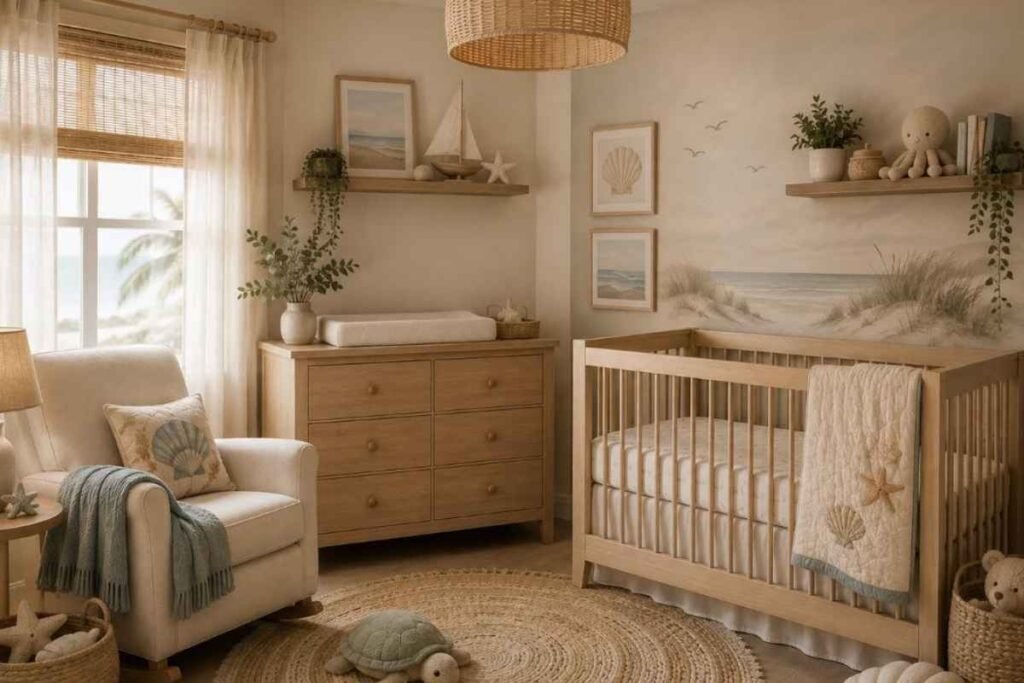
A softer take on coastal style can be created with beige, sand, cream, and pale blue. Instead of obvious beach decorations, focus on the natural feeling of the coast through linen fabrics, woven textures, pale wood, and relaxed furniture. A subtle ocean landscape or abstract wave artwork can provide a focal point. Keep the room light and airy with simple curtains and plenty of open space. A textured rug can add warmth underfoot while natural baskets provide storage. The result feels like a peaceful seaside retreat without becoming overly nautical. This nursery design is especially suitable for parents who want a coastal atmosphere that remains sophisticated and timeless.
21. Soft Peach & Warm White Nursery
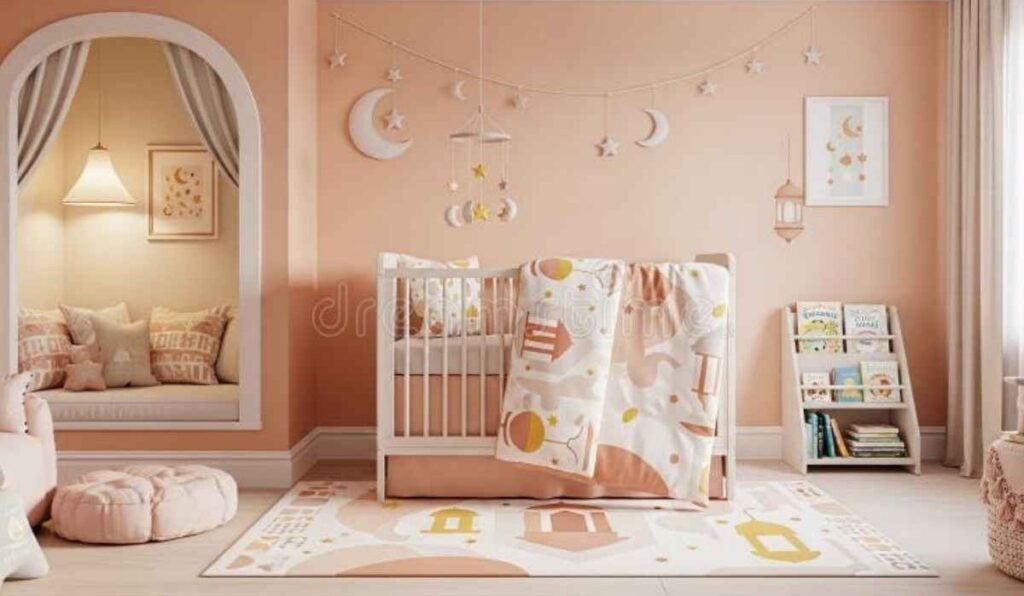
Soft peach can create a warm and cheerful nursery when balanced with plenty of creamy white. Use peach as an accent wall or introduce it through curtains, artwork, rugs, and textiles. Warm white furniture and light wood can prevent the color from feeling too strong. Add delicate floral, abstract, or nature-inspired artwork to give the room personality. Soft lighting can enhance the warmth of the peach tones in the evening. Keep the rest of the palette simple so the room feels peaceful rather than overly colorful. This combination works beautifully for a dreamy nursery that feels cheerful during the day and cozy at night.
22. Minimalist Black, White & Wood Nursery
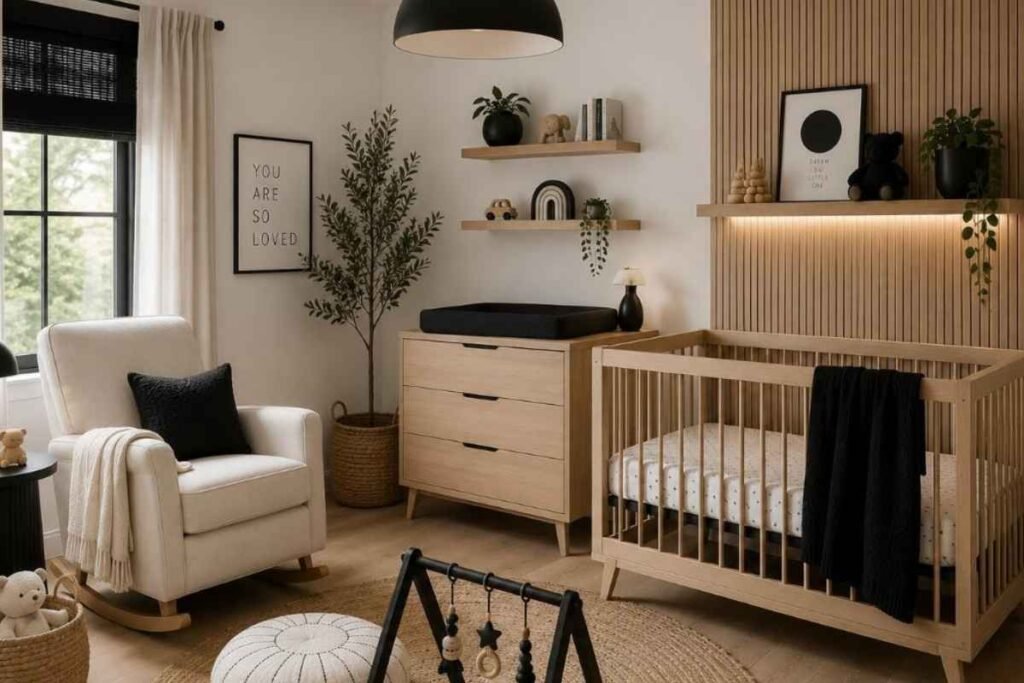
A black, white, and wood nursery offers a modern graphic look while natural wood keeps the room from feeling too stark. Use white or warm off-white as the dominant color, with black introduced through small details such as frames, lighting, patterns, or furniture accents. Natural oak provides warmth and balances the contrast. Choose simple geometric artwork, striped textiles, or minimal patterns to continue the modern theme. Avoid using too much black because the goal is to create a nursery rather than a dramatic adult interior. Keeping black to smaller accents allows the room to remain bright while giving it a contemporary edge.
23. Whimsical Storybook Nursery
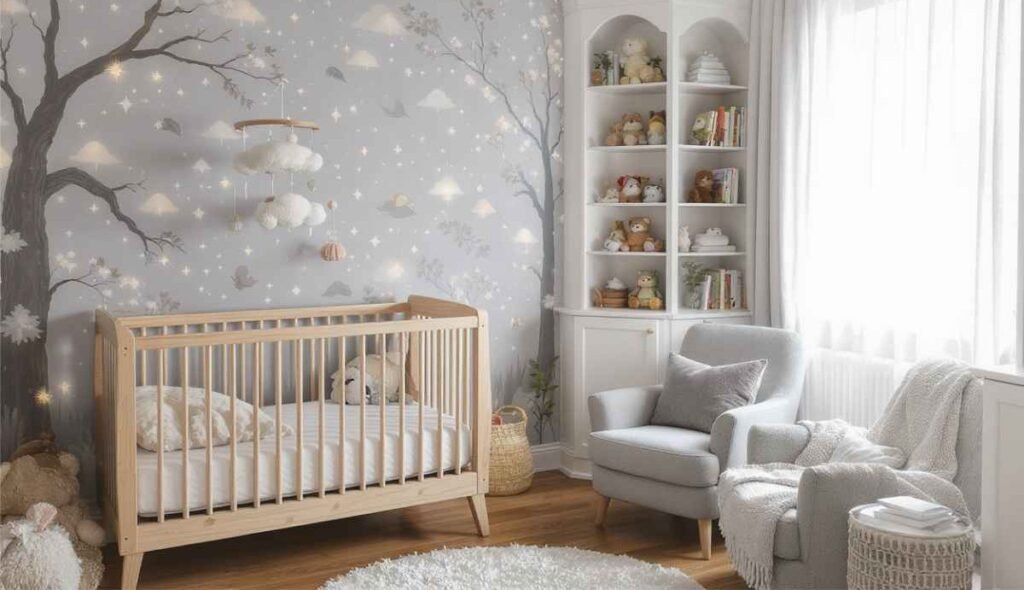
A storybook nursery can turn the entire room into a gentle world of imagination. Choose a soft cream or pastel foundation and build the theme around illustrated animals, woodland scenes, castles, clouds, or favorite storybook-inspired motifs. A mural can become the main feature while the furniture remains simple and neutral. Add a cozy reading area and a small collection of beautiful children’s books to support the theme. Use textiles with subtle illustrations rather than covering every surface in characters. Soft lighting can make the room feel magical in the evening. The key is to create an imaginative atmosphere without making the nursery feel visually overwhelming.
24. Modern Celestial Nursery
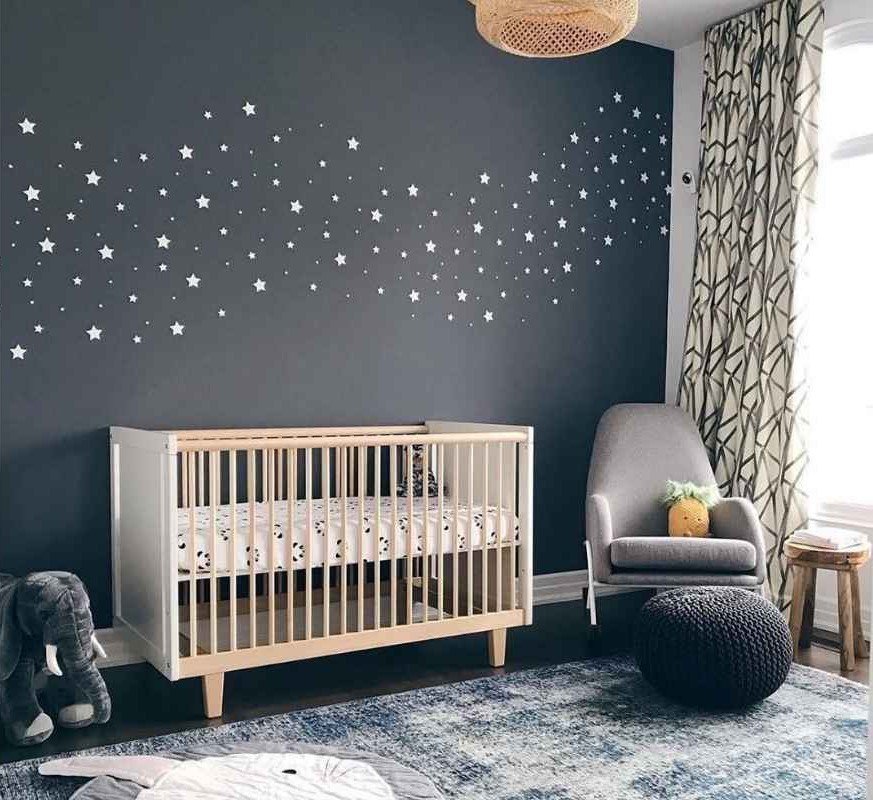
A modern celestial nursery can feel dreamy and sophisticated at the same time. Use deep blue, warm cream, beige, or muted gray as the main palette and introduce stars, moons, and celestial shapes through artwork or one feature wall. Gold or brass accents can add a subtle glow without becoming excessive. Natural wood furniture can soften the darker colors, while cream textiles keep the room balanced. Choose simple geometric celestial patterns rather than overly cartoon-like designs. Warm lighting can enhance the nighttime atmosphere beautifully. This style creates a magical room that feels appropriate for a baby but can remain appealing well into childhood.
25. Earthy Olive & Cream Nursery
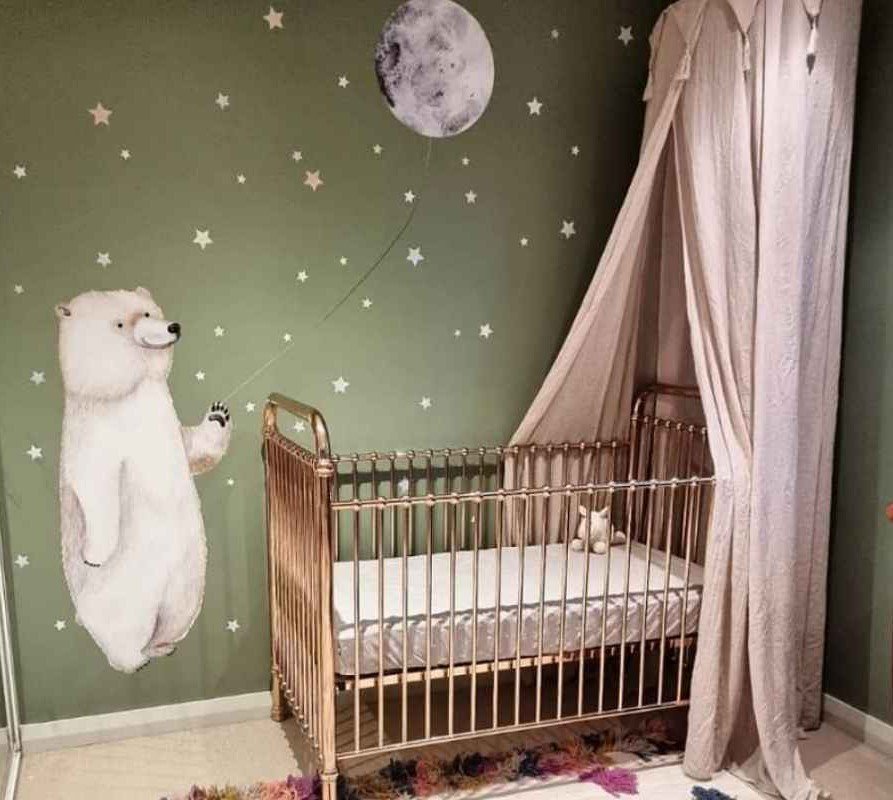
Olive green and cream create a rich yet calming nursery palette. Use a muted olive shade on the walls or as an accent color, then balance it with warm cream furniture and natural wood. Terracotta, beige, and soft brown can be introduced in very small amounts through textiles or artwork. Choose nature-inspired patterns such as leaves, branches, or subtle animal illustrations. Keep the room grounded with natural textures and a soft rug. Because olive is deeper than traditional nursery colors, plenty of cream and natural light will help maintain an airy feeling. The result is a distinctive nursery that feels warm, sophisticated, and connected to nature.
26. Soft Blue & White Traditional Nursery
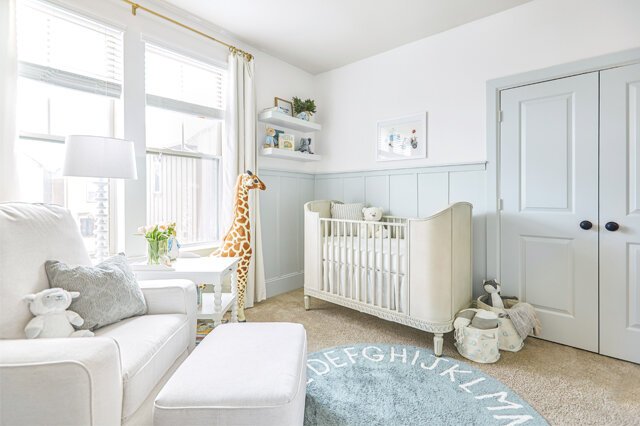
A soft blue and white nursery is a classic combination that can feel both fresh and timeless. Choose a muted powder blue rather than a highly saturated shade and pair it with warm white walls or furniture. Traditional furniture shapes, delicate curtains, and classic artwork can give the room an elegant character. Add small touches of natural wood or beige to prevent the palette from becoming too cool. A patterned rug or subtle striped textile can provide additional interest. Keep decorative details coordinated rather than mixing too many styles. This nursery design is easy to personalize and can transition naturally into a toddler room with only a few updates.
27. Neutral Animal-Themed Nursery
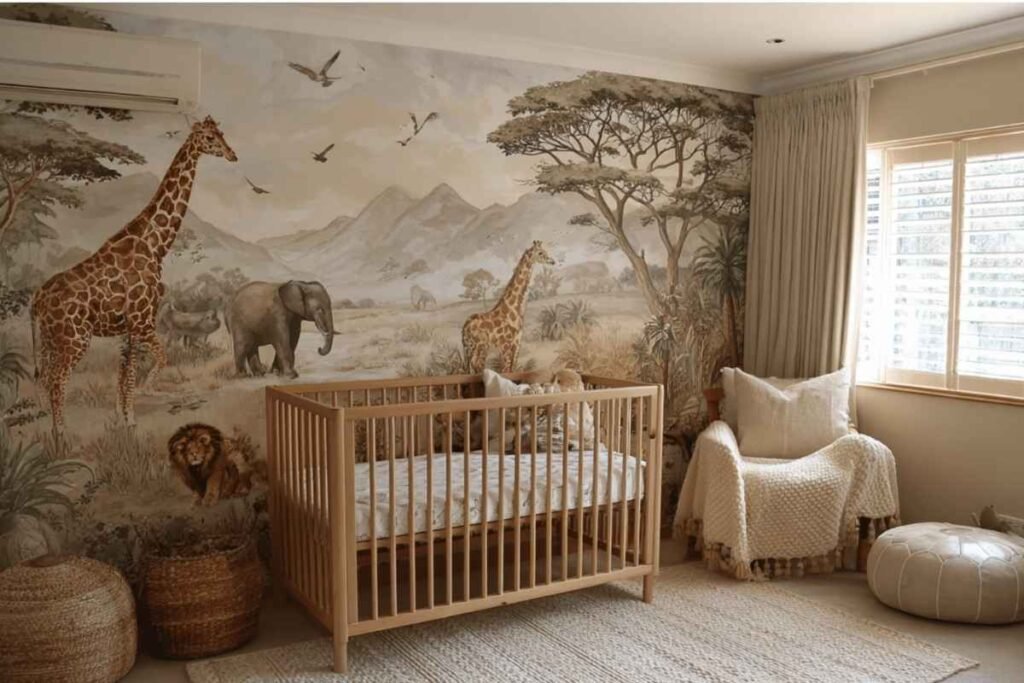
A neutral animal nursery offers playful character without relying on bright colors. Use cream, beige, taupe, and light brown as the foundation and introduce animals through wallpaper, artwork, rugs, or textiles. Choose one visual style for the animals so the room feels cohesive—for example, soft watercolor illustrations or simple line drawings. Natural wood furniture and woven storage complement the theme beautifully. Keep the animal details concentrated in a few areas rather than decorating every surface. This creates a nursery that feels fun and welcoming while remaining sophisticated. Because the neutral palette is versatile, you can later replace the animal accessories without changing the main furniture or walls.
28. Parisian-Inspired Elegant Nursery
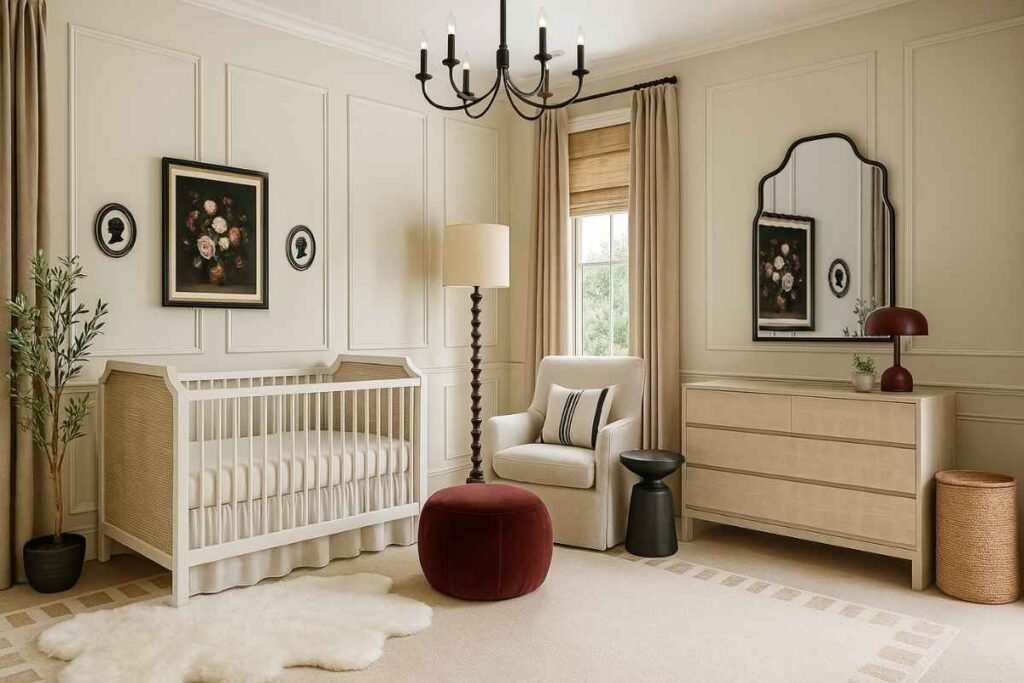
A Parisian-inspired nursery can feel elegant and timeless through soft colors, classic furniture, and refined details. Use warm white, cream, pale blush, or muted gray as the foundation. Decorative wall molding, a vintage-inspired mirror, elegant lighting, and beautifully shaped furniture can create a sophisticated atmosphere. Keep patterns delicate, perhaps through subtle floral or toile-inspired textiles. Gold or brass details can be used sparingly for a polished finish. The room should feel graceful rather than overly formal, so balance elegant pieces with soft rugs and comfortable seating. This style is ideal if you want a nursery that feels luxurious while still remaining warm and welcoming.
29. Cozy Nordic Pastel Nursery
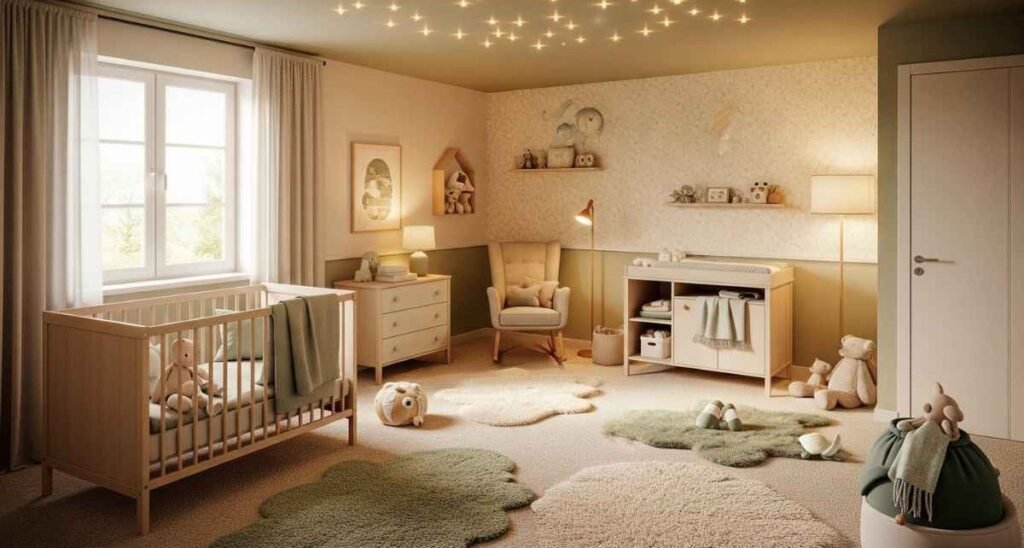
A Nordic pastel nursery combines Scandinavian simplicity with gentle color. Use white or warm cream walls and introduce muted pastel shades such as dusty pink, powder blue, pale green, or soft yellow through selected furniture and accessories. Natural wood adds warmth while simple furniture keeps the room visually clean. Choose playful but minimal artwork and a soft rug with a subtle pattern. Storage should be practical but visually understated so the room does not become cluttered. Plenty of natural light and warm evening lighting can enhance the cozy atmosphere. This style creates a cheerful baby room without losing the calm simplicity associated with Nordic interiors.
30. Modern Neutral Nursery With Timeless Details
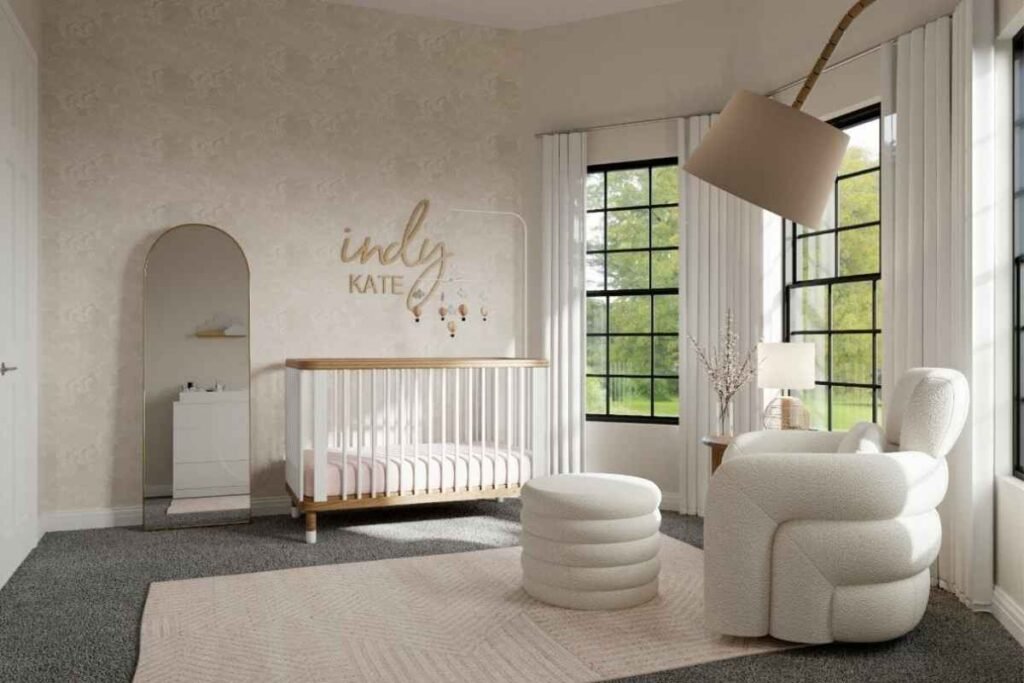
A modern neutral nursery is a versatile choice for parents who want a beautiful room that can easily evolve. Use cream, beige, taupe, and natural wood as the foundation, then add personality through one statement wall, textured textiles, artwork, and carefully chosen accessories. Choose modern furniture with clean silhouettes and enough storage to support everyday routines. A comfortable chair, soft rug, warm lighting, and a small reading area can make the room feel inviting without overcrowding it. Keep decorative details meaningful rather than adding items simply to fill space. The neutral foundation allows you to introduce new colors, toys, and interests as your child grows, making this one of the most adaptable nursery styles.
Tips for Designing the Perfect Nursery
- Start with a clear theme: Choose one overall style before buying furniture or decor so everything works together.
- Select a calming color palette: Soft neutrals, muted pastels, and earthy shades generally create a peaceful atmosphere.
- Prioritize essential furniture: Plan the crib, changing area, wardrobe, dresser, and comfortable parent seating before adding decorative pieces.
- Think about room flow: Leave enough open space to move comfortably between the main furniture pieces.
- Use layered lighting: Combine natural daylight with soft ambient lighting for different times of day.
- Choose practical fabrics: Washable rugs, easy-care curtains, and durable upholstery are especially useful in a nursery.
- Plan storage early: Babies need many small essentials, so drawers, baskets, wardrobes, and organizers can prevent clutter.
- Keep the crib area simple: Follow current safe-sleep recommendations and keep unnecessary items out of the baby’s sleep space.
- Choose furniture that can grow: Whenever possible, select pieces that can remain useful beyond the newborn stage.
- Use decor thoughtfully: A few meaningful pieces usually create a more polished look than filling every wall and surface.
- Add texture: Wood, linen, cotton, woven materials, and soft rugs can make a simple room feel warm and cozy.
- Consider the natural light: Observe how sunlight enters the room before choosing wall colors and furniture placement.
- Create a flexible play area: Leave some open floor space that can adapt as your baby becomes more mobile.
- Keep everyday essentials convenient: Organize frequently used items where adults can reach them easily during daily routines.
- Think long-term: Choose a foundation that can transition into a toddler room with small changes rather than a complete redesign.
Common Nursery Mistakes to Avoid
- Overdecorating the room: Too many patterns, accessories, and colors can make a nursery feel busy instead of peaceful.
- Choosing style over practicality: Beautiful furniture is useful only when it also works well for everyday routines.
- Ignoring storage: Without enough storage, baby clothes, diapers, toys, and blankets can quickly create clutter.
- Using too many strong colors: Several bold shades competing for attention can make the room feel visually overwhelming.
- Filling every empty corner: Open space is important for movement and helps the nursery feel larger.
- Buying furniture without measuring: Always check the room dimensions and furniture measurements before making major purchases.
- Forgetting future needs: A room designed only for a newborn may require major changes sooner than expected.
- Using unsafe crib accessories: Keep the baby’s sleep environment aligned with current safe-sleep recommendations.
- Placing cords within reach: Secure cords from lamps and window coverings so they remain safely away from children.
- Skipping furniture anchoring: Tall or heavy furniture should be properly secured according to manufacturer guidance.
- Choosing difficult-to-clean materials: Nursery messes are inevitable, so practical finishes and washable textiles are valuable.
- Following trends too closely: A timeless foundation allows you to update the room without replacing everything.
- Adding too many toys: A few age-appropriate toys are enough; excessive toys can make the nursery feel cluttered.
- Forgetting parent comfort: The nursery should work for parents too, especially around feeding, soothing, and changing routines.
Frequently Asked Questions
What is the best color for a nursery?
There is no single best nursery color. Soft neutrals, warm beige, sage green, muted blue, lavender, blush, and other gentle shades can all create a calming atmosphere. Choose a color that works with the room’s natural light and your preferred decorating style.
How do I make a small nursery look bigger?
Use lighter colors, appropriately scaled furniture, vertical storage, and plenty of open floor space. Avoid filling every wall and corner with decor. Mirrors and good natural lighting can also help the room feel more open.
What furniture is essential for a nursery?
The essentials usually include a suitable crib, changing setup, clothing storage, and comfortable seating for parents. Additional furniture should depend on the room’s size and your family’s needs rather than trying to fit everything into the space.
How can I make a nursery look expensive?
Focus on a cohesive color palette, quality-looking materials, thoughtful lighting, natural textures, and a few statement pieces. You do not need excessive decoration. A simple room with coordinated furniture and carefully selected details often looks more elegant.
How do I choose a nursery theme?
Start with the atmosphere you want, such as calm, playful, natural, coastal, modern, or classic. Then choose a color palette and furniture style that support that feeling. Use themed elements sparingly so the room remains versatile.
How can a nursery grow with my child?
Choose timeless furniture, neutral walls, flexible storage, and simple decorative pieces. As your child grows, you can replace baby-specific artwork, textiles, and accessories while keeping the main furniture and room layout.
How do I keep a nursery organized?
Give every category of item a designated storage place. Use wardrobes for clothing, drawers for smaller essentials, baskets for toys and blankets, and shelves for books or decorative items. Regularly remove items your child has outgrown.
Should a nursery have a reading area?
A reading area is not essential, but it can be a wonderful addition if you have enough space. A comfortable chair and a small collection of books can create a relaxing spot for bonding and bedtime stories.
Conclusion
The most beautiful nursery is not necessarily the one with the most decorations. It is the room where color, furniture, lighting, storage, comfort, and personal style work together. Whether you prefer a Scandinavian white and oak nursery, a sage green botanical room, a coastal blue design, a modern boho space, or a soft lavender cottage nursery, the key is creating a cohesive environment that feels comfortable and practical.
Start with the overall style and color palette, choose essential furniture carefully, and then add textures and decorative details that make the room feel personal. With thoughtful planning, you can create a dreamy and functional baby room that feels beautiful today and can continue evolving with your little one.