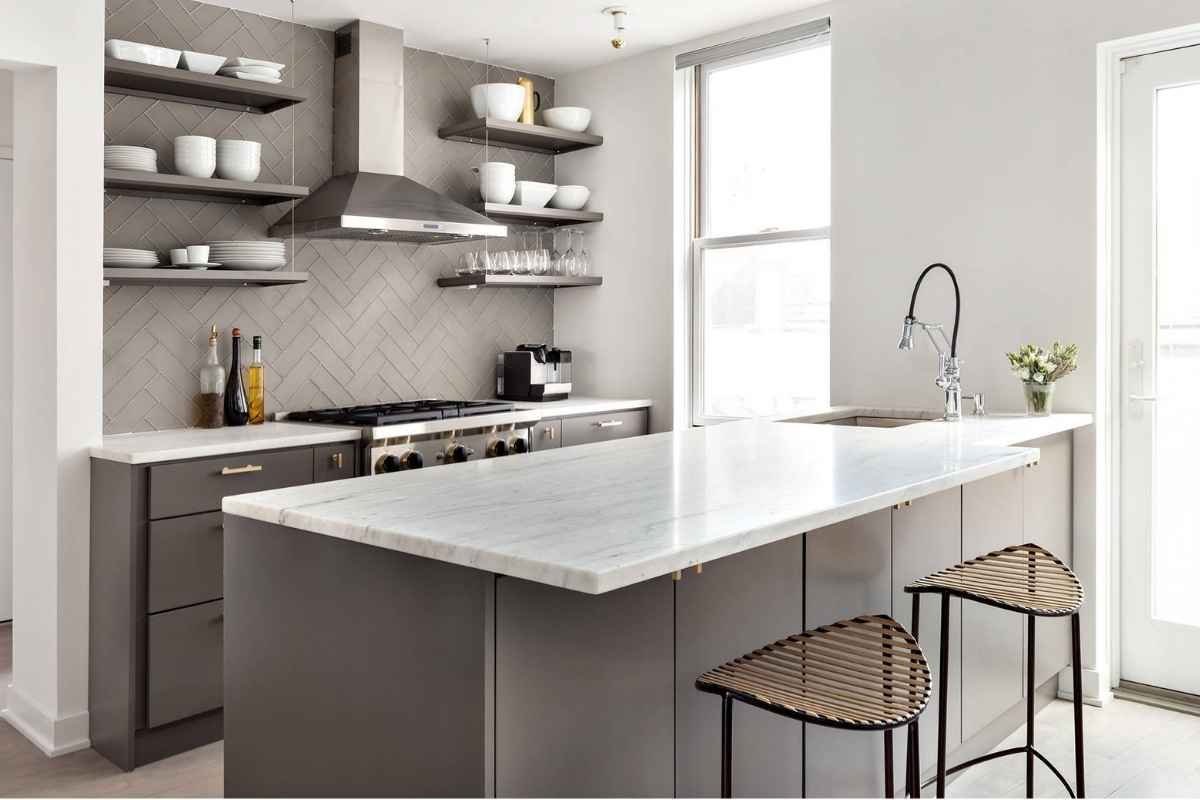
A small kitchen does not have to feel cramped or difficult to work in. The key is to make every surface, cabinet, and empty corner work a little harder while keeping the room visually calm. Smart storage can hide everyday clutter, while a few intentional decorative details can make the kitchen feel polished rather than purely functional.
The best small-kitchen ideas are not necessarily about adding more furniture. They are about choosing the right places to store things, using vertical space, and keeping the visual layout open.
1. Turn the Backsplash Into Useful Storage
The wall above your countertop is often an overlooked storage opportunity. Instead of leaving the backsplash completely unused, consider adding a slim rail, a few hooks, or a narrow shelf for items you reach for regularly.
A simple rail can hold cooking utensils, measuring cups, or small kitchen towels without taking up valuable counter space.
What works best:
- Keep only frequently used items within reach.
- Choose one consistent finish for hooks and rails.
- Leave enough open wall space so the area does not look crowded.
The goal is to make storage feel like part of the kitchen design rather than an afterthought.
2. Use the Inside of Cabinet Doors
Sometimes the best storage is hiding behind a cabinet door.
The inside of a cabinet door can hold lightweight cutting boards, measuring spoons, cleaning supplies, or small kitchen tools with the help of slim organizers. This is especially useful in kitchens where drawers are limited.
A good rule: use cabinet-door storage for small, flat items rather than bulky objects. That way, the door can still close properly and the cabinet remains easy to use.
3. Make the Corner Cabinet Work Harder
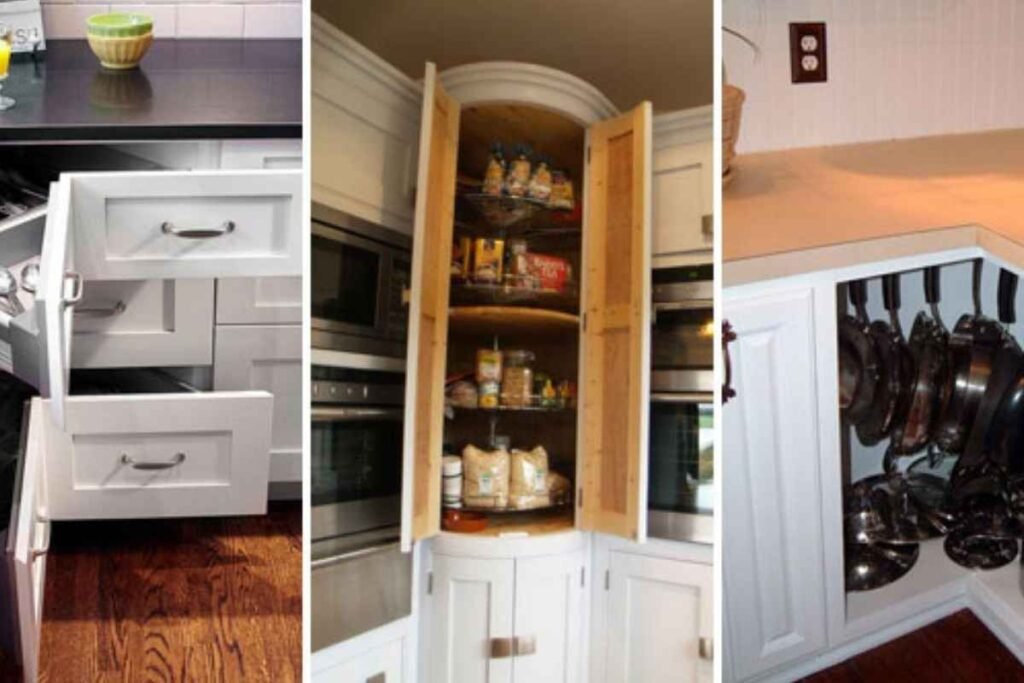
Corner cabinets can quickly become awkward storage zones where things disappear into the back. Instead of allowing that space to go unused, install a rotating organizer, pull-out shelves, or tiered storage.
This makes it easier to see everything at once and prevents you from buying duplicates simply because something was forgotten at the back of the cabinet.
Small-space win:
A well-organized corner can give you extra usable storage without adding another cabinet.
4. Add a Slim Rolling Cart
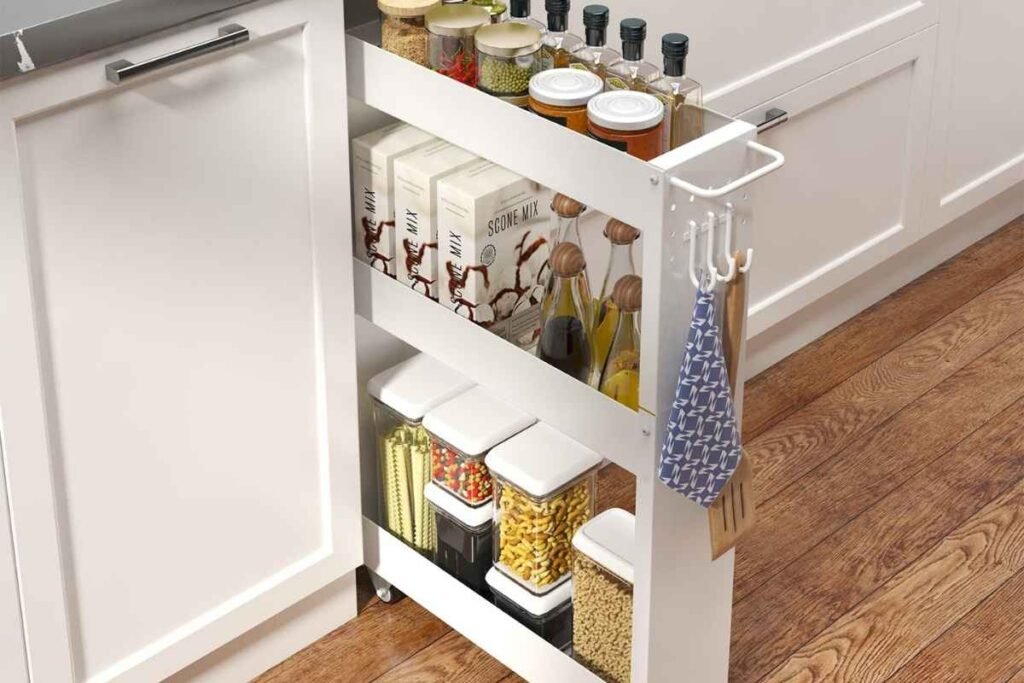
A narrow rolling cart can be surprisingly useful in a small kitchen. Choose one that fits between existing cabinets, beside the refrigerator, or in another unused gap.
Use it for pantry staples, baking ingredients, coffee supplies, or kitchen linens. Because it can be moved when necessary, it offers flexibility that permanent shelving cannot.
Before buying one
Measure the available space carefully. A cart that is only slightly too wide can make an already-small kitchen feel even tighter.
Look for:
- A slim profile
- Multiple shelves
- Lockable wheels
- A simple finish that blends with your kitchen
5. Take Storage Up Instead of Out
When floor space is limited, look upward.
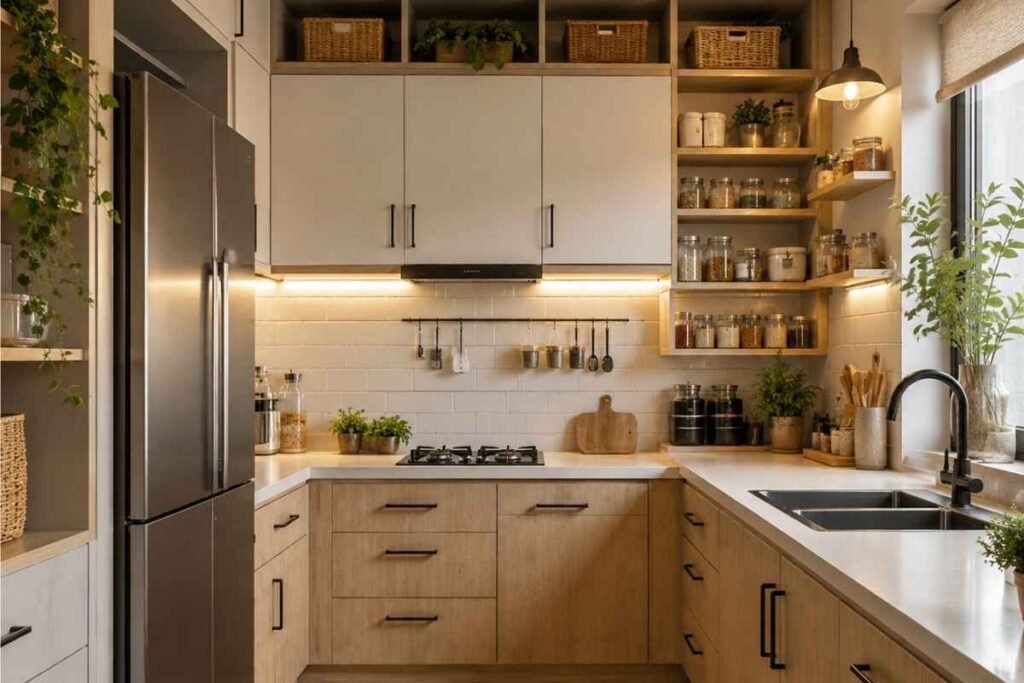
Tall cabinets, vertical shelves, and stackable organizers can take advantage of the space between your countertops and ceiling. Even inside cabinets, shelf risers can create a second level for plates, mugs, or bowls.
This is one of the easiest ways to increase capacity without making the kitchen physically larger.
Designer note: Keep the highest shelves for things you use less often. Everyday items should stay within comfortable reach.
6. Style the Countertop With Intention
Small kitchens can become visually crowded when every appliance and decorative object stays on the countertop.
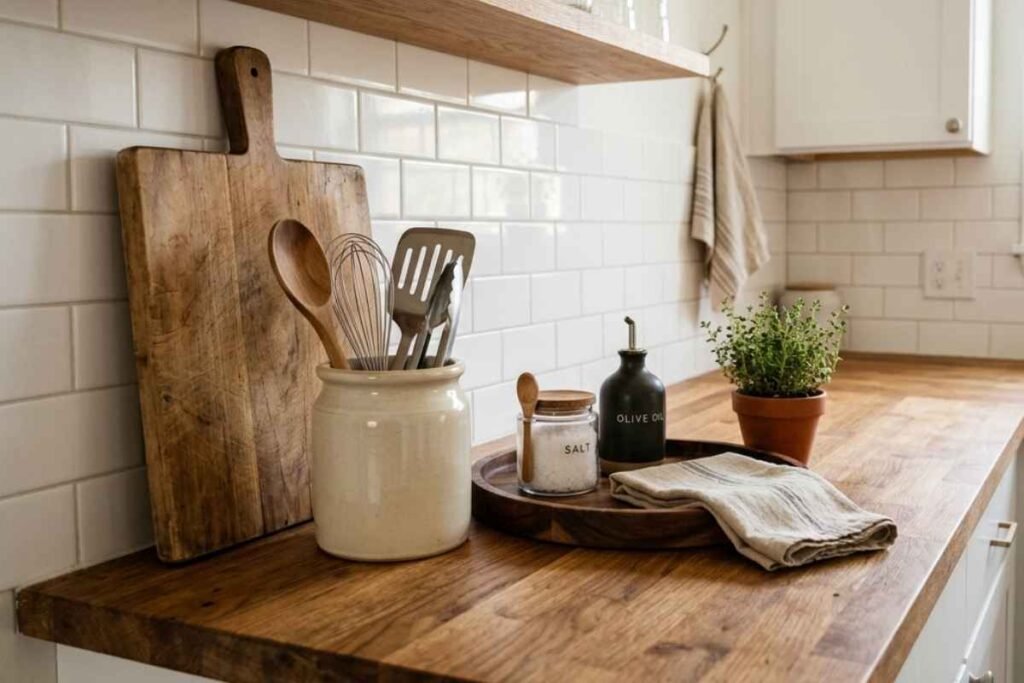
Instead of removing all decor, choose a few pieces that are both attractive and useful. A wooden cutting board, ceramic utensil holder, attractive tray, or simple container for frequently used ingredients can add warmth without creating clutter.
Try the “edited countertop” approach
Keep the essentials visible and give everything else a designated home.
A small kitchen often looks more expensive when there is less competing for attention.
7. Choose Open Shelving Carefully
Open shelving can make a small kitchen feel lighter because it visually breaks up a wall of closed cabinetry. But it works best when the shelves are edited rather than overloaded.
Use them for attractive everyday pieces such as:
- Neutral dishes
- Glassware
- Small bowls
- Wooden serving boards
- A few decorative objects
What weakens the look: filling every inch of every shelf.
Leave some breathing room between objects. The empty space is part of the design.
8. Use a Kitchen Island With Storage
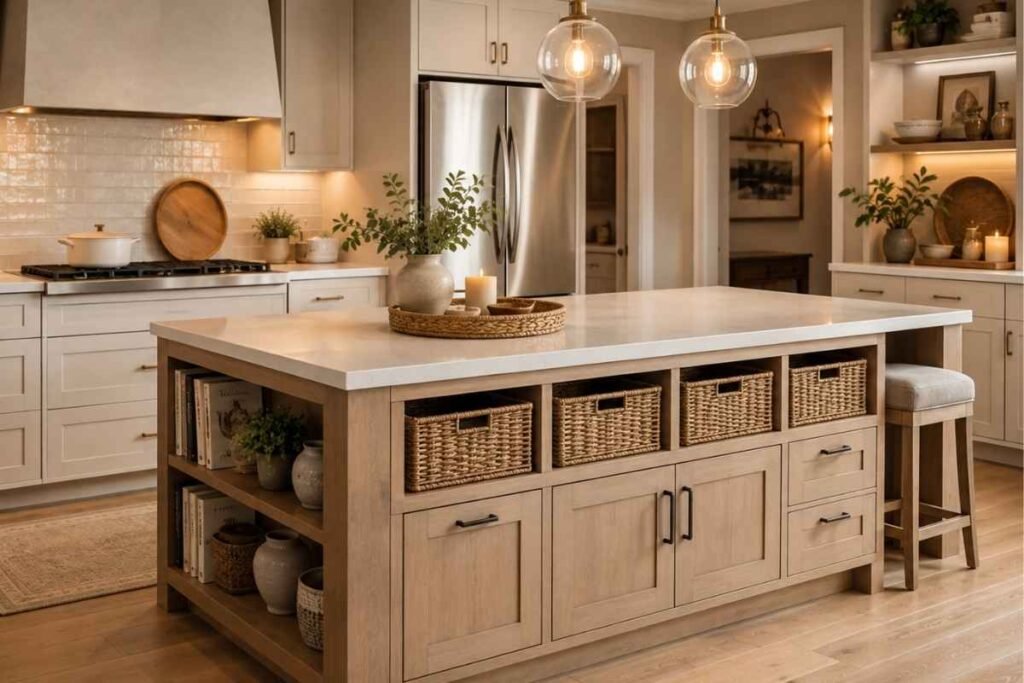
If your kitchen layout allows for an island, choose one that provides more than an extra work surface.
An island with drawers, cabinets, or open shelving underneath can become a valuable storage zone for pots, pans, cutting boards, or serving pieces.
For very small kitchens, a compact island or movable cart may work better than a large fixed island.
Think about circulation first. You should still be able to comfortably open cabinets and move between the main work areas.
9. Create a Dedicated Coffee or Beverage Station
A small section of countertop can become a practical beverage station instead of allowing coffee supplies to spread throughout the kitchen.
Keep the coffee maker, mugs, beans, and frequently used accessories together. A small tray can visually define the area and make it feel intentional.
This approach is particularly useful when you want to keep the rest of the countertop clear.
Keep it simple: one tray, a few everyday pieces, and enough space to actually prepare the drink.
10. Use Matching Containers to Reduce Visual Clutter
Storage does not have to disappear completely to make a kitchen look organized.
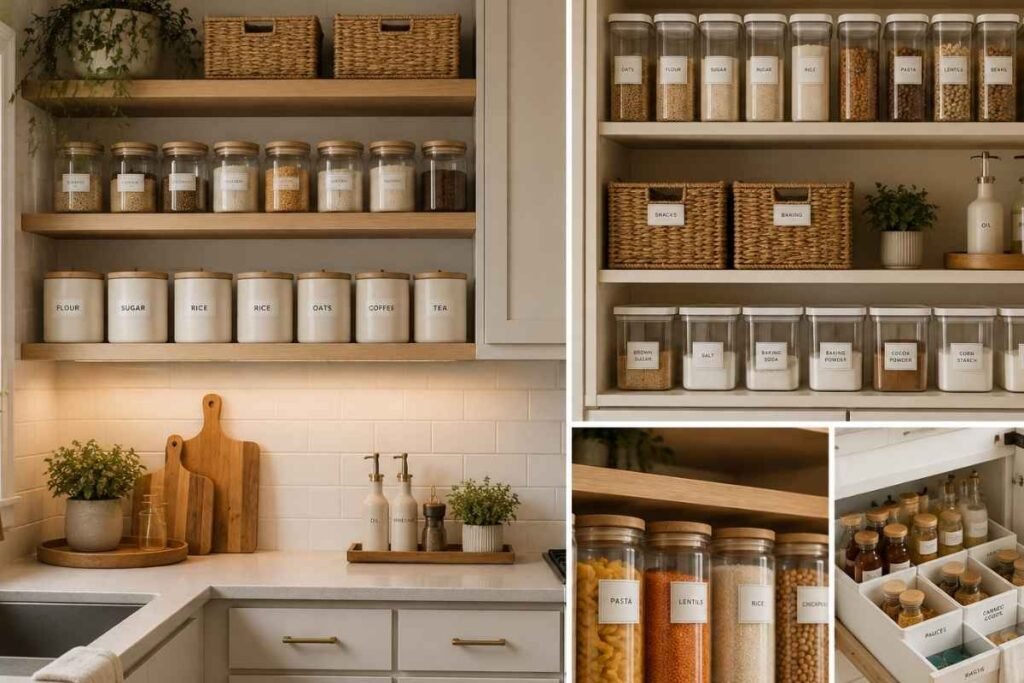
Uniform containers can make pantry shelves, open shelving, or countertop storage look much more cohesive. Matching shapes and labels create a cleaner visual rhythm, especially when several items are stored together.
Choose containers that suit the size of your cabinets rather than buying large sets first and trying to make them fit afterward.
The small-kitchen formula
Less visual clutter + better vertical storage + intentional decor = a kitchen that feels larger.
You do not need to hide everything. You simply need to give everything a place.
What Helps a Small Kitchen Feel Bigger?
A few design choices can make a noticeable difference:
- Keep frequently used items easy to reach.
- Use vertical space whenever possible.
- Choose furniture with built-in storage.
- Keep countertops selectively styled.
- Repeat a few finishes instead of mixing too many.
- Use light-reflective surfaces where appropriate.
- Leave clear pathways around the main work areas.
What Can Make a Small Kitchen Feel Even Smaller?
Adding storage is not always the answer. Too many organizers, shelves, baskets, and decorative pieces can create another form of clutter.
Avoid:
- Overloading open shelves
- Keeping every appliance on the counter
- Using oversized furniture
- Filling unused walls with unnecessary decor
- Mixing too many container styles
- Blocking natural light with bulky storage
The goal is not maximum storage at any cost. It is useful storage that still allows the kitchen to breathe.
A Simple Weekend Small-Kitchen Refresh
If you do not want to renovate, start with what you already have.
Day 1: Remove everything from one cabinet or drawer and keep only what you actually use.
Next: Group similar items together and identify awkward spaces that could benefit from a shelf riser, divider, hook, or small organizer.
Then: Clear the countertop and return only the items you use regularly.
Finally: Add one decorative detail—a wooden board, ceramic piece, framed print, or simple tray—to give the kitchen some personality.
Small changes can make the room feel noticeably more functional without requiring a full makeover.
The bottom line
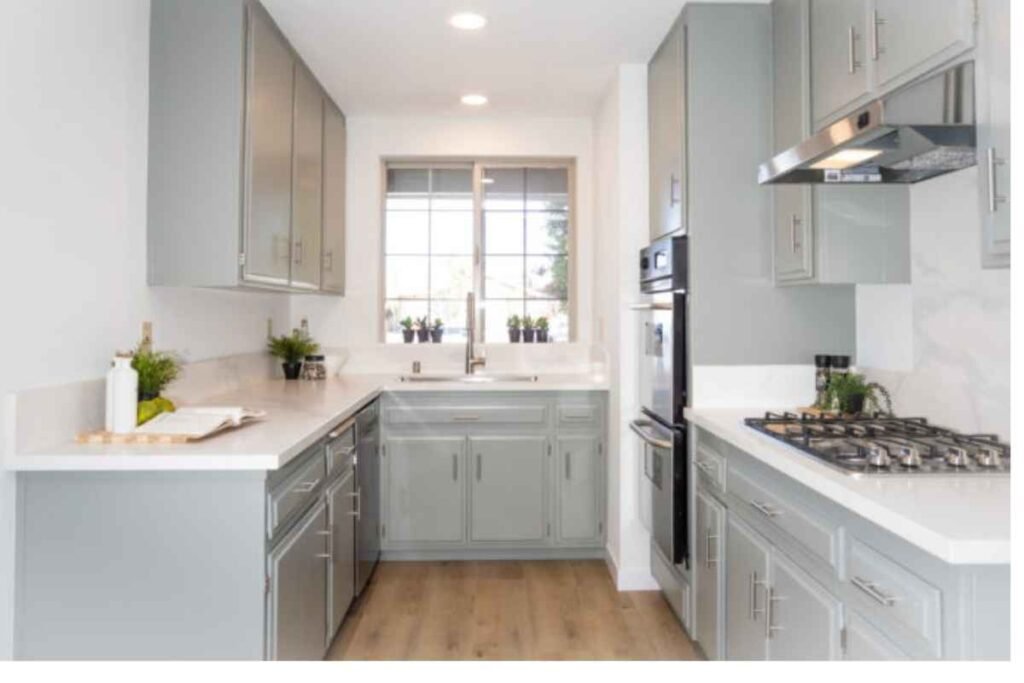
A small kitchen does not need more stuff—it needs better decisions about space.
Use overlooked areas, take storage upward, choose furniture that performs more than one job, and keep visible surfaces intentionally edited. Then add a few warm decorative touches to make the room feel personal.
When storage and decor work together, even a compact kitchen can feel organized, comfortable, and thoughtfully designed.