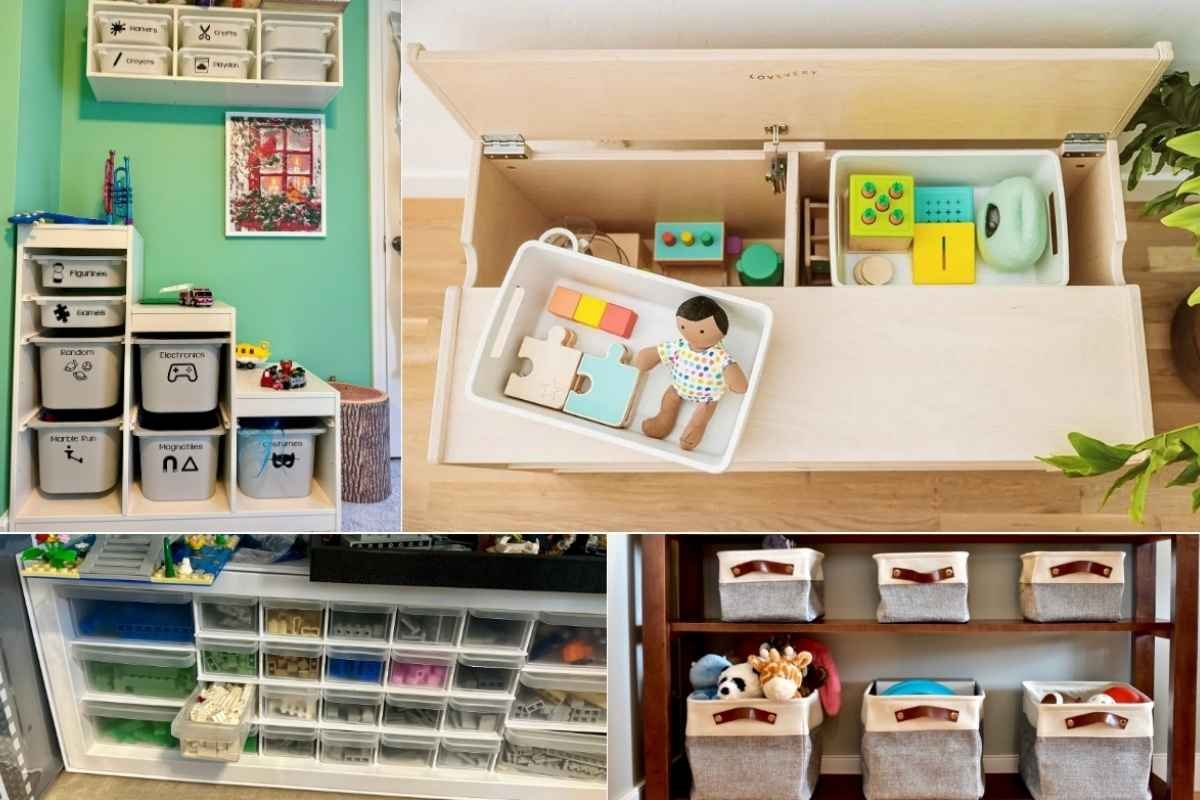
Kids’ clothes, shoes, toys, school bags, books, and tiny everyday essentials can make even a beautiful home feel cluttered. The answer isn’t simply adding more shelves and baskets—it’s choosing storage that disappears into the room.
Think of a window seat that opens to reveal a toy compartment, a wardrobe with a dedicated pull-out shoe drawer, or a stylish bench hiding a row of school bags underneath.
These clever solutions keep children’s belongings close enough to use every day, but hidden enough to maintain a clean, modern look.
Here are 20 smart storage tricks that make kids’ clutter practically disappear.
1. Hide Toys in Deep Drawers Under the Bed
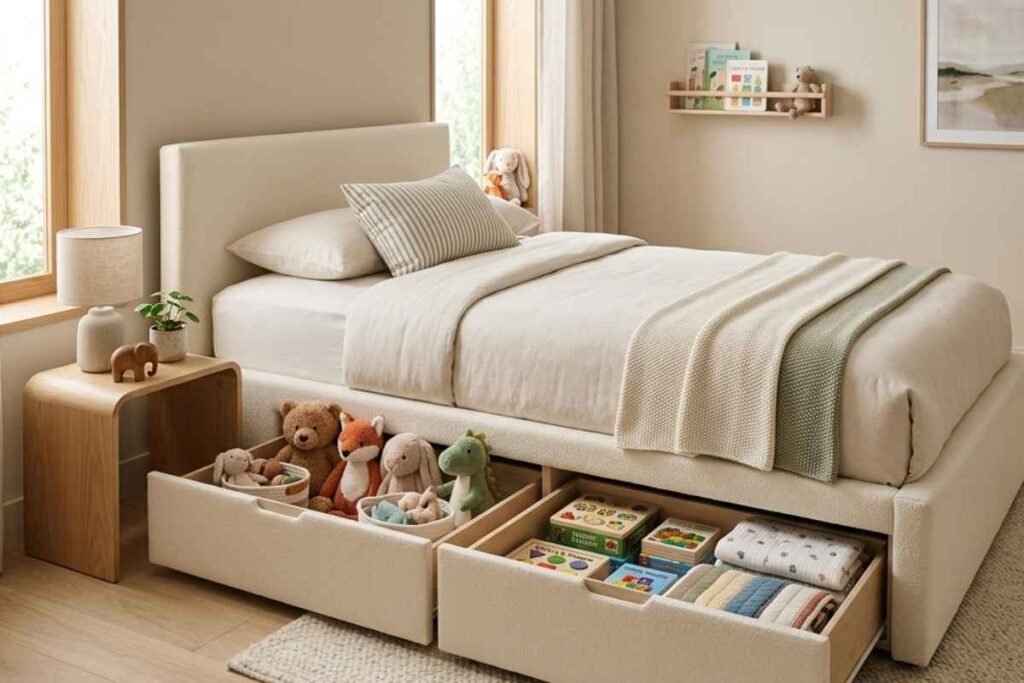
Imagine a simple upholstered or wooden bed with three or four wide drawers running along the bottom. From the outside, the bed looks completely ordinary—but pull out a drawer and there is room for stuffed animals, LEGO, puzzles, and board games.
Use one drawer for toys, another for extra bedding, and another for seasonal clothes. Choose drawers that extend almost the full length of the bed so you get maximum storage without adding another cabinet.
Best for: Toys, blankets, seasonal clothes, board games.
2. Turn a Pretty Ottoman Into a Secret Toy Box
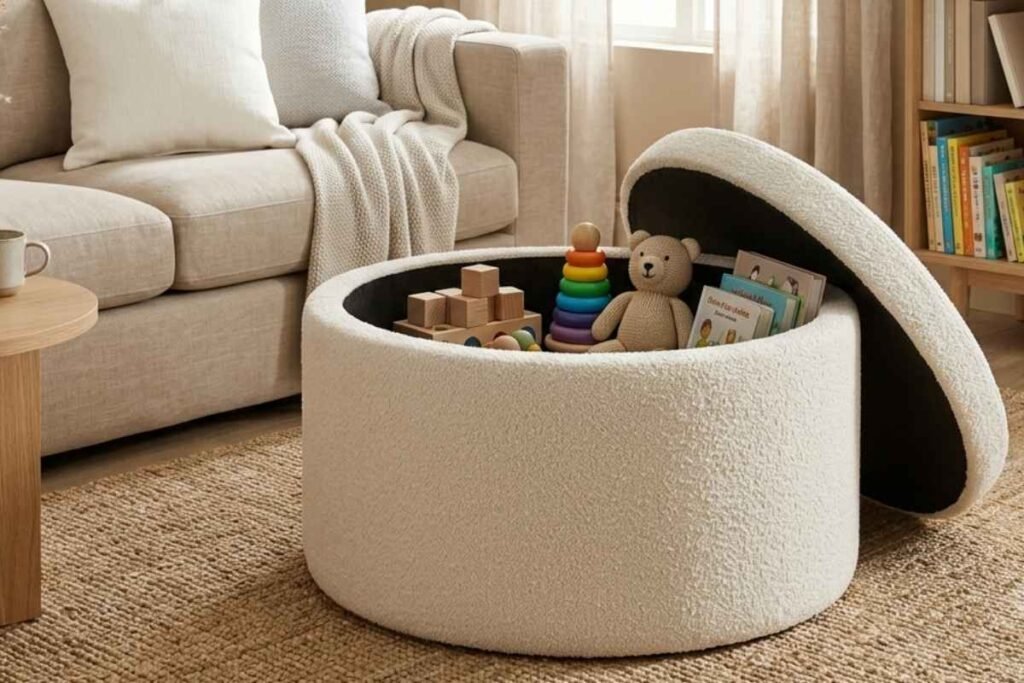
Place a large upholstered ottoman at the end of the bed or in a family living room. Choose a lift-up lid with a completely hidden compartment inside.
Stuffed animals, dolls, toy cars, and coloring books can disappear inside within seconds. Because the exterior looks like regular furniture, the storage doesn’t make the room feel overly childlike.
For a more designer look, match the ottoman fabric to the room’s curtains, rug, or sofa.
Best for: Soft toys, games, dolls, coloring books.
3. Build Hidden Drawers Under a Window Seat
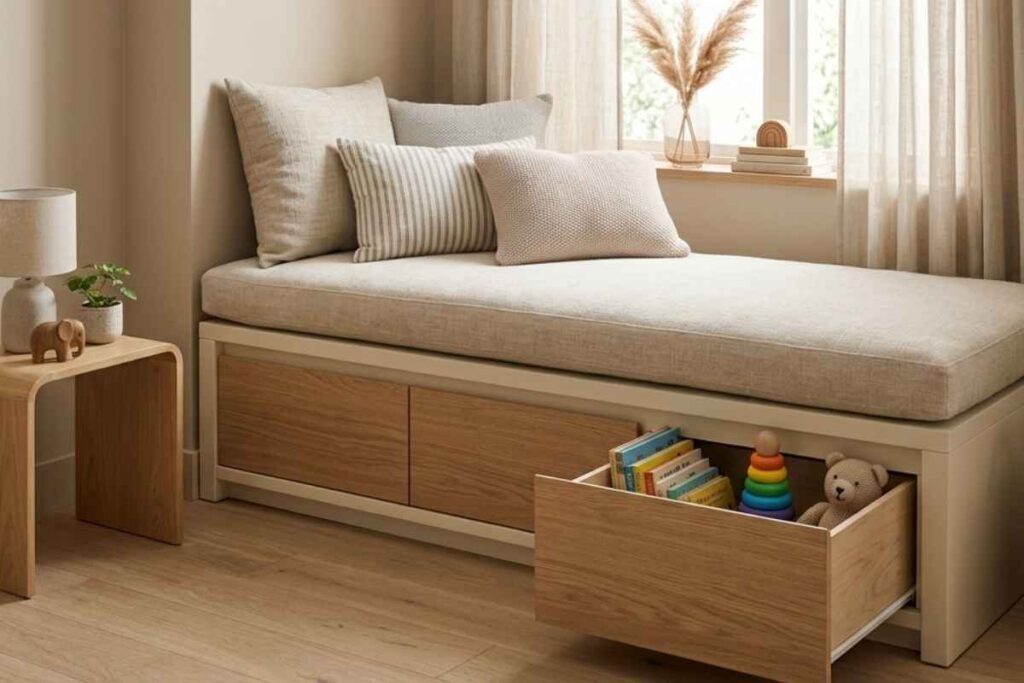
A built-in window seat can become a secret storage wall disguised as a cozy reading nook.
Picture a long cushioned bench beneath the window with two or three handle-free drawers underneath. The drawers can hold toys, books, stuffed animals, blankets, or clothes.
Keep the front panels the same color as the surrounding cabinetry so the storage visually blends into the wall.
Best for: Toys, books, blankets, extra clothes.
4. Install a Slim Pull-Out Shoe Cabinet
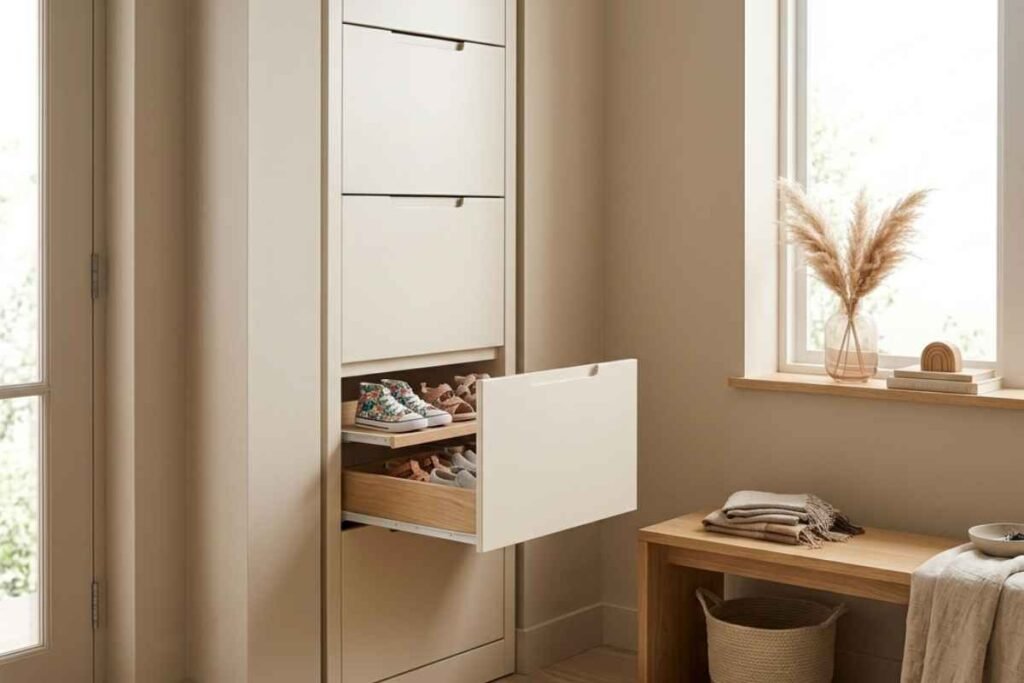
Instead of a pile of tiny sneakers beside the door, create a slim vertical cabinet with pull-out shoe shelves.
Each shelf can hold several pairs, while the cabinet doors hide everything from view. Keep everyday sneakers on the lowest shelves and sandals, boots, or special-occasion shoes higher up.
A handle-free or push-to-open design gives the cabinet a sleek, built-in appearance.
Best for: Sneakers, sandals, school shoes, boots.
5. Give School Bags a Hidden Cubby Wall
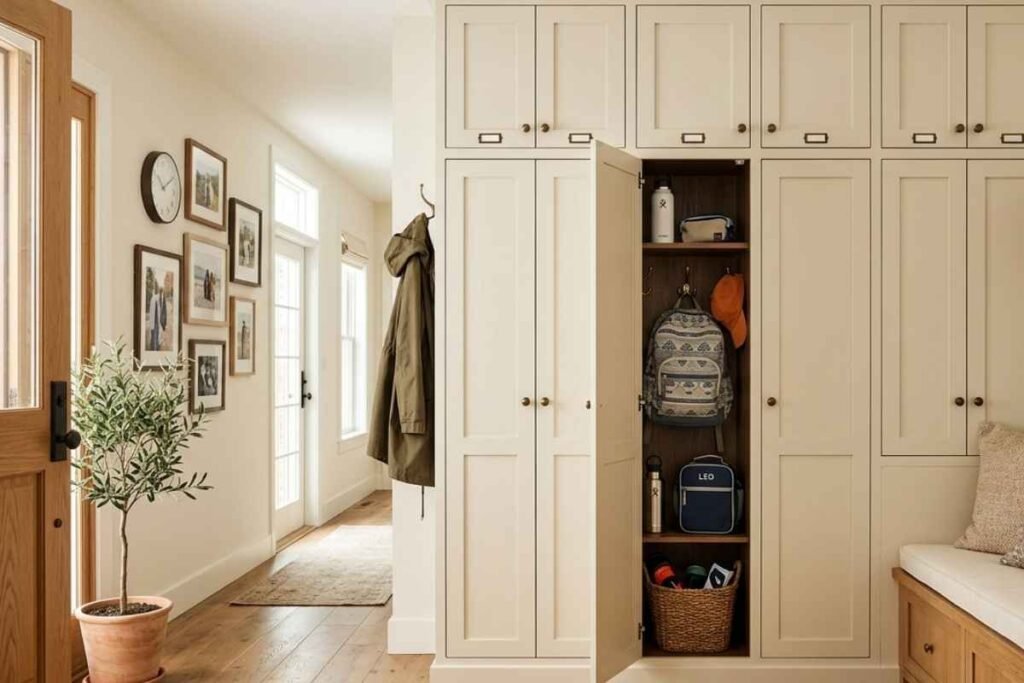
Create individual cubbies inside a closed entryway cabinet—one section per child.
Each cubby can hold a backpack, lunch bag, water bottle, and sports kit. Add a small hook inside each compartment for caps or jackets.
When the cabinet doors close, the collection of colorful backpacks disappears and the entrance instantly looks calmer.
Best for: School bags, lunch bags, sports bags, water bottles.
6. Replace Half Your Open Toy Shelves With Closed Cabinets
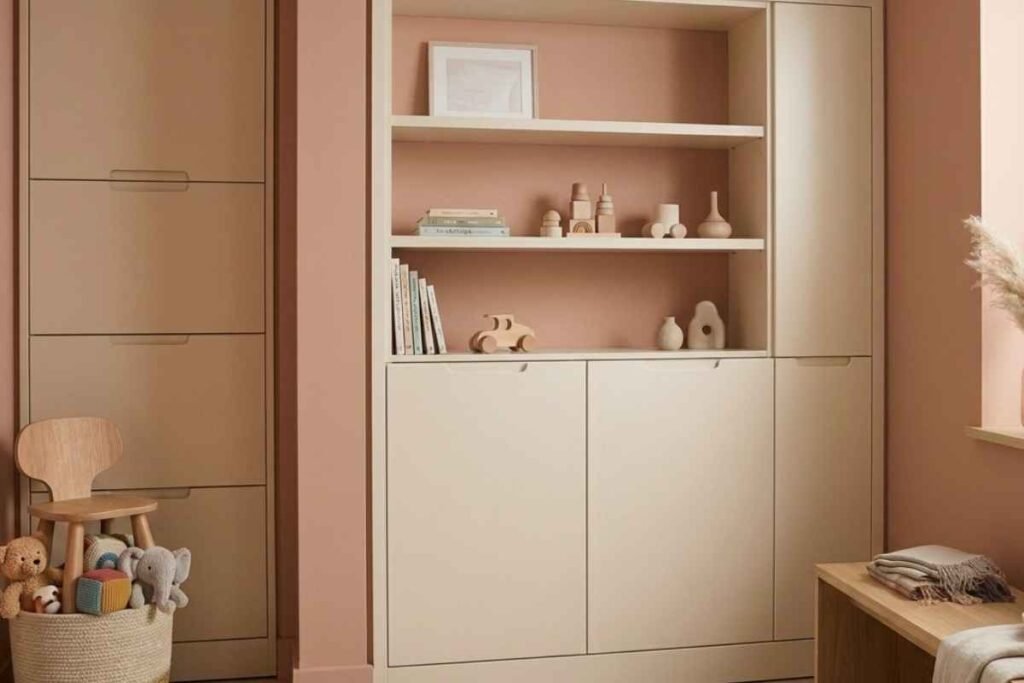
Instead of displaying every toy, create a wall with a combination of open shelves and closed cupboards.
Use the open section for a few favorite books, framed artwork, or beautiful wooden toys. Hide the colorful plastic toys, games, and miscellaneous pieces behind the lower cabinet doors.
The result is still playful, but much less visually busy.
Best for: Toys, games, craft supplies, miscellaneous clutter.
7. Hide Shoes and Bags Inside a Storage Bench
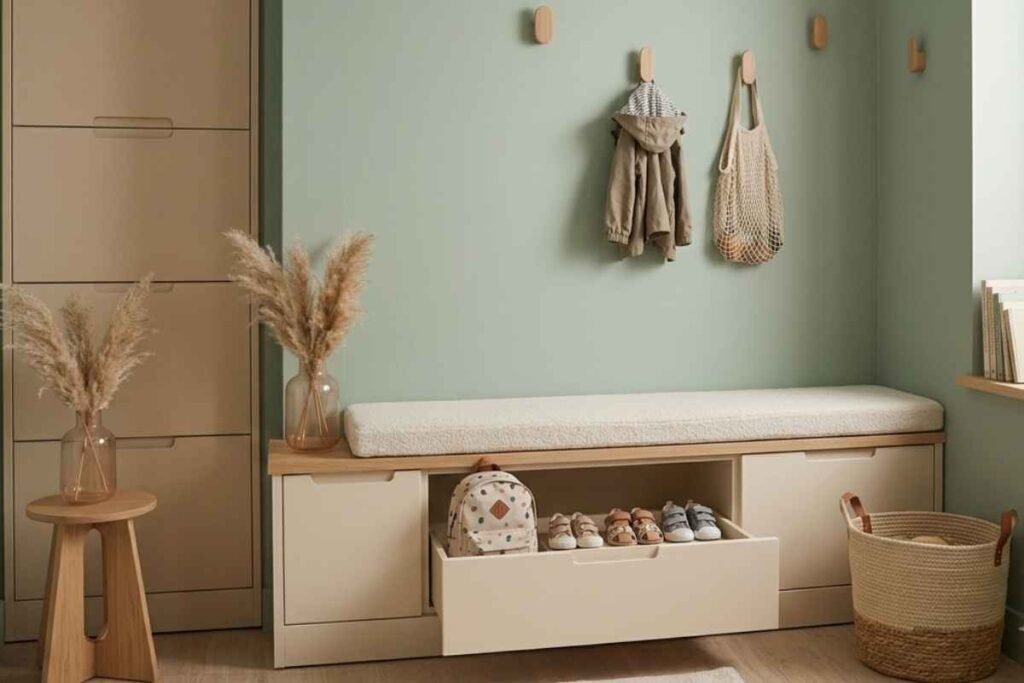
Place a long bench near the entrance with deep drawers or lift-up compartments underneath.
Children can sit on the bench to put on their shoes, while the space beneath stores shoes, backpacks, helmets, and sports equipment.
For a seamless look, use cabinet fronts that match the wall or built-in shelving around them.
Best for: Shoes, bags, sports equipment, helmets.
8. Use Matching Boxes on the Top Wardrobe Shelf
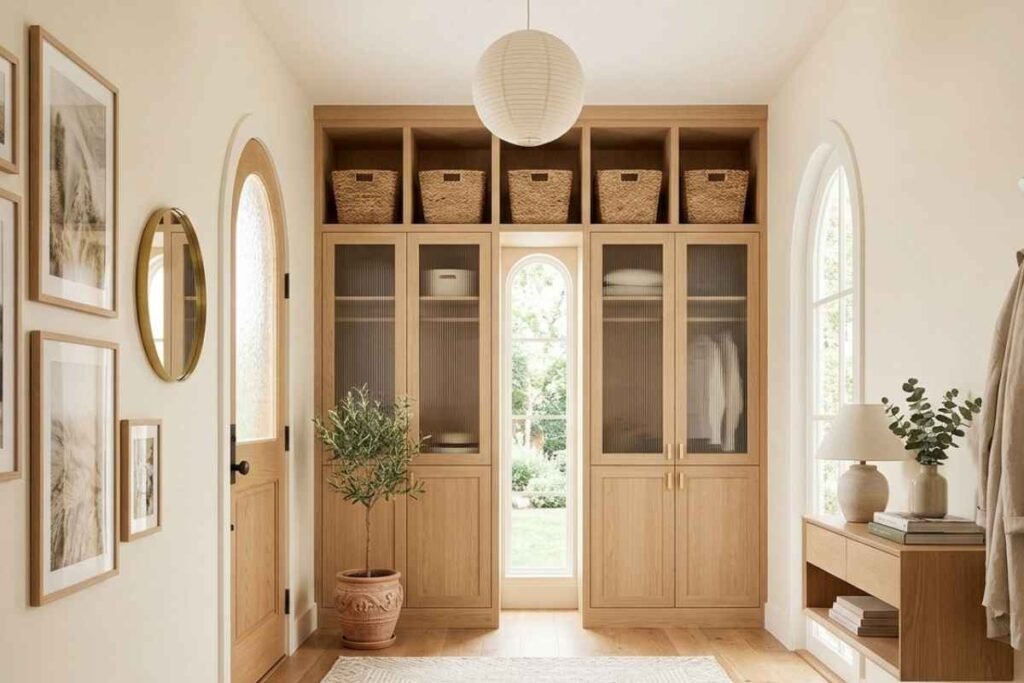
The upper part of a wardrobe is perfect for things children don’t need every day.
Place matching lidded boxes in one neat row across the top shelf. Use them for winter jackets, festive outfits, outgrown clothes, swimming gear, or next-size clothing.
Instead of seeing a collection of mismatched bags and boxes, you see one clean, uniform line.
Best for: Seasonal clothes, outgrown clothes, special outfits.
9. Create a Hidden Craft Drawer Beneath the Desk
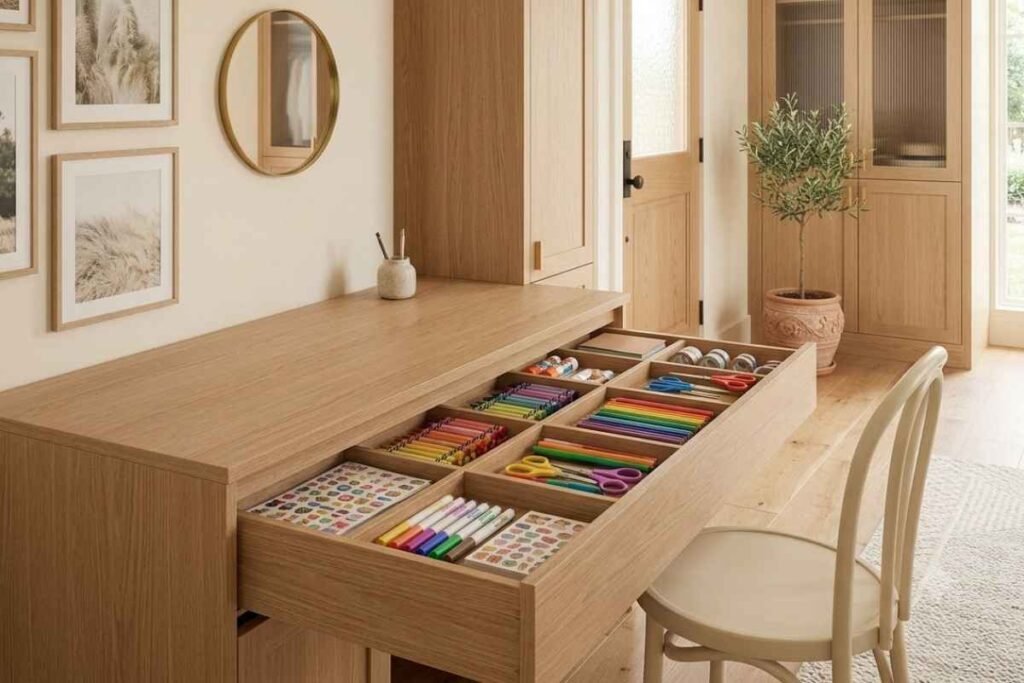
Give the study desk one extra-deep drawer dedicated entirely to crafts.
Inside, use narrow dividers for crayons, colored pencils, markers, glue, scissors, stickers, and washi tape.
When the creative session ends, everything goes back inside and the desk surface becomes completely clear again.
Best for: Stationery, crayons, markers, craft supplies.
10. Turn the Space Under the Stairs Into a Secret Kids’ Cabinet
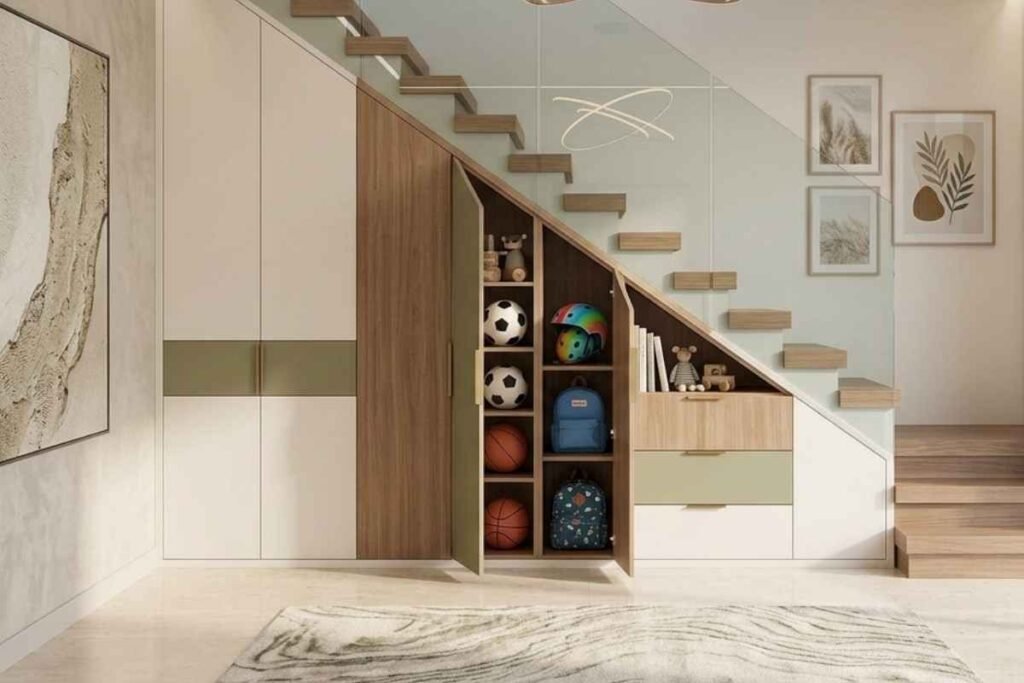
That awkward triangular space under the stairs can become a surprisingly large storage area.
Use handle-free cabinet doors and drawers that follow the shape of the staircase. Store bulky toys, scooters, sports equipment, school bags, and seasonal belongings inside.
From the outside, it looks like part of the architecture rather than a children’s storage area.
Best for: Bulky toys, scooters, sports gear, bags.
11. Choose a Toy Chest That Looks Like a Sideboard
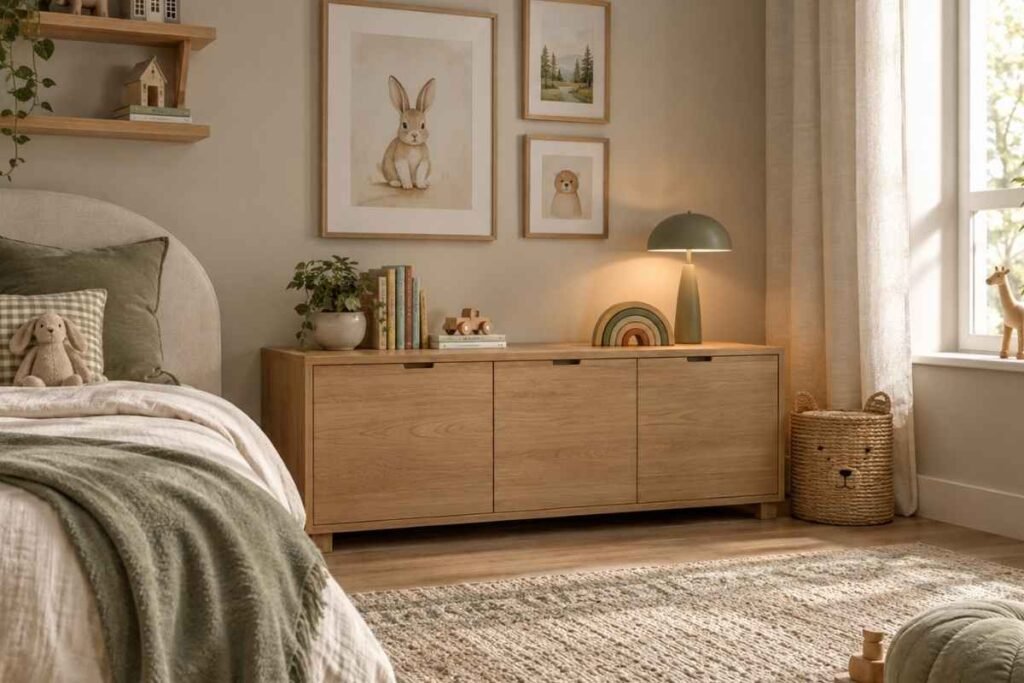
Instead of a bright plastic toy box, choose a low wooden chest with clean lines and a concealed lid.
Place it against a wall beneath artwork or at the foot of the bed. It can look like a stylish sideboard while quietly storing a large toy collection.
Choose a finish that matches the child’s bed or other wooden furniture for a coordinated appearance.
Best for: Toys, stuffed animals, dolls, games.
12. Hide Extra Books Behind Lower Cabinet Doors
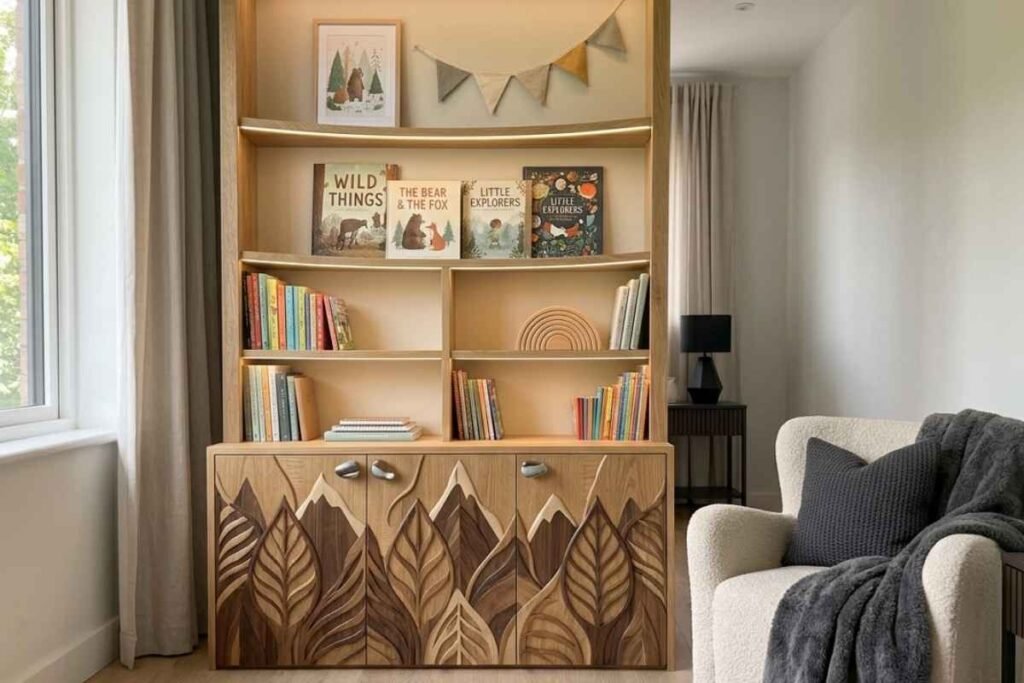
Create a bookshelf where the upper half stays open and the lower half has doors.
Display a small selection of favorite picture books at eye level. Keep school notebooks, older books, activity books, and extra reading material inside the lower cupboards.
This gives the room the charm of a reading nook without covering every wall with visible books.
Best for: Books, notebooks, activity books.
13. Conceal the Laundry Hamper Inside the Wardrobe
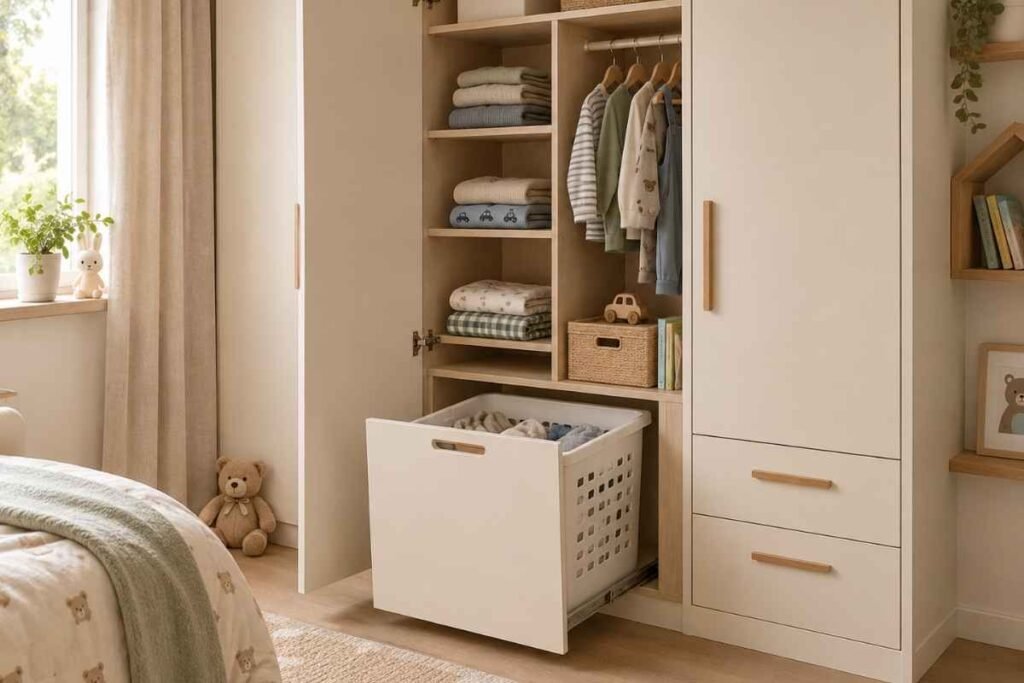
Replace the visible laundry basket with a pull-out hamper hidden behind a wardrobe door.
The child can simply open the door, drop dirty clothes inside, and close it again. For multiple children, use two removable baskets so clothes can be separated immediately.
No overflowing laundry basket means one less source of bedroom clutter.
Best for: Dirty clothes, towels, school uniforms.
14. Use the Back of the Closet Door
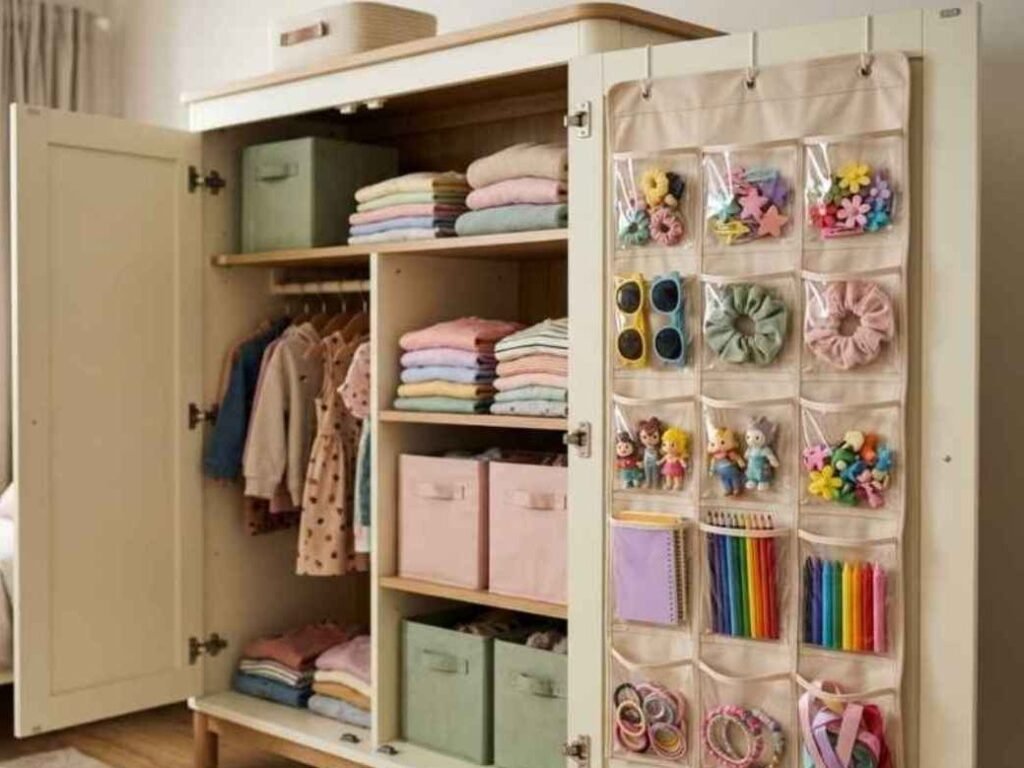
The inside of a wardrobe door is a hidden vertical storage opportunity.
Add a slim organizer with small individual pockets or narrow shelves for hair accessories, sunglasses, small toys, stationery, belts, or school essentials.
Close the wardrobe door and all those little items disappear from view.
Best for: Accessories, small toys, stationery, hair items.
15. Add a Secret Drawer for All the Tiny Stuff
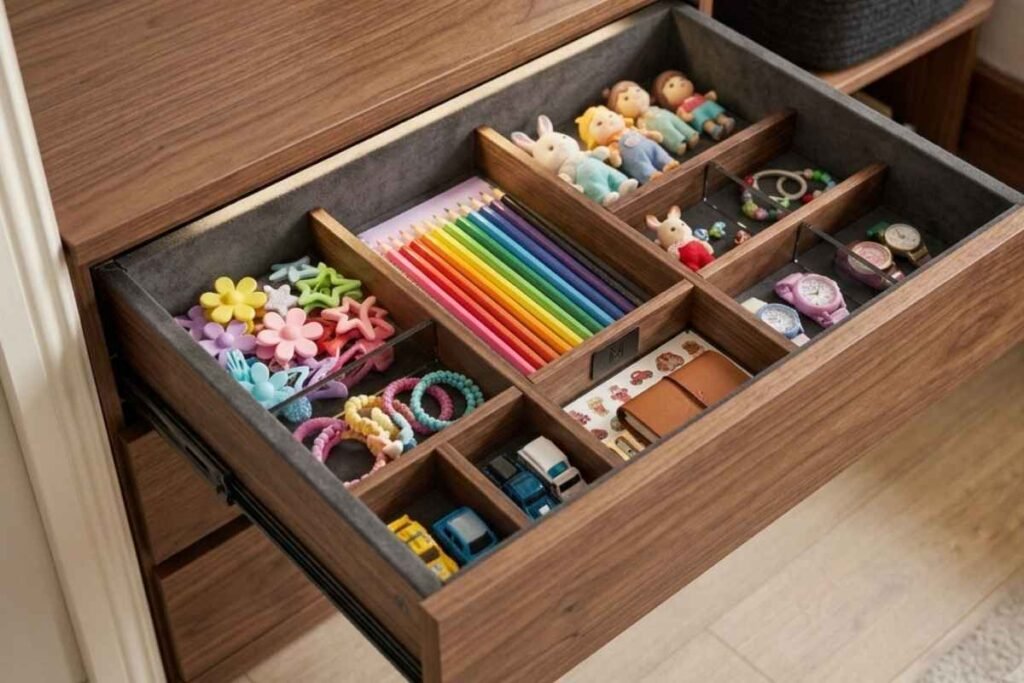
Give all the tiny objects that normally spread across the room one dedicated hidden drawer.
Use removable dividers to create small sections for hair clips, watches, stickers, chargers, small toys, pencils, and accessories.
The drawer should be shallow enough that children can see everything at once rather than digging through a deep box.
Best for: Tiny toys, accessories, stationery, gadgets.
16. Turn the Study Desk Into a Hidden School Station
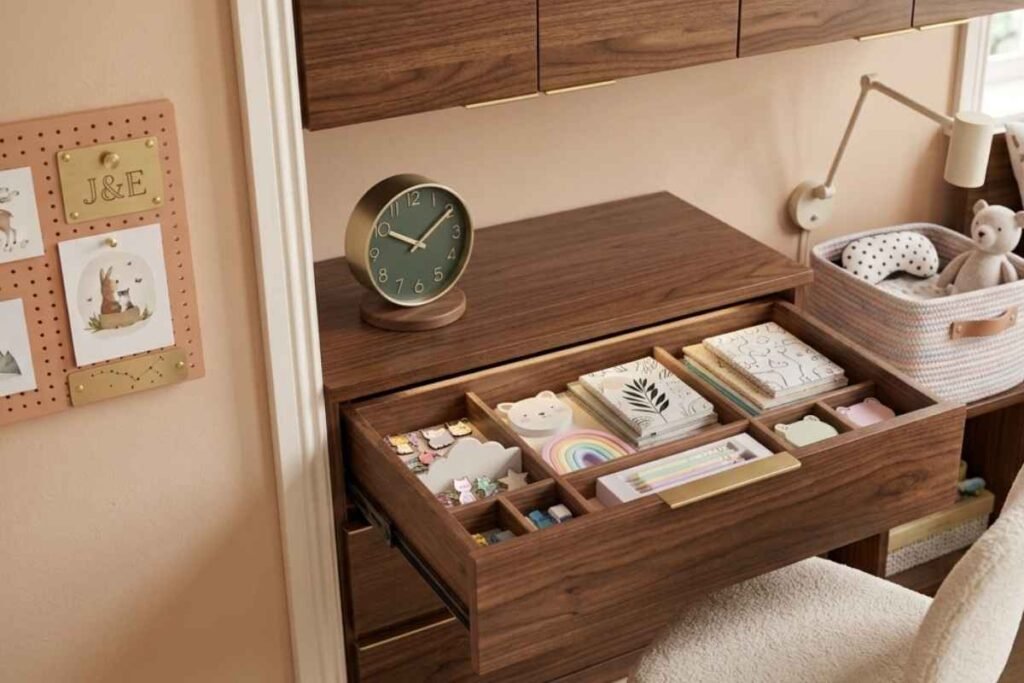
Choose a desk with drawers that run underneath the work surface and, if possible, a narrow overhead cabinet.
Keep pencils and everyday supplies in the top drawer. Store notebooks, worksheets, textbooks, and project materials in the larger compartments.
At the end of homework time, close the drawers and cabinet doors. The entire study area looks ready for the next day.
Best for: School books, notebooks, stationery, homework supplies.
17. Build a Closed Entryway Drop Zone
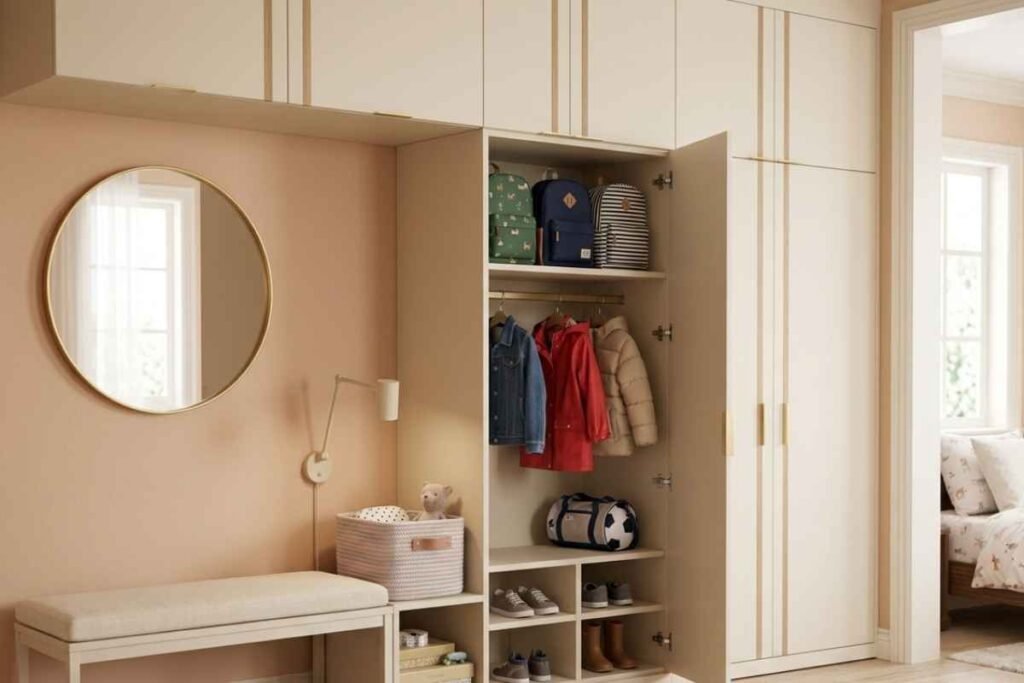
Create one tall cabinet near the entrance where children’s daily belongings can disappear.
Inside, include hooks for jackets, shelves for shoes, cubbies for bags, and a small drawer for keys or accessories.
When everyone leaves for school or comes home, the cabinet becomes the single destination for their everyday things.
Best for: Jackets, shoes, backpacks, sports gear.
18. Give the Coffee Table a Hidden Toy Compartment
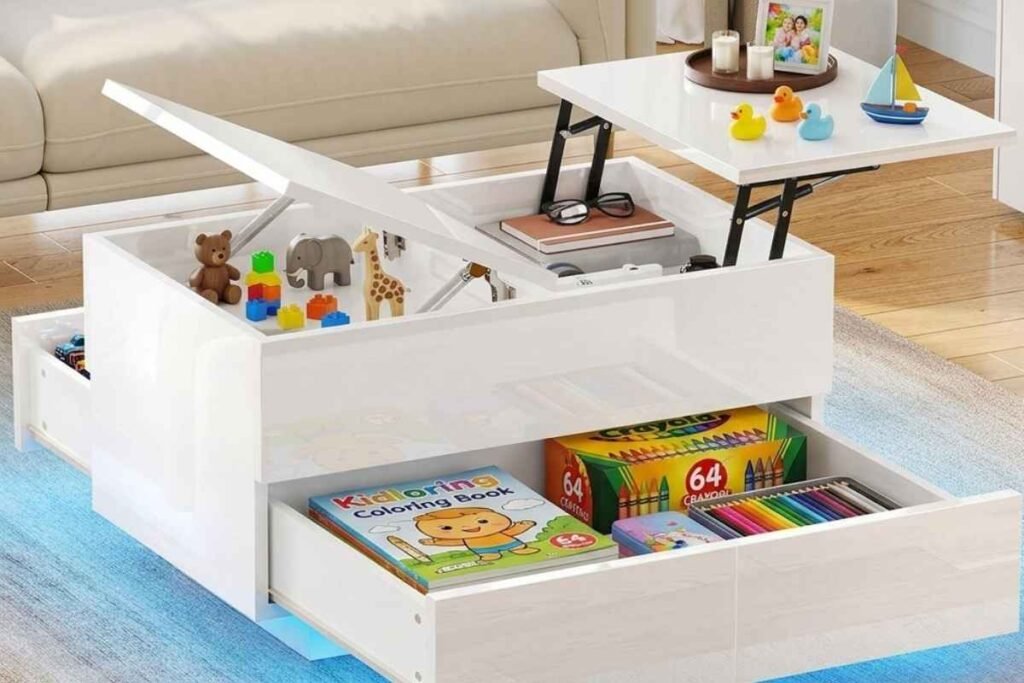
If toys naturally end up in the living room, make the coffee table part of the solution.
Choose a lift-top coffee table or one with concealed drawers. Store puzzles, coloring books, cards, and small toys inside.
When guests arrive, the toys can disappear without having to carry everything back to the child’s room.
Best for: Small toys, puzzles, coloring books, cards.
19. Create One Beautiful “Everything” Cabinet
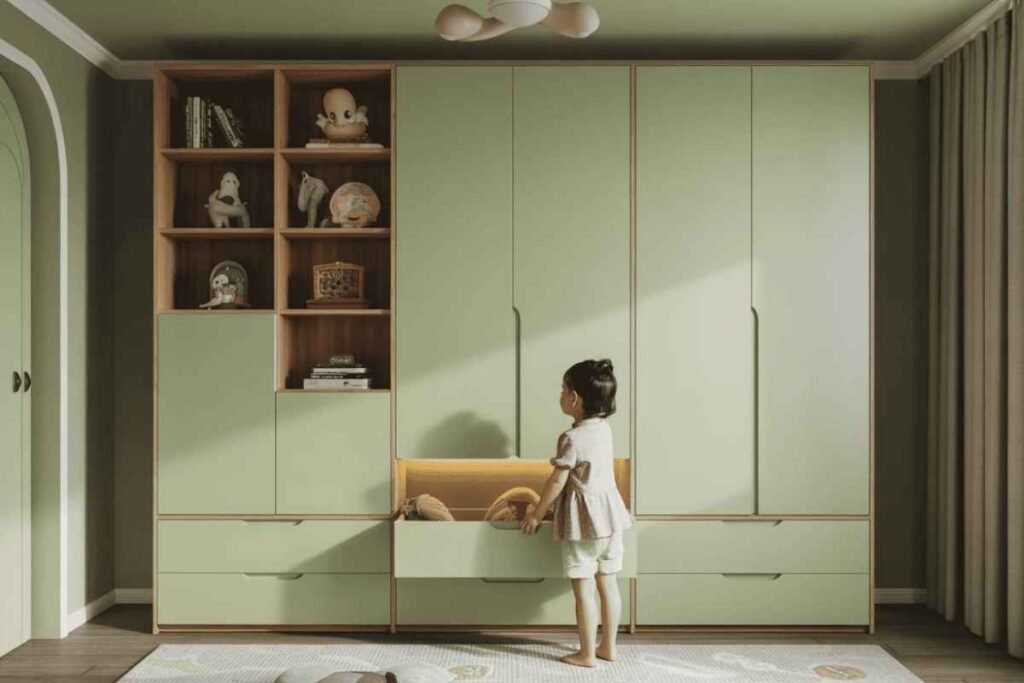
Every home needs one place for things that don’t have an immediate home.
Choose a tall, closed cabinet with adjustable shelves and use it as the family’s quick-reset zone.
Small bags, temporary school papers, toys, art projects, and random children’s belongings can go inside while you sort them properly later.
The important rule: don’t let this become a permanent dumping cabinet. Give it a quick reset every week.
Best for: Everyday clutter, temporary items, school papers.
20. Give Each Child Their Own Hidden Storage Zone
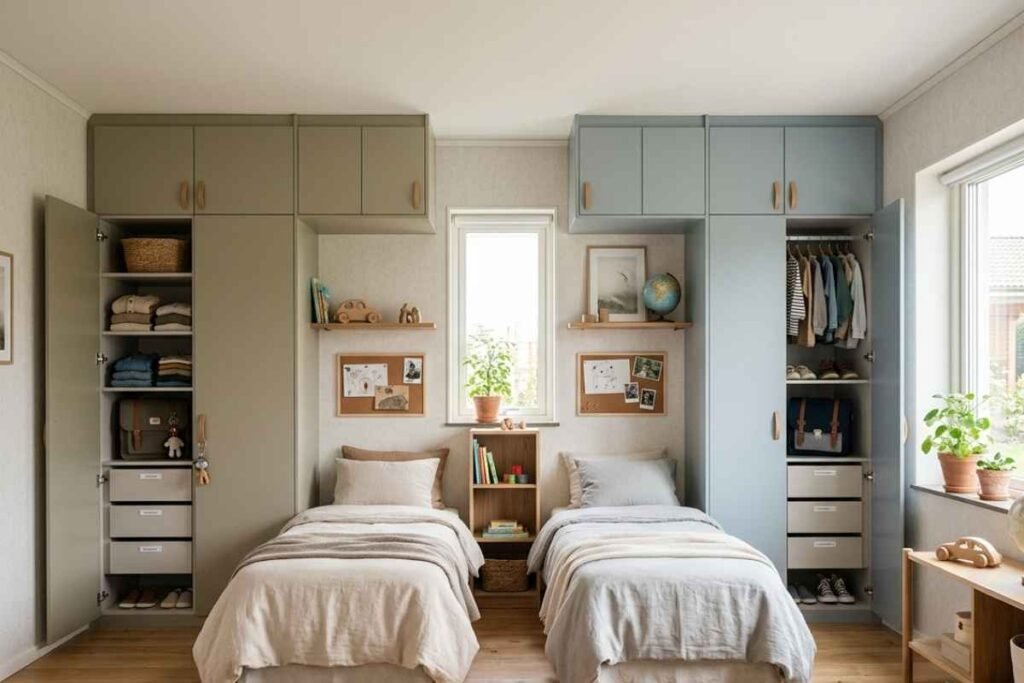
For families with more than one child, create one clearly defined storage zone per child.
It could be a section of the wardrobe, a column of drawers, or a closed cabinet with their name or a simple symbol.
Give each child space for clothes, shoes, school supplies, and personal items. Keeping everything in one zone makes it much easier to find belongings—and much easier to put them away.
Best for: Clothes, shoes, school items, personal belongings.
How to Make Hidden Storage Look Expensive
The trick to stylish storage is making it blend into the architecture of the room.
Choose cabinetry that matches the wall color, use simple hardware, and avoid filling every surface with containers. Handle-free doors, natural wood, soft neutrals, and clean-lined furniture can make even a children’s storage system feel sophisticated.
For open shelves, follow the 70/30 rule: keep roughly 70% of children’s belongings hidden and use the remaining 30% for books, artwork, or a few favorite toys.
That balance keeps the room functional without making it feel visually overloaded.
The Best Hidden Storage Is Easy for Kids to Use
Beautiful storage isn’t useful if children can’t use it themselves.
Keep everyday toys, shoes, clothes, and school bags at child-friendly heights. Reserve high shelves and difficult-to-reach cabinets for seasonal or rarely used belongings.
The easier the storage is to access, the more likely children are to put things back.
Final Thoughts
The goal of hidden kids’ storage isn’t to make a home look like no children live there. It’s to create a space where the fun, colorful, everyday chaos has somewhere to go.
A deep drawer beneath the bed can swallow a pile of toys. A closed entryway cabinet can make school bags disappear. A window seat can hide blankets and books. Even an ordinary coffee table can become a secret toy station.
The smartest solutions are the ones that look like beautiful furniture first and storage second.
Start with the items that create the most visible clutter—clothes, shoes, toys, school bags, books, and tiny everyday essentials—and give each category a dedicated hidden home.
Once everything has an easy place to go, keeping the house tidy becomes less of a daily battle and much more of a simple routine.
Save these ideas for your next kids’ room makeover and discover more smart, stylish home organization ideas on NimraBloom.